A high-end projector can look surprisingly average on the wrong screen. That is usually the moment homeowners realize the best projector screen for home theater is not a finishing touch – it is a core performance decision.
In custom theater design, the screen does more than give the projector a surface to hit. It shapes brightness, contrast, color accuracy, viewing angles, and how immersive the room feels once the lights go down. For some spaces, a fixed-frame screen is the clear answer. In others, a motorized screen or an ambient light rejecting material is the smarter investment. The right choice depends on the room, the projector, and how the system will actually be used.
What makes the best projector screen for home theater?
The best screen is not simply the most expensive one or the one with the highest published gain. It is the screen that matches your environment and your expectations.
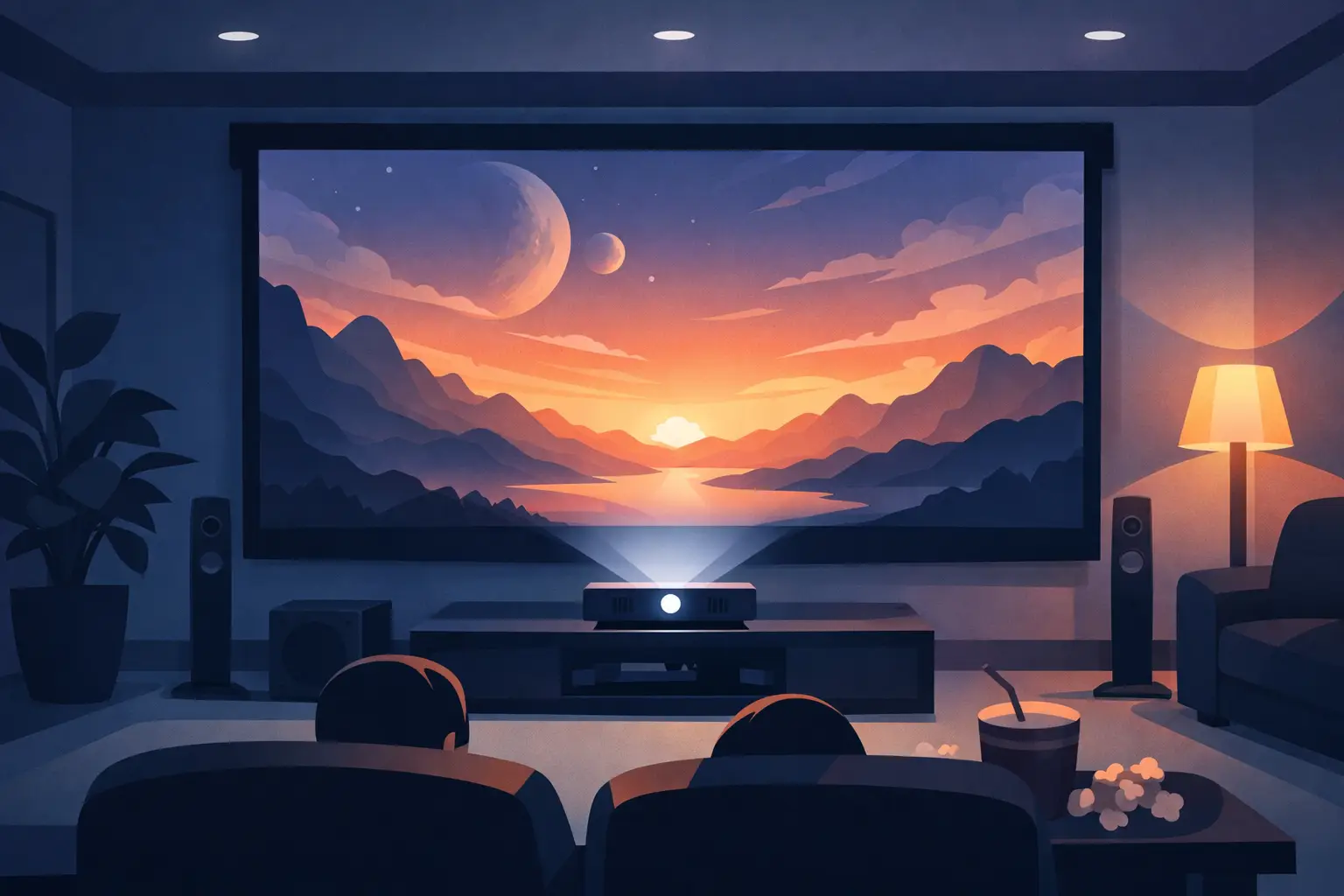
If the room is a dedicated theater with controlled lighting, dark finishes, and carefully placed seating, screen selection can focus on cinematic accuracy. In that setting, a matte white fixed-frame screen often delivers the most natural image. It preserves color balance well, supports wide viewing angles, and avoids some of the visual compromises that come with more specialized materials.
If the room is a media room, great room, or open-concept living space, the conversation changes. Daylight, decorative lighting, reflective surfaces, and multi-purpose use all work against image performance. In those rooms, the best projector screen for home theater is often an ambient light rejecting screen designed to improve perceived contrast and preserve image punch when the space cannot be fully darkened.
That distinction matters because many disappointing projector systems are not caused by weak equipment. They are caused by a mismatch between the screen material and the room.
Screen material matters more than most buyers expect
Screen material is where image quality is won or lost.
Matte white remains the benchmark for dedicated theaters. It offers balanced brightness, consistent color, and broad seating flexibility. If your projector is properly specified for the screen size and the room light is under control, matte white is still one of the strongest choices available.
Gray screens can deepen black levels in rooms with moderate ambient light, but they also reduce overall brightness. That trade-off can work well with a bright projector, but it can leave the image looking flat if the projector does not have enough output to compensate.
Ambient light rejecting, or ALR, screens are often the right answer for luxury media rooms where clients want a large projected image without treating the room like a commercial cinema. These materials are engineered to favor light coming from the projector while rejecting light from windows or ceiling fixtures. When properly matched to the projector and installation geometry, the improvement can be substantial. When poorly matched, the image can suffer from brightness uniformity issues or narrower viewing angles.
Acoustically transparent screens are another category worth serious attention in premium home theater projects. These allow speakers to be placed behind the screen, which is often the best way to achieve proper front soundstage alignment. Dialogue appears to come directly from the image, not from speakers placed below or beside it. That can create a much more polished theater experience, but there are trade-offs. Some acoustically transparent materials slightly reduce brightness or introduce texture if the seating distance is too close.
Fixed-frame vs. motorized screens
This is usually one of the first design decisions, and it should be based on how the space is used, not just appearance.
A fixed-frame screen is typically the best-performing option for a dedicated theater. The material stays consistently tensioned, the border helps with perceived contrast, and the installation creates a permanent cinematic focal point. If the room is purpose-built for movies, sports, and immersive viewing, fixed-frame is usually the right call.
Motorized screens make more sense in multi-use spaces where the screen needs to disappear when not in use. That could be a living room, a bedroom, a conference area, or a dual-purpose entertainment space with a television and projector in the same room. A quality motorized screen can perform very well, especially when paired with tab-tensioning to keep the surface flat. Without proper tensioning, though, screen waves and edge curl can become a visible issue over time.
The real question is not which style is better in general. It is which style serves the room without compromising long-term performance.
Size, aspect ratio, and seating distance
Bigger is not always better. Better is better.
A screen that overwhelms the room can strain the eyes, expose projector limitations, and make lower-quality content less enjoyable. A screen that is too small misses the emotional impact that makes home theater worth the investment in the first place.
Screen size should be selected with projector brightness, viewing distance, content habits, and room dimensions in mind. A family that mainly watches blockbuster films in a dark room can comfortably enjoy a larger image than a household using the same room for casual daytime sports and streaming.
Aspect ratio also matters. Most homeowners default to 16:9 because it works well for television, sports, gaming, and streaming content. For dedicated cinema rooms, a widescreen format can create a more dramatic presentation for films, especially when paired with the right projector and control system. The trade-off is flexibility. If your viewing habits are mixed, 16:9 often remains the more practical choice.
The room itself often decides the screen
The room is the most honest advisor in the process.
Wall color, ceiling height, window placement, recessed lighting, and furniture layout all affect what the screen can realistically do. A bright white room with large windows will behave differently than a dark, enclosed theater, even if both use premium projectors. That is why screen selection should never happen in isolation.
This is also where professional design makes a visible difference. Choosing the best projector screen for home theater means understanding throw distance, projector mounting position, light control, speaker placement, and sight lines together. It is a system decision, not a one-line product comparison.
In higher-end homes, aesthetics matter too. The screen has to complement the architecture, disappear when appropriate, and integrate cleanly with audio, control, shading, and lighting systems. A strong installation looks intentional, not added on later.
Common mistakes that lead to disappointing results
The most common mistake is choosing screen material based on marketing claims instead of room conditions. A high-gain screen may sound appealing, but in the wrong setup it can create hotspotting or uneven brightness. An ALR screen may promise better daytime viewing, but if the projector placement is wrong, performance can fall short.
Another frequent issue is underestimating the importance of tension and build quality. In premium environments, a screen should stay flat, stable, and visually clean for years. Lower-quality products often reveal their weaknesses after installation, not before.
There is also a tendency to overspend on the projector while treating the screen as secondary. That is backwards. The image you enjoy every day is the combination of both. Even an excellent projector cannot overcome a poor surface.
So, what is the best projector screen for home theater?
For a dedicated dark-room theater, a fixed-frame matte white screen is often the strongest choice for pure image fidelity. For a multi-use room with ambient light, an ALR screen is frequently the better fit. For a true cinema-style layout with speakers hidden behind the image, an acoustically transparent screen may be the ideal solution.
That may sound less definitive than a simple product recommendation, but it is the honest answer. The best result comes from matching the screen to the space, the projector, and the lifestyle of the people using it.
That is why thoughtful design matters. A well-selected screen does not call attention to itself. It simply makes the entire room perform the way it should – with stronger contrast, better immersion, cleaner aesthetics, and a viewing experience that feels worthy of the home around it.
If you are building or upgrading a theater space, treat the screen like a central component from day one. That decision will shape every movie night that follows.