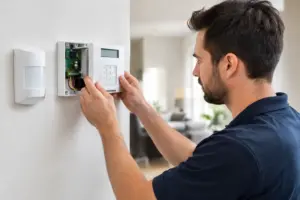
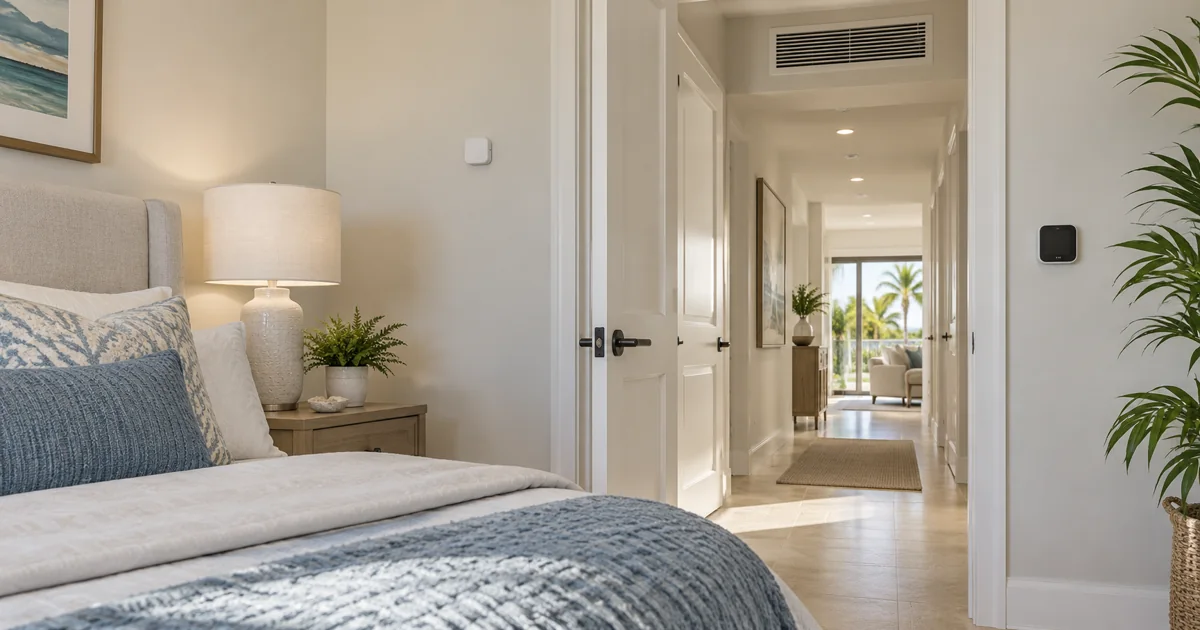
A room-temperature sensor can help a compatible climate-control system measure conditions in a chosen location, but adding a sensor does not by itself create a separately controlled HVAC zone. Before buying a Savant climate upgrade, distinguish what will be measured, which equipment will respond and whether the home’s mechanical system can deliver the requested room-by-room result.
Plan your Savant project
Share the existing thermostat models, mechanical zones if known and the rooms with comfort concerns. We can coordinate supported sensing and automation requirements with your HVAC professional before selecting equipment.
Request a Sentry Audio Video consultation Call (561) 717-3280
That distinction matters when a bedroom feels warmer than the hallway or a guest suite is used differently from the main living areas. The correct solution may involve sensor configuration, control changes, mechanical work or a combination—not simply another device on the wall.
Separate sensing from heating and cooling control
A sensor reports conditions at its location. A thermostat or compatible control arrangement uses the configured information to request heating, cooling or other supported operation. The HVAC equipment and air-distribution design determine what areas that operation actually serves.
If one system serves several rooms together, choosing a different measurement location can change when that shared system operates. It does not automatically give each room an independent setpoint or a separate supply of cooling.
Start with a diagram of the existing mechanical zones and the spaces they serve. Have the responsible HVAC professional verify that information rather than relying only on the number of wall thermostats or the room names shown in an app.
Define the comfort problem before choosing hardware
Describe when the problem occurs: afternoon sun in one bedroom, a closed guest-room door, uneven temperatures after a renovation or a schedule that does not match occupancy. Record the affected areas and the existing thermostat locations.
Temperature differences can have causes beyond controls, including airflow, system capacity, building conditions or equipment operation. A control-system upgrade should not be sold as a guaranteed correction for an unassessed mechanical problem.
Ask what result the owner expects. “Use the bedroom temperature for overnight control” differs from “maintain three bedrooms at three independent temperatures.” The proposal should state which outcome is supported by the assessed system.
Verify the exact Savant thermostat and sensor combination
Savant publishes specific climate products and sensor compatibility information. Confirm the exact thermostat, sensor, control equipment and applicable software for the proposed installation. Do not assume that any wireless room sensor can be added to any Savant-controlled climate system.
Check how the selected configuration uses sensor information. The available options and setup depend on the product and system. A sensor being detected does not establish that it is influencing control in the way the homeowner requested.
Review cable and power requirements for the actual components. Some sensor arrangements are wired and have defined connection requirements; others use supported wireless methods. Product selection should follow the project conditions and current manufacturer documentation.
Choose measurement locations carefully
A sensor should represent the area it is intended to measure. Direct sun, a nearby supply grille, exterior exposure or heat from equipment can make a location unrepresentative. Coordinate placement with the HVAC professional and the selected product’s instructions.
The most visually discreet location is not automatically the most useful one. Review furniture, drapery and normal room use before finalizing the position. If the room arrangement changes later, revisit whether the reading still represents occupied conditions.
For a comparison during diagnosis, use appropriate measurement methods and conditions. Do not infer a permanent system defect from one momentary reading on different devices with unknown accuracy or placement.
Coordinate the automation scope with the HVAC contractor
Sentry’s integration work should have a clear boundary with mechanical design, equipment service and any zoning alterations performed by the responsible licensed professionals. Identify who verifies compatibility, who modifies HVAC connections and who commissions the mechanical operation.
Where an existing thermostat is retained and integrated, confirm the supported functions and limitations. Remote access to a setpoint is not the same as adding mechanical capacity, balancing airflow or creating an independent zone.
If the desired outcome requires equipment or ductwork changes, include that as a coordinated project requirement. Do not hide an unresolved mechanical dependency inside a general automation proposal.
Test the requested operating behavior
Commission the selected sensor configuration and demonstrate how the owner can identify the relevant room or zone. Confirm the agreed setpoint, schedule and scene behavior using the normal Savant interface where supported.
Review what happens when the household changes occupancy patterns or uses a different schedule. Avoid stacking conflicting schedules in several systems without deciding which one owns normal operation.
Keep comfort verification separate from a quick demonstration that a command was sent. The mechanical system may need an appropriate observation period and professional assessment to establish whether the original comfort issue has been addressed.
Document capabilities and limits before purchase
The proposal should identify the exact products, intended sensor use, retained HVAC equipment, integration scope, contractor responsibilities and testing. State which rooms remain part of a shared mechanical zone and which have genuinely independent control.
This makes it easier to compare a modest sensor improvement with a larger climate or HVAC project. It also protects the owner from paying for a device under the mistaken assumption that it creates a capability the house does not have.
Sentry Audio Video is an authorized Savant dealer providing Savant installation, equipment sales and programming and existing-system support. Call (561) 717-3280 for Boca Raton or Palm Beach, (954) 859-6475 for Fort Lauderdale, or request a coordinated climate-control review. Manufacturer reference: Savant climate products; exact thermostat and sensor compatibility is verified before ordering.