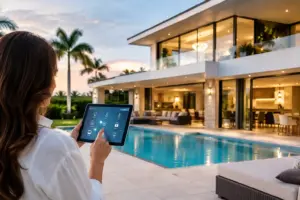
A Palm Beach residence may have motorized shades facing the water, landscape lighting across the property, a pool and spa, distributed audio, surveillance, climate zones, and several entertainment spaces. Without thoughtful Crestron Home programming Palm Beach homeowners can be left moving between remotes, wall controls, and individual apps. The value of a professionally programmed Crestron Home system is not simply that it puts controls in one place. It makes the home respond appropriately to the way it is actually lived in.
For a primary residence, seasonal property, or a major renovation, programming is where a collection of premium systems becomes a coordinated experience. It determines what happens when you arrive, when guests come over, when the home is vacant, and when a simple command needs to work the first time.
What Crestron Home Programming Really Does
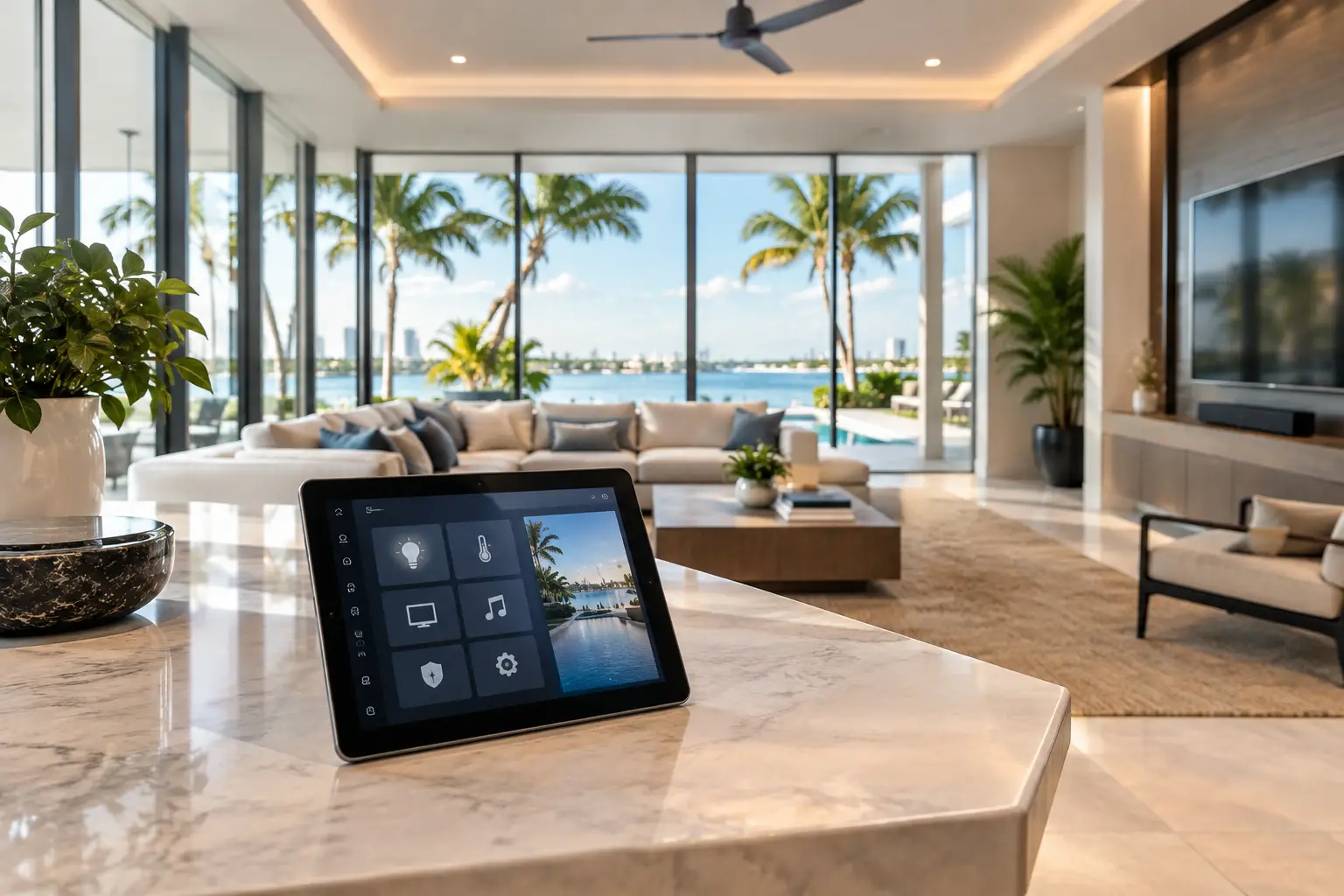
Crestron Home is a control platform designed to bring compatible home systems under a refined, personalized interface. A touchscreen, keypad, handheld remote, or mobile device can control the spaces and systems that matter to the homeowner. But the equipment alone does not determine the result. The programming defines the behavior behind each button, room page, scene, and automation.
A well-designed interface keeps daily control intuitive. In a family room, that may mean one command that turns on the display, selects the preferred source, lowers the shades, and sets the lighting to a comfortable level. In an outdoor living area, it may mean adjusting music, landscape lighting, fans, and pool features from a single location rather than managing each one separately.
Programming also establishes priorities. If a security event occurs, the system can present the relevant camera view. If the property is placed in Away mode, selected lights can turn off, shades can move to their preferred position, and entertainment systems can power down. These details should be tailored to the home, not applied as a generic preset.
Why Palm Beach Properties Need a Tailored Approach
Palm Beach homes often combine formal rooms, indoor-outdoor entertaining areas, guest suites, staff access, waterfront exposure, and seasonal occupancy. That complexity makes system design and programming especially consequential. The objective is to simplify control without oversimplifying how the property operates.
Consider a waterfront terrace used for evening entertaining. A single Entertain scene might set exterior lighting, activate selected audio zones, open or close shades based on the room, and prepare pool lighting for the occasion. The right scene is not necessarily the one with the most actions. It is the one that feels natural for the property and does not create unwanted changes elsewhere in the home.
Climate and shade control deserve the same attention. Sun exposure can change dramatically from one elevation to another. Automated shading can support comfort and protect furnishings, while still preserving a view when the homeowner wants it. The programming should account for room use, time of day, privacy preferences, and the equipment selected for the project.
Seasonal residences present another consideration. Owners need confidence that the home is easy to monitor and manage while they are away. Clear Away, Vacation, and Arrival scenes can support a more controlled handoff between occupied and unoccupied periods. Exact functions depend on the connected systems and the owner’s preferences, but the principle remains the same: the technology should reduce uncertainty, not add another layer of management.
The Difference Between Control and Automation
Centralized control and automation are related, but they are not identical. Centralized control means the homeowner can operate systems from a single, organized interface. Automation means the system can take approved actions based on time, occupancy, environmental conditions, or a selected mode.
Not every room needs extensive automation. A formal dining room may benefit from a few carefully chosen lighting scenes and straightforward shade control. A media room may need more detailed behavior around lighting, source selection, and audio settings. Outdoor areas may need programmed responses that vary between everyday use and larger gatherings.
The most successful projects strike a balance. Too little automation leaves the homeowner doing unnecessary work. Too much automation can feel unpredictable if it acts against the household’s routines. Experienced programming makes deliberate choices about what should happen automatically and what should remain under direct control.
Scenes That Match Real Routines
Scenes are often the most visible benefit of a Crestron Home installation. They replace a string of separate actions with a simple, meaningful command such as Good Morning, Good Night, Entertain, or Away.
A Good Night scene can turn off selected lights, secure common areas, lower shades where desired, and adjust temperature settings. An Entertain scene can create the appropriate mood in connected spaces without disrupting bedrooms or private areas. For households with staff, children, or frequent guests, permissions and interfaces can also be configured to keep operation clear and appropriate.
The names, functions, and appearance of these scenes should be decided during consultation. A home should not be forced into a standard template when its routines are distinct.
Crestron Home Programming Palm Beach: Planning Before Installation
Strong programming starts well before the final walkthrough. It begins with understanding how each room will be used, which systems must work together, and who will use them. This is why a full-service integrator evaluates the project as a connected environment rather than a series of isolated products.
During planning, the conversation should cover daily habits as well as special situations. Where do owners enter the home? Which rooms are used at night? Is the pool area an occasional retreat or a frequent gathering place? Are guest suites intended to have independent control? Does the homeowner want a simple interface in every room, or more detailed controls in select locations?
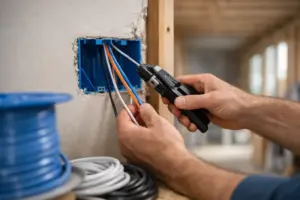
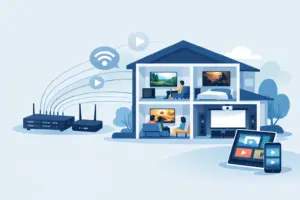
Infrastructure matters as much as the interface. Reliable network design, properly organized equipment locations, structured cabling, and clean device installation all influence long-term performance. A polished touchscreen cannot compensate for weak communications between systems. When audio, video, surveillance, shades, lighting, climate, and pool controls are considered together from the start, the finished experience is more dependable and easier to service.
What to Expect From a Professional Programming Process
A professional process moves from design intent to testing, refinement, and ongoing support. After the system plan is established, programming maps the components into clear room controls and home-wide scenes. The integrator then tests each function under real operating conditions, including handoffs between related systems.
The final walkthrough is more than a demonstration. It is the opportunity to make sure commands reflect the owner’s expectations. A scene may need a timing adjustment. A keypad button may be better assigned to a different function. A favorite source or camera may need to appear first in the interface. These refinements are not cosmetic. They are what make a sophisticated system feel easy to use.
Ongoing support also has value. Homes change over time: a room is repurposed, a new outdoor area is added, schedules shift, or connected equipment is upgraded. Programming should be maintained by a team that understands the original system design and can make changes without creating confusion elsewhere in the property.
Questions to Ask Before You Commit
Before moving forward, ask how the programming will be documented, how changes will be handled after installation, and whether the integrator is responsible for the broader infrastructure supporting the system. It is also wise to ask how the interface will be tailored for different users and which third-party systems are intended to be included.
Compatibility is not a promise that every function of every device will behave identically within one interface. Some integrations provide deep control, while others may offer more limited functions. A trusted integrator will explain those boundaries early, recommend equipment that aligns with the desired experience, and avoid overpromising.
For homeowners seeking Crestron Home programming in Palm Beach, the goal should be simple: a home that feels composed, responsive, and easy to operate whether the day calls for quiet privacy, family time, or a full house of guests. Sentry Audio Video approaches that goal through careful design, clean execution, and support that continues after installation. The right next step is a conversation about how your property is used, because that is where the most valuable programming decisions begin.