A security system rarely fails at a convenient time. A keypad begins beeping after midnight, a notification says a zone is open when every door is shut, or a camera disappears from the app just before leaving town. Alarm Troubleshooting Boca Raton property owners need should start with a careful assessment, not assumptions. The goal is to restore dependable protection while identifying the condition that caused the disruption in the first place.
For a residence, that may mean tracing an intermittent sensor, a low backup battery, a communication failure, or an automation setting that is affecting the alarm interface. For a business, the concern can extend to access points, video surveillance, fire alarm monitoring requirements, staff procedures, and network reliability. These systems are connected by design. A qualified integrator looks at the whole environment before recommending a repair.
Why Alarm Problems Should Be Taken Seriously
An alarm panel can remain powered while part of the system is no longer performing as intended. That distinction matters. A trouble message may not trigger a siren, yet it can signal that a sensor, cellular communicator, backup battery, camera, or network connection needs attention. Ignoring a recurring alert turns a manageable service visit into uncertainty about whether the property is protected.
False alarms deserve the same level of attention. They interrupt families, frustrate staff, and can lead people to dismiss future alerts too quickly. A false alarm can stem from a door contact that has shifted, a motion detector placed near moving drapery, a deteriorating battery, an environmental issue, or an improperly configured zone. The correct solution depends on the equipment, the layout, and how the space is actually used.
Boca Raton properties also face conditions that can expose weaknesses in an aging or incomplete installation. Heat, humidity, heavy rain, coastal air, power interruptions, and seasonal travel all place added importance on protected wiring, proper equipment placement, reliable backup power, and dependable remote communication. A system that worked acceptably years ago may need a more thorough review after a renovation, network change, or equipment upgrade.
Common Alarm Troubleshooting Issues in Boca Raton
Keypad messages, chirps, and trouble codes
A keypad message is useful only when it is interpreted in the context of the system. Low battery alerts, communication failures, tamper conditions, zone faults, and power-loss messages can look similar to a property owner, but they do not call for the same response. Replacing a battery may resolve one issue, while another may point to a panel power supply, damaged cable, or monitoring-path problem.
Repeated chirping is particularly easy to postpone. Yet a backup battery has a defined service life, and it is intended to keep the panel operating during an outage. If it can no longer hold a charge, the alarm may not provide the level of continuity expected when utility power is unavailable. A service professional can confirm whether the alert is limited to the battery or whether charging and panel components should also be evaluated.
A door, window, or motion zone will not clear
When a zone remains open after the opening appears closed, the issue may be mechanical, magnetic, wired, wireless, or programming-related. Door and window contacts can move slightly as frames settle or hardware is adjusted. Wireless devices may lose signal quality over time, especially when a property has expanded or construction materials interfere with communication.
Motion detection requires equal care. Pets, sunlight, airflow, decor changes, and the placement of furnishings can affect performance. The answer is not to simply reduce protection in that area. It is to determine why the detector is responding and adjust, replace, or reposition equipment in a way that protects the intended space without creating nuisance alarms.
The system cannot reach the monitoring center
Modern alarm communication often relies on cellular and internet pathways. If the panel cannot communicate, the cause might be a network equipment change, expired cellular service, poor signal strength, configuration errors, or damage to a connection. A camera app functioning normally does not prove that alarm signals are reaching the monitoring center. These are separate functions that should be tested separately.
This is one of the clearest reasons to use an integrated technology partner. The issue may be at the alarm panel, the network, the communication module, or the settings that connect them. Isolating the source efficiently protects against unnecessary equipment replacement and avoids leaving a critical issue unresolved.
Cameras are offline or recordings are missing
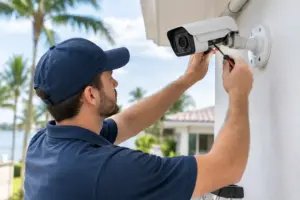
Video surveillance is not an intrusion alarm, but it often becomes essential when an alarm event needs verification. An offline camera can result from a network interruption, failed power source, damaged cabling, recording-system issue, password change, or device failure. Missing video may also be tied to storage settings, retention periods, motion rules, or a recorder that has not been maintained.
A proper service visit verifies live video, recording, playback, remote access, and time synchronization. The last detail is often overlooked until footage is needed. Accurate timestamps make it far easier to review an event and coordinate with monitoring records or access activity.
What Professional Diagnosis Looks Like
Effective troubleshooting is methodical. It begins by documenting the symptoms: which alerts appear, when they began, whether they are intermittent, and whether recent changes occurred at the property. Renovations, new doors or windows, network replacements, furniture changes, landscaping work near exterior devices, and power events can all provide valuable clues.
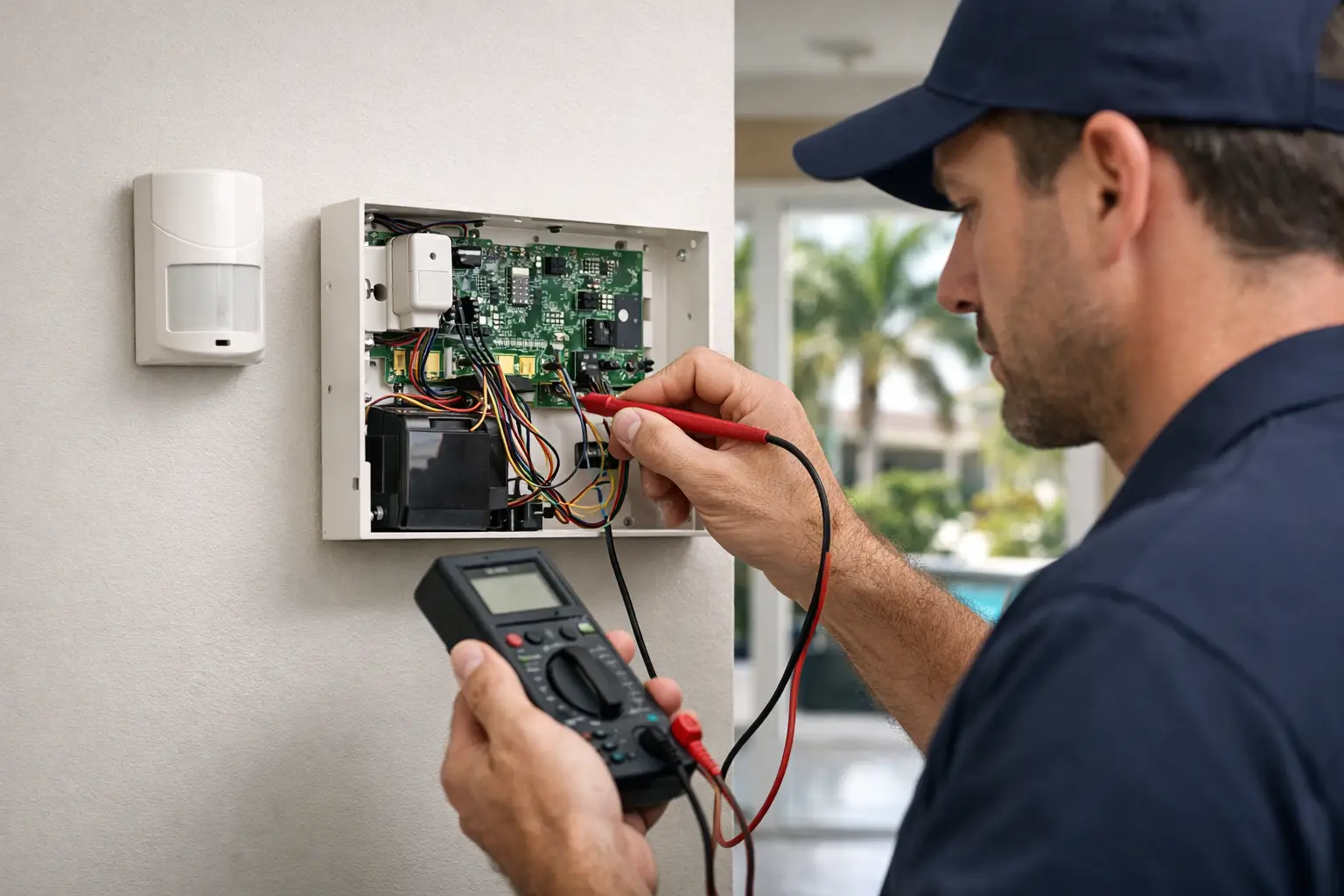
The next step is system-level testing. A technician evaluates the panel, power supply, backup battery, communication path, keypads, sensors, sirens, and connected devices relevant to the issue. On commercial sites, that may include access control, surveillance, network infrastructure, and coordination with the appropriate fire alarm service provider when life-safety systems are involved.
Testing should include the user experience, not only the equipment status. Can authorized users arm and disarm the system without confusion? Do they receive the right notifications? Can they view relevant cameras when an event occurs? Are staff members following procedures that match the current system configuration? A technically operational system can still create risk if it is difficult for people to use correctly.
After diagnosis, the recommendation should be specific. Sometimes a targeted repair is the right answer. In other cases, recurring issues reveal that older equipment, incomplete wiring, limited communication options, or fragmented systems are creating an ongoing liability. The trade-off is straightforward: a focused repair may restore service now, while a strategically planned update can improve reliability, visibility, and long-term support.
When an Alarm Issue Calls for Immediate Service
Certain conditions should not wait for a routine appointment. A panel that cannot communicate with monitoring, an alarm that will not arm, a perimeter zone that cannot be secured, repeated unexplained triggers, visible damage to security equipment, or a loss of video coverage at a critical entry point all warrant prompt professional attention.
Commercial properties should also act quickly when an issue affects opening and closing procedures, protected inventory areas, employee access, or required alarm and life-safety operations. The right response may involve more than one system, particularly in offices, hospitality environments, retail spaces, and multi-use properties where surveillance, access, communications, and network performance overlap.
Do not rely on repeated resets as a long-term answer. A temporary return to normal operation can hide an intermittent connection, a failing component, or a condition that will reappear during a power outage or at the moment protection is most needed. Clear documentation and proper testing create a much more dependable outcome.
Maintaining Confidence After the Repair
Once service is complete, schedule periodic testing and make system updates part of property management. Test alarm communication, review camera coverage, confirm backup power condition, and update authorized users whenever household staff, tenants, employees, or access procedures change. If a property is being renovated or expanded, involve the security integrator early so new technology supports the existing protection strategy rather than complicating it.
For homes with smart lighting, shades, gates, climate controls, and outdoor entertainment, integrated design can also make alerts easier to act on. For example, an alarm event can be paired with appropriate lighting and video visibility while preserving clear, simple control for the people who use the property every day. The value is not more complexity. It is a system that responds predictably when it matters.
When alarm alerts become frequent, confusing, or unreliable, the most useful next step is a professional evaluation of the complete system. Sentry Audio Video brings security, surveillance, networking, and integrated control under one accountable service relationship, helping Boca Raton homes and businesses regain confidence in the technology protecting their property.