A luxury home should not require a row of wall switches, separate shade remotes, and repeated adjustments throughout the day. Lutron HomeWorks brings architectural lighting and motorized shades into a unified control system that responds to how your home is actually used – from a quiet early morning to a fully occupied evening of entertaining.
For properties with layered lighting, expansive glass, outdoor spaces, and multiple living areas, this is more than a convenience upgrade. It is the infrastructure behind a home that feels composed, comfortable, and easy to manage. The quality of the experience, however, depends as much on thoughtful design and programming as it does on the equipment itself.
What Lutron HomeWorks Controls
Lutron HomeWorks is a premium whole-home lighting control platform. Rather than treating each light fixture or motorized shade as a separate device, it organizes them into an intentional system. A homeowner can control individual lights when needed, but the real value comes from scenes that set multiple lights and shades to the right positions with one button press.
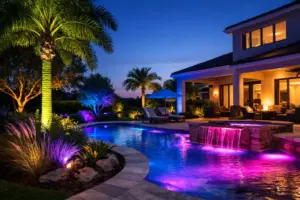
A typical system may include dimmable interior lighting, decorative fixtures, landscape and pool-area lighting, motorized roller shades, drapery tracks, keypads, touchscreens, and app-based control. It can also communicate with a professionally integrated control system for coordinated entertainment, climate, security, and exterior-living experiences.
The system is designed around the home, not around a single room. Pressing “Goodnight” from the primary suite can turn off selected lights, lower shades, and set a preferred path light level through the house. A “Welcome” scene can illuminate the entry, kitchen, and main living space before anyone reaches for a switch. The exact behavior is customized, which is why the planning stage matters.
Lighting that supports architecture
High-quality lighting is not simply about making a room brighter. It shapes how artwork, stone, millwork, furniture, and architectural details are perceived after sunset. HomeWorks supports precise dimming and scene control so ambient, accent, task, and decorative lighting can work together rather than compete.
For example, a kitchen may need bright, practical task lighting in the morning, softer illumination for dinner, and a low-level late-night setting that does not flood the entire room with light. Those are three distinct experiences, and they should not require adjusting six separate controls each time.
Shades that do more than block sunlight
Motorized shades are often selected for privacy and light control, but their role can be much broader. In South Florida, where strong sunlight and expansive windows are common, well-planned shades can reduce glare on displays, protect furnishings from direct sun exposure, and make rooms more comfortable at different times of day.
Shade fabrics, openness levels, blackout requirements, pocket details, and mounting locations all affect the final result. A shade system that looks refined and operates reliably needs to be considered before finishes are finalized, particularly when recessed pockets or concealed wiring are part of the design.
Why Keypads Matter More Than an App
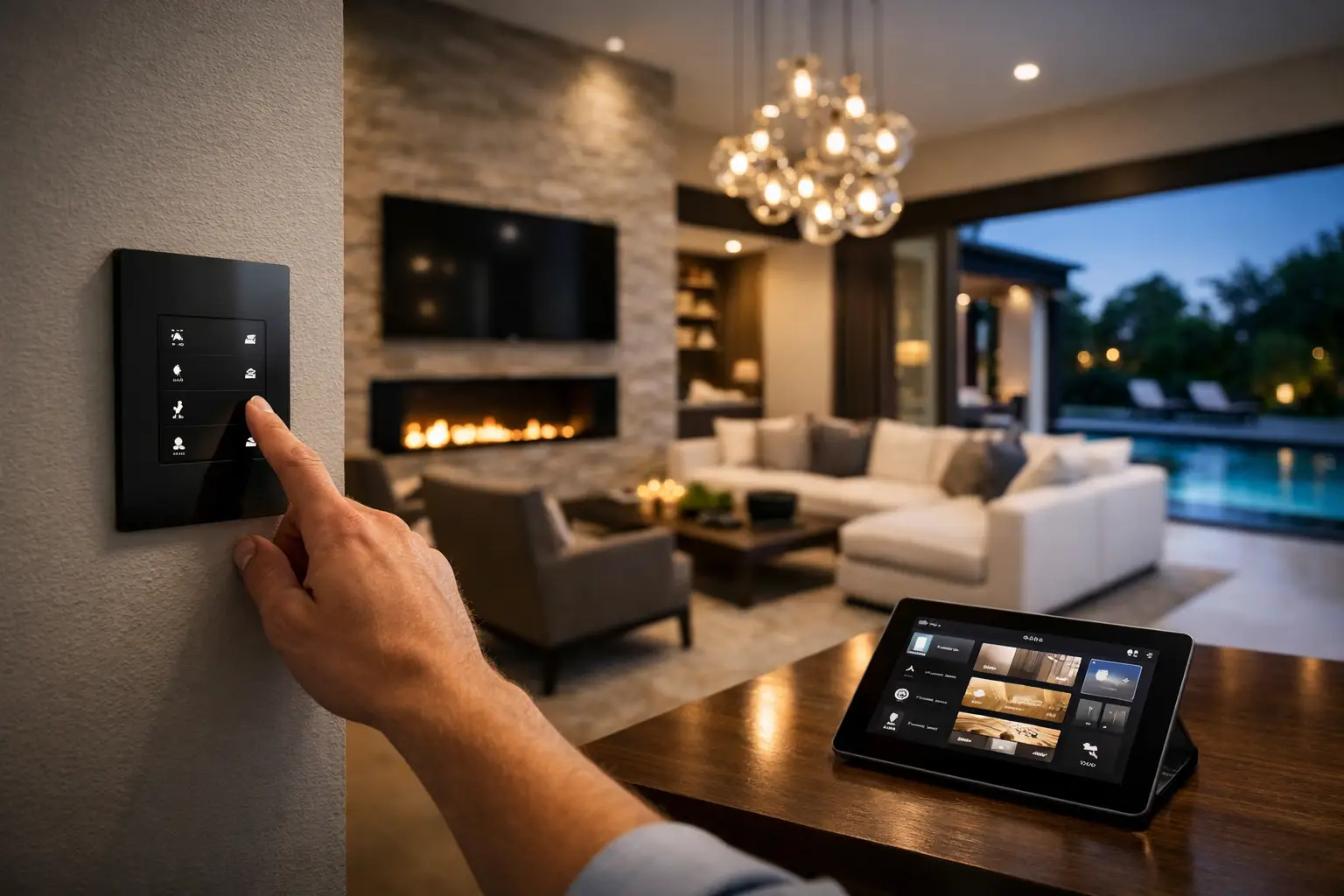
App control is useful when you are away from home or want to make a quick adjustment. It should not be the primary way a family interacts with lighting. The most successful Lutron HomeWorks installations place engraved keypads exactly where decisions happen: at room entries, beside a bed, near outdoor doors, and in frequently used transition spaces.
A keypad eliminates the guesswork of deciding which switch controls which fixture. Instead of a bank of matching toggles, homeowners see clear scene labels such as Entertain, Dining, Relax, Patio, All Off, or Goodnight. Guests can operate the system confidently without being handed instructions, and the wall itself remains clean and intentional.
Keypad style also deserves attention. Lutron offers finish and button configurations that can complement traditional, transitional, or contemporary interiors. This is a small detail with a large visual impact because controls are touched every day and appear throughout the property.
The Case for Planning HomeWorks Early
HomeWorks can be designed for new construction, major renovations, and select retrofit projects. Still, the best time to begin is before drywall, trim, and lighting locations are finalized. Early coordination gives the integration team, architect, interior designer, electrical contractor, and shade provider time to resolve the details that are difficult to change later.
That includes determining which fixtures should dim together, identifying keypad locations, documenting loads, selecting the appropriate control-panel location, and coordinating low-voltage pathways for shades and keypads. It also means reviewing decorative fixtures early. Not every fixture, driver, or lamp performs the same way under dimming control, and compatibility should be confirmed before installation.
A retrofit can be an excellent fit when wall finishes must remain largely intact or a homeowner wants to improve control in a defined area. The trade-off is that design choices may be shaped by available wiring, existing electrical infrastructure, and access conditions. A professional site review clarifies what is practical before a system is specified.
Programming is where the house becomes personal
Hardware creates the foundation. Programming turns it into a lived-in experience. The right scenes reflect routines: how the household wakes up, where people gather, which rooms are used after dark, and how the property should behave when it is vacant.
There is a balance to strike. Too few scenes can leave the system underused, while too many labels and buttons can make it unnecessarily complicated. A well-designed interface feels obvious from the first day. It gives homeowners control without asking them to learn a new operating system.
Programming should also account for exceptions. Perhaps the outdoor areas remain active after the interior is off, or a guest suite has independent shade preferences. Homes are rarely one-size-fits-all, and the system should respect that.
HomeWorks and Integrated Home Technology
Lighting and shades are often the visual centerpiece of a smart-home project because their effect is immediate. Yet their value increases when they are coordinated with the rest of the property. A single “Movie” command might lower selected shades, set pathway lighting, and prepare the room for the home theater. An “Entertain” scene can create the right lighting across the main living areas and outdoor spaces before guests arrive.
Integration should always be purposeful. Connecting every device merely because it can be connected creates confusion and more potential points of failure. The goal is dependable, simple control that supports daily routines.
For security-conscious homeowners, lighting scenes can also help create an occupied appearance while away. They should complement professionally designed surveillance and security systems, not replace them. Each system has a distinct job, and a quality integrator makes sure they work together appropriately.
What a Professional HomeWorks Installation Requires
HomeWorks is not a one-size-fits-all package. It requires a detailed discovery process, clear documentation, proper load and fixture review, coordinated installation, programming, and post-installation support. The system must be built cleanly behind the walls and in the equipment location, then remain easy to use in the spaces homeowners see every day.
This is where an experienced integration partner earns its value. Sentry Audio Video coordinates the technical details across lighting control, shades, audio/video, networking, surveillance, and other connected systems so the project has a single point of accountability. That coordination is especially valuable in larger residences, where separate trades can otherwise create gaps in responsibility.
Before approving a design, homeowners should ask how scenes will be documented, how lighting compatibility will be verified, where panels and processors will be located, and what support is available after move-in. Clear answers protect both the appearance of the home and the long-term reliability of the system.
Is Lutron HomeWorks the Right Fit?
Lutron HomeWorks is well suited to custom residences where lighting quality, discreet control, motorized shades, and a polished user experience are priorities. It is particularly compelling when a project includes many lighting zones, multiple floors, significant window treatments, or integration with other premium home systems.
It may be more capability than necessary for a small property with only a few lighting zones and no plans for shades or centralized scenes. The right system depends on the size of the home, construction conditions, desired control level, and how much the lighting experience matters to the household.
The most useful first step is not choosing keypads or shade fabric. It is mapping the way your home should feel at different moments of the day. Once that is clear, a properly designed Lutron HomeWorks system can make every arrival, gathering, and quiet evening feel considered rather than complicated.