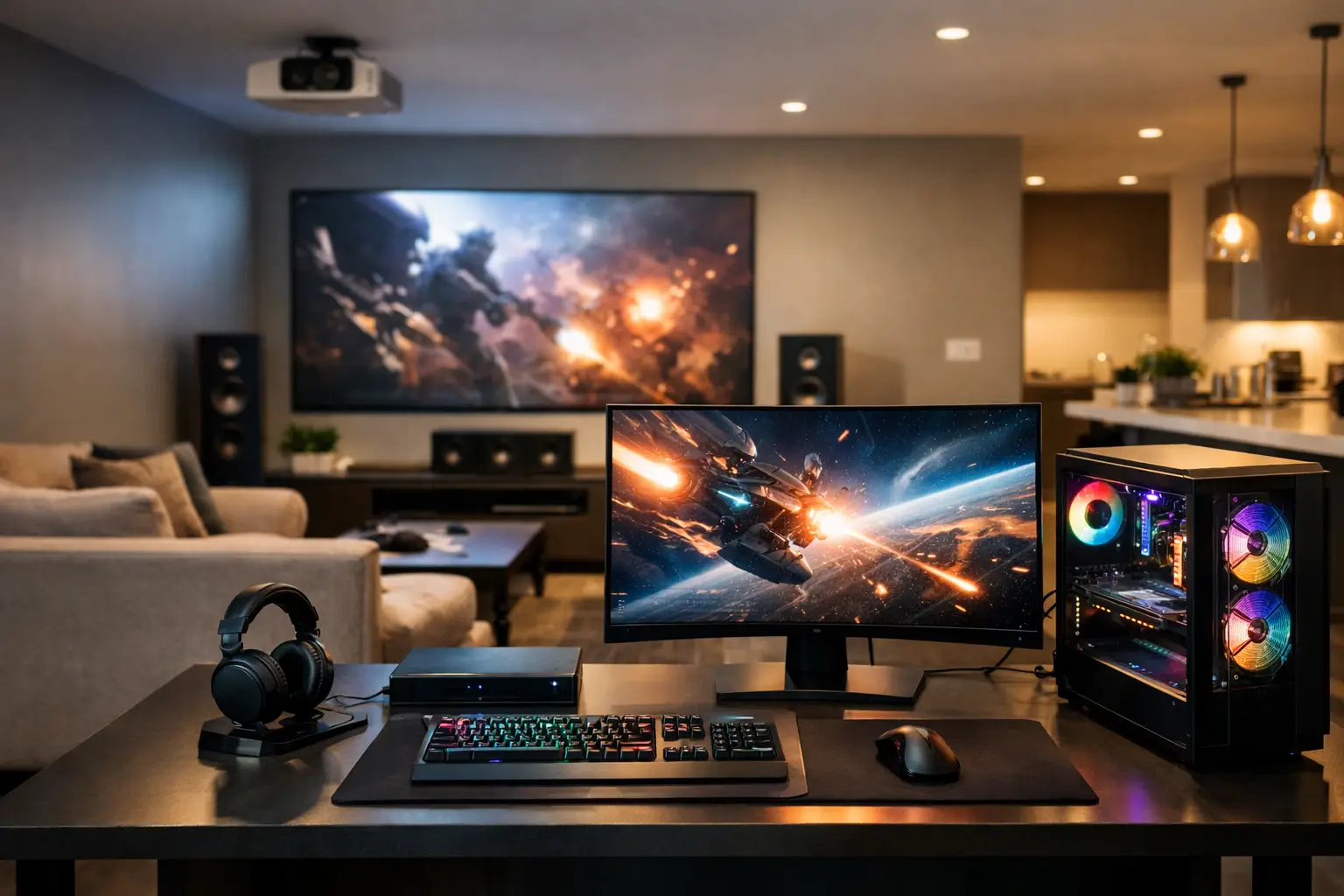
A premium game room should not become the one space in a home where performance is compromised by tangled cables, delayed video, unreliable Wi-Fi, or a stack of remotes. The Ultimate Gaming Setup: Integrating High-End Consoles and PCs into a Whole-Home AV System is not simply about placing powerful equipment beside a large display. It is about engineering the signal paths, network, audio, control, cooling, and infrastructure so every component performs as intended.
For a primary residence, vacation property, or high-end renovation, the right design creates a refined entertainment environment that works in the media room, dedicated theater, family room, and selected outdoor areas without cluttering the spaces that were designed to be enjoyed.
Start With the Experience, Not the Equipment
A whole-home AV plan begins by defining how each room will be used. The main game room may need a high-refresh-rate display, responsive controls, immersive surround sound, and direct access to a high-performance computer or console. A theater may prioritize a projection system, reference-level audio, and comfortable multiplayer viewing. A family room may need a simpler interface that allows anyone in the household to select a source and start playing without technical steps.
These use cases sound similar, but they place different demands on the system. A display selected for cinema can be exceptional for movies yet unsuitable for fast-paced play if its input lag is too high. A video distribution system that is excellent for cable programming may not preserve the resolution, frame rate, color, and responsiveness demanded by modern high-end sources.
This is why professional design matters. The system should be built around the performance requirements of each zone rather than forcing every room into the same equipment package.
The Ultimate Gaming Setup Needs a Signal Strategy
The most common frustration in a multiroom entertainment system is assuming every video signal can be distributed the same way. It cannot. High-resolution, high-frame-rate content requires substantial bandwidth, and every device in the path must support the intended signal format.
For the primary play area, the most reliable approach is often a direct, certified connection between the source and display. This minimizes processing and protects response time. When sources must be housed in a central equipment rack or shared between rooms, the integration team must specify video transport hardware designed to carry the full signal without unwanted conversion, scaling, or delays.
HDMI versions alone do not tell the whole story. The design also needs to account for HDR formats, variable refresh rate support, audio return paths, HDCP compatibility, and the capabilities of every display, receiver, switcher, and extender. One outdated component can limit the experience across an otherwise premium system.
A well-designed installation makes these choices invisible to the homeowner. Select the room, choose the source, and the system delivers the correct picture and sound format without a complicated series of adjustments.
Centralized Sources vs. Room-Based Sources
A centralized rack keeps equipment protected, ventilated, and out of sight. It also allows a single source to be available in more than one room. This can be an elegant solution for shared systems, particularly when paired with professional cable management, remote monitoring, and service access.
However, centralization is not always the right answer for every high-performance source. A dedicated console or computer located close to its primary display can offer the shortest possible video path and the simplest support for demanding formats. The strongest designs often use a hybrid approach: shared sources are centralized, while the most performance-sensitive equipment remains local to its main display.
That decision should be made during system design, ideally before walls are closed. Structured wiring gives the project flexibility now and protects it against future upgrades.
Wired Network Infrastructure Is Part of the Experience
A powerful source and premium display cannot compensate for an unstable network. Online play, digital downloads, cloud saves, voice communication, and software updates all depend on a network that can handle heavy demand without affecting the rest of the home.
The priority is a wired Ethernet connection at every fixed entertainment location. Hardwired connections deliver more consistent performance than relying solely on wireless coverage, especially in larger homes with concrete construction, multiple access points, smart home devices, and outdoor living areas.
The network should also be designed as managed infrastructure, not a collection of disconnected devices. Proper switching, wireless access point placement, equipment ventilation, backup power, and network segmentation help maintain reliable performance when the household is streaming, working remotely, using surveillance cameras, and entertaining at the same time.
For clients who expect dependable service, remote monitoring adds meaningful value. Many issues can be identified and addressed before they become a weekend interruption in the theater or media room.
Audio Must Match the Scale of the Picture
Large-format displays and projectors deserve audio with presence, clarity, and control. In a dedicated theater or game room, surround sound creates positional detail that helps the room feel more dimensional. Carefully placed speakers, calibrated subwoofers, and tuned processing can produce impact without making dialogue unclear or overwhelming adjacent spaces.
The room itself affects results as much as the equipment. Hard surfaces, open floor plans, glass walls, and high ceilings can create reflections that make audio feel harsh or unfocused. Speaker placement, acoustic treatments, and calibrated tuning should be considered early, particularly in luxury homes where architectural finishes are part of the design intent.
There is also a practical consideration: sound containment. A theater designed for high output may require isolation measures if bedrooms, offices, or neighboring residences are nearby. In South Florida condominiums and waterfront properties, this can be just as important as choosing the speaker system itself.
Control Should Be Simple Enough for Everyone
A whole-home AV system earns its value when it removes friction. The homeowner should not need to know which input is active, which component powers on first, or why an audio receiver did not switch formats correctly.
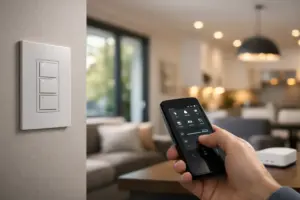
A professionally programmed control interface can present plain-language choices such as Watch Movie, Play Console, Listen to Music, or Patio TV. Behind that single command, the system powers the correct devices, selects inputs, recalls lighting scenes, positions motorized shades when appropriate, and sets the room to the intended volume level.
The control experience should be tailored to the room. A dedicated theater may use an in-wall touchscreen and handheld remote. A casual family room may benefit from a compact remote with only the commands used most often. Outdoor zones need weather-appropriate controls and a design that keeps equipment safely indoors whenever possible.
Voice control can be useful for simple actions, but it should not be the only method. Physical controls and well-designed touch interfaces remain essential when fast response and predictable operation matter.
Design for Heat, Power, and Service Access
High-performance consoles, computers, amplifiers, video processors, and network equipment generate heat. When equipment is placed in a closed cabinet without airflow, thermal buildup can shorten component life and cause intermittent failures. A proper equipment rack includes planned ventilation, organized connections, labeled wiring, and service access that does not require dismantling cabinetry.
Power management is equally important. Quality surge protection and battery backup for critical network and control equipment help protect the system during power events and allow for an orderly shutdown when necessary. In areas susceptible to seasonal storms, this level of preparation is a sensible part of protecting a significant technology investment.
Clean workmanship also matters long after installation day. Clearly labeled cables, documented connections, and a logical rack layout make future service, upgrades, and troubleshooting faster and less disruptive.
Build Flexibility Into the Whole-Home AV System
Entertainment technology changes quickly, while the home’s infrastructure should last for years. The goal is not to predict every future source or display. It is to create enough capacity that upgrades do not require opening finished walls or redesigning the entire system.
That means installing appropriate conduit where possible, pulling additional category cable to key locations, allowing rack space for future components, and selecting distribution equipment with realistic expansion capacity. It also means coordinating early with architects, builders, interior designers, and lighting professionals so displays, speakers, controls, shades, and equipment locations support the home rather than competing with it.
A high-end whole-home AV system should feel intentional in every room. With a performance-first design, clean installation, and ongoing support, the technology stays in the background while the experience takes center stage. Sentry Audio Video approaches these projects as complete environments, with the engineering and accountability required to keep them performing long after move-in day.