A well-designed smart home should feel less like a collection of devices and more like a property that anticipates the way you live. The most meaningful smart home technology trends are not about adding another app or voice command. They are about bringing entertainment, security, lighting, shading, climate, outdoor spaces, and network infrastructure into one reliable experience.
For homeowners investing in a new build, major renovation, or luxury property upgrade, the question is no longer whether smart technology belongs in the home. The better question is which systems deserve to be integrated from the start, and how they will continue to perform years after installation.
Smart Home Technology Trends Shaping Premium Properties
Centralized control is replacing fragmented apps
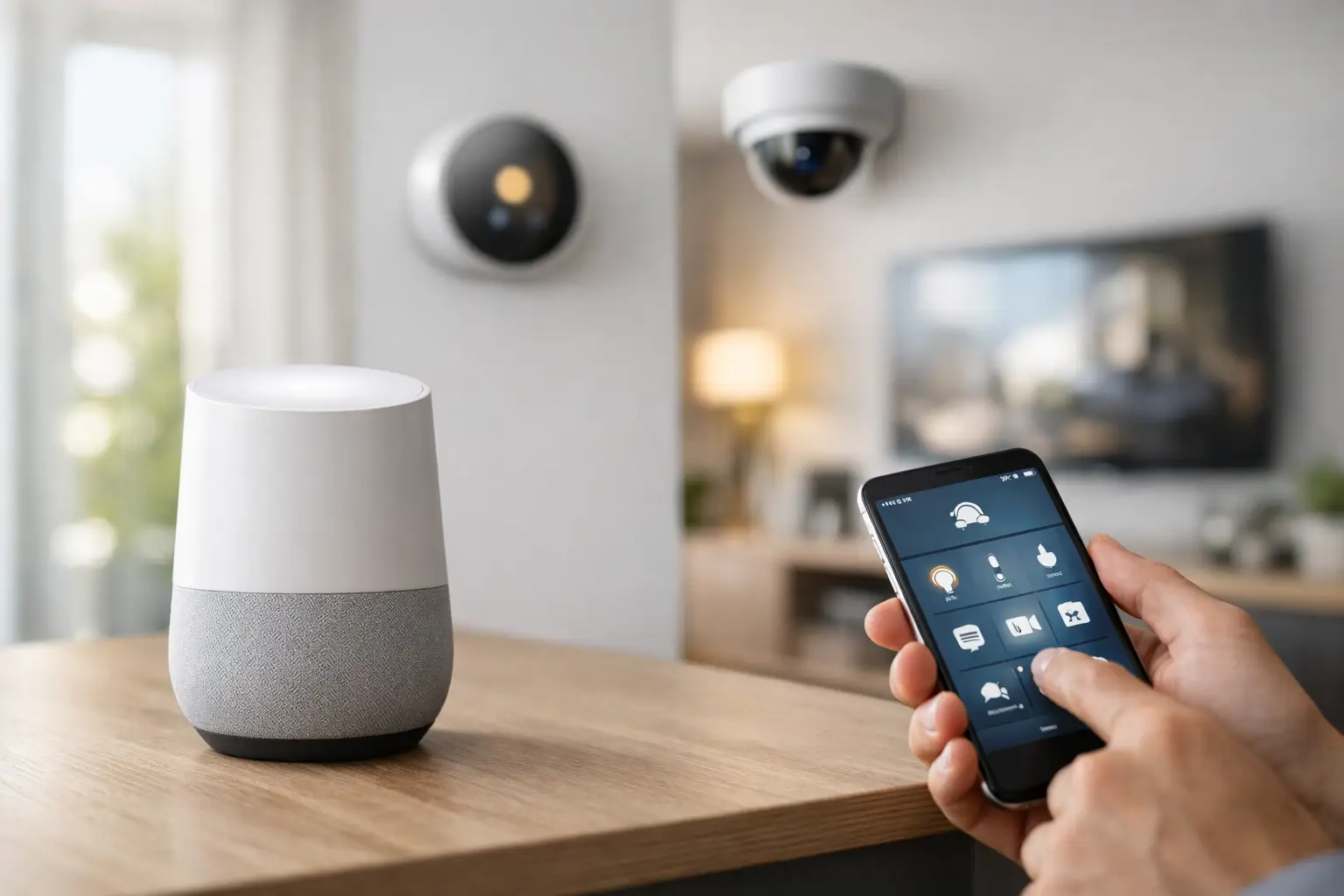
A home can have excellent equipment and still be frustrating to operate when every room, camera, shade, and audio source requires a separate interface. Centralized control remains one of the most valuable trends because it brings essential functions into a consistent, intuitive experience.
A professionally programmed control system can place lighting scenes, motorized shades, whole-house music, video distribution, security cameras, gates, pool features, and climate settings in one place. A homeowner might select a “Goodnight” scene that turns off selected lights, lowers shades, arms the security system, adjusts temperatures, and confirms that exterior doors are secured.
The goal is not to automate every possible action. Over-automation can feel intrusive or confusing when it does not match a household’s routines. The strongest designs focus on the moments that occur repeatedly: arriving home, entertaining, preparing for bed, opening the home in the morning, and leaving for travel.
Lighting and shades are becoming part of the architecture
Lighting control and motorized shading have moved beyond convenience. They now play a central role in how a home looks, feels, and performs throughout the day.
In South Florida, where intense sun, privacy, and expansive glass are common design considerations, automated shades can respond to time of day, room orientation, and homeowner preferences. The same system can preserve views when desired while reducing glare in a media room or protecting furnishings from prolonged direct sunlight.
Layered lighting scenes make rooms more adaptable without filling walls with switches. A kitchen can shift from bright task lighting in the morning to a lower, warmer setting for dinner. Outdoor lighting can support entertaining while maintaining appropriate illumination around walkways and entry points. These are details that make a property more comfortable and polished every day.
Whole-home audio is extending outdoors
Outdoor living has become a true extension of the home, especially for properties with pools, covered patios, summer kitchens, and waterfront entertaining areas. As a result, distributed audio is increasingly designed as a whole-property system rather than an indoor-only amenity.
High-performance outdoor speakers can provide even coverage across a patio, pool deck, garden, or lounge area without relying on a few overly loud speakers mounted in one location. Proper placement matters. The system should deliver clear sound where people gather while respecting adjacent rooms and neighboring properties.
Integrated outdoor entertainment also benefits from a unified control platform. Homeowners should be able to choose music, adjust volume by zone, and control outdoor displays without searching for remotes or navigating multiple applications. Equipment selection, weather protection, wiring paths, and network coverage all influence the long-term result.
Home theaters are becoming flexible media environments
Dedicated theaters remain a powerful feature in luxury residences, but the expectation has evolved. Clients want cinematic performance without sacrificing ease of use. They also want media spaces that work for a family movie night, a major event, casual viewing, or quiet listening.
That requires more than a large display or projector. Acoustic treatment, speaker placement, screen selection, room lighting, seating layout, control programming, and proper ventilation planning all affect performance. A theater should be designed around the room and the client’s viewing habits, not assembled from a generic equipment list.
Multi-purpose media rooms present a different opportunity. They can pair architectural speakers, a premium display, automated shading, and scene-based lighting to create an elevated viewing experience without making the room feel like a dedicated theater. The right solution depends on how the space will actually be used.
Security is becoming more intelligent and more discreet
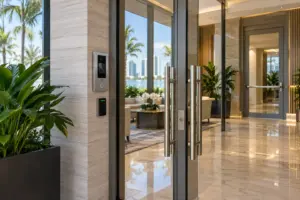
Video surveillance, access control, intrusion detection, and property monitoring are increasingly expected to work together. Homeowners want clear visibility at gates, entryways, garages, docks, and perimeter areas, but they also want systems that are thoughtfully positioned and easy to manage.
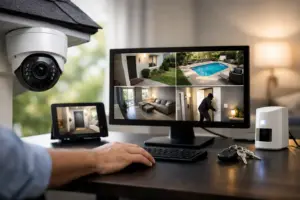
The trend is toward better information rather than more notifications. A well-designed surveillance system should help distinguish meaningful activity from routine movement, provide dependable image quality in changing light, and make it easy to review footage when needed. Camera placement should be determined by sight lines, lighting conditions, privacy considerations, and the property’s security priorities.
For second homes and frequently traveled households, remote awareness is especially valuable. However, remote access is only as dependable as the underlying network, power protection, and system configuration. Security should never be treated as an isolated add-on after construction is complete.
The Infrastructure Behind Smart Home Technology Trends
The visible interfaces get attention, but the most important work often happens behind the walls. Structured cabling, wireless design, equipment racks, backup power, and network segmentation are the foundation for every connected system in the home.
A premium property may have multiple wireless access points, streaming sources, cameras, touch panels, audio zones, motorized shades, control processors, and guest devices operating at the same time. Without a carefully planned network, performance becomes inconsistent. Video may lag, controls may respond slowly, and coverage may fall short in outdoor areas or rooms with dense construction materials.
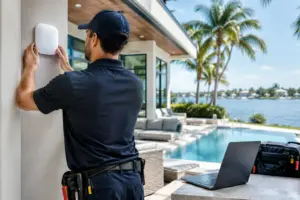
Wired connections remain essential for many high-demand components, including displays, access points, surveillance cameras, and equipment locations. Wireless technology adds flexibility, but it should complement a designed infrastructure rather than replace it. This is particularly important during renovations, when pathways and low-voltage wiring can be planned before walls are finished.
A clean, labeled equipment rack also makes a measurable difference. It protects equipment, simplifies service, improves airflow, and gives future upgrades a clear path. The homeowner may never need to see it, but they will notice the difference when systems operate consistently.
Privacy and ownership deserve early attention
Connected homes collect information through cameras, access systems, occupancy sensors, voice interfaces, and network-connected equipment. Privacy should be part of the original design conversation, not an afterthought.
Homeowners should understand who has access to their systems, how remote management is handled, which alerts are enabled, and how credentials are maintained. A professional integrator can configure appropriate user permissions, secure network practices, and remote support procedures without making daily operation complicated.
There is also a practical ownership question. Systems should be documented, clearly labeled, and designed so that future service does not depend on guesswork. Premium integration is not merely about installation day. It is about maintaining clarity and control as a property evolves.
What to Prioritize During a Renovation or New Build
The best time to plan integrated technology is before finishes are finalized. That does not mean every decision must be made immediately, but the infrastructure and spatial requirements need early coordination with the architect, builder, designer, and other project partners.
Start with lifestyle zones. Consider where the family gathers, where guests enter, which rooms need privacy, how outdoor spaces will be used, and where security coverage is most valuable. Then identify the systems that should work together. A media room may need lighting, shades, audio, video, and control. An entry sequence may combine gate access, cameras, pathway lighting, and intercom communications.
It is also wise to plan for change. Leaving capacity in wiring pathways, equipment racks, and network design makes a home more adaptable as needs shift. Not every emerging feature is worth adopting immediately, but a well-prepared infrastructure gives homeowners options without reopening finished walls.
For properties in Boca Raton, Fort Lauderdale, and surrounding South Florida communities, Sentry AV approaches these decisions as an integrated design challenge. The priority is a clean installation, carefully selected equipment, intuitive control, and long-term support from a team that understands the full system.
The strongest smart home is rarely the one with the most features. It is the one that makes a busy household feel more secure, more comfortable, and more enjoyable to live in – with technology that works reliably in the background when it matters most.