A wall of glass can be a defining feature of a home, office, restaurant, or waterfront property – until afternoon glare, heat, and privacy needs turn it into a daily frustration. The right motorized shade control options make window treatments part of the property’s overall environment, not another set of cords and remotes to manage.
For high-performance spaces, the question is not simply whether shades should be motorized. It is how they should respond to the way the space is used. A well-designed system can lower shades at sunset, protect furnishings during the brightest hours, create privacy with one command, and coordinate with lighting, climate, and audiovisual systems. The result is comfort that feels intentional and technology that works quietly in the background.
Why Shade Control Deserves a System-Level Plan
Motorized shades solve obvious problems: they are easier to operate, safer around children and pets, and more polished on tall or hard-to-reach windows. Their greater value comes from automation and integration. When shades operate as part of a complete control system, they can respond to time of day, occupancy, room activity, and custom scenes rather than requiring constant manual adjustment.
In South Florida, solar exposure is a significant design consideration. Large expanses of glass create exceptional views while introducing intense glare and solar heat. In New York, privacy, insulation, and light management may carry equal weight, especially in urban residences and commercial settings. The correct fabric, motor, power method, and control approach depend on the property’s architecture and the owner’s priorities.
This is why shade selection should happen early in a new build or renovation whenever possible. Wiring pathways, recessed pockets, control locations, and fabric choices all affect the finished appearance and long-term reliability. Retrofitting can still deliver an excellent result, but early planning creates more options for a clean installation.
Motorized Shade Control Options That Fit Real Life
There is no single control method that suits every room. The strongest systems give occupants a few intuitive ways to operate shades while maintaining centralized programming behind the scenes.
Handheld remotes
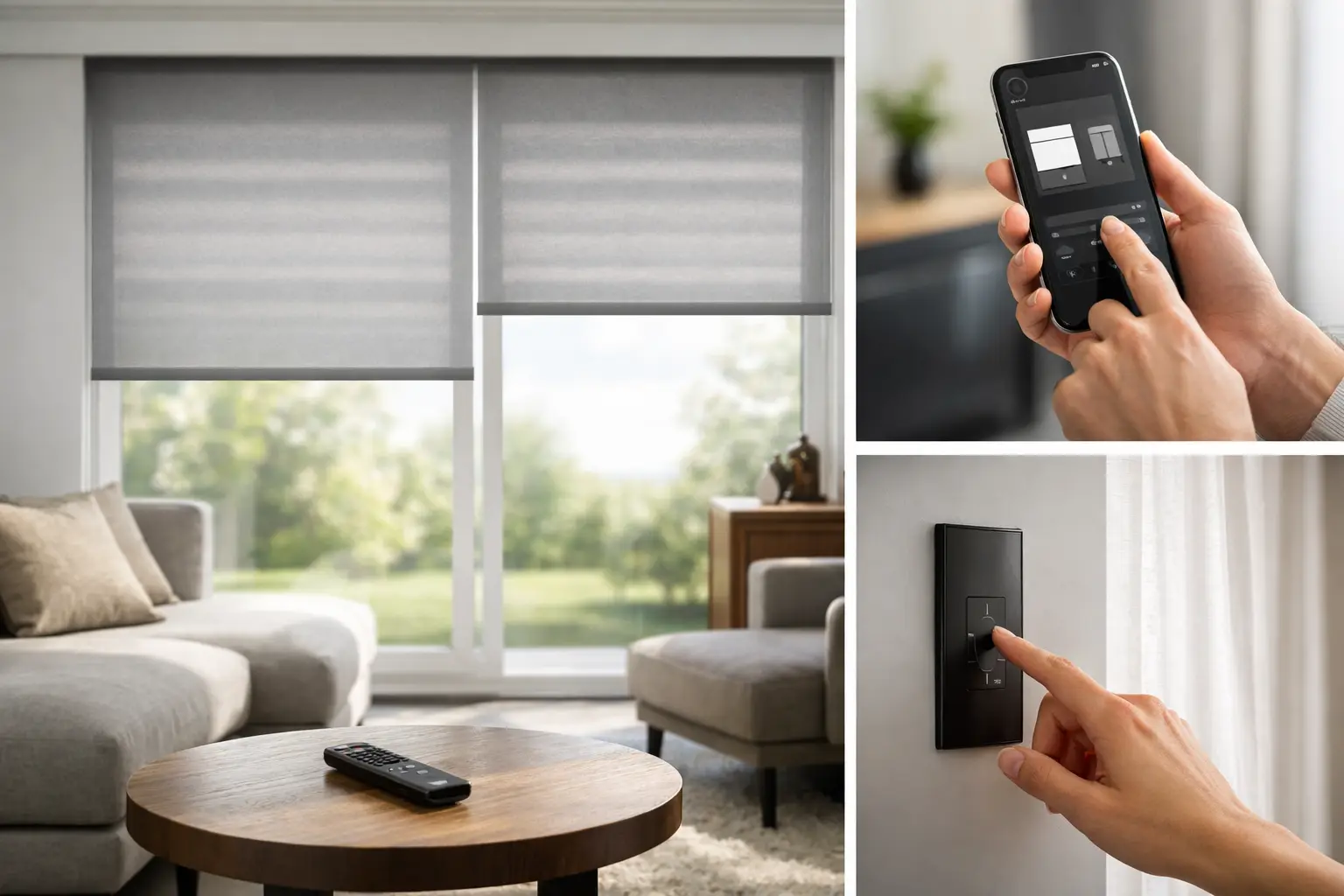
A dedicated remote is familiar and immediate. It can control one shade, a group of shades, or an entire room, making it a practical choice for bedrooms, media rooms, and smaller spaces. A remote is also useful for guests who may not be familiar with the larger automation system.
The trade-off is that remotes can be misplaced and may not be the ideal primary interface for a large residence or business. They work best as one layer of control rather than the only layer.
Wall keypads
Professionally installed keypads provide dependable, always-available control at the entrance to a room. A single button can raise or lower a selected group of shades, while engraved labels make operation clear for family members, employees, and visitors.
Keypads are especially effective when paired with scene programming. A button labeled “Entertain,” for example, can adjust shades, lighting, and audiovisual settings together. In a conference room, “Presentation” can lower the appropriate shades and prepare the display for use. The goal is not more buttons. It is fewer decisions at the moment the room needs to change.
Touchscreens and smart home apps
Touchscreens and mobile apps offer a visual way to manage shades across the property. Users can see individual rooms, adjust groups of window treatments, and activate scenes from a central interface. For larger homes and commercial properties, this level of visibility is valuable because it gives the owner or manager control without walking from room to room.
App-based control is convenient, but it should not replace physical controls where immediate access matters. A professionally designed system balances both: a keypad for fast daily use and a touchscreen or app for broader management and personalization.
Voice control
Voice commands can be useful when hands are full or when a room is being used casually. Asking for shades to lower in a kitchen, family room, or bedroom can feel natural. However, voice control works best as a convenience feature, not the foundation of the system.
Privacy preferences, changing voice platforms, and the need for a reliable fallback make keypads and automation scenes essential. The most dependable installations do not require a voice command to perform a basic function.
Automated Schedules and Custom Scenes
Scheduling is where motorized shades become a proactive part of the property. Instead of reacting to glare after it is already affecting a room, shades can move according to a schedule that supports the daily rhythm of the space.
Morning settings might open bedroom shades gradually and raise common-area shades after sunrise. During peak sun hours, solar shades can lower in exposed rooms to reduce glare on displays and help protect hardwood floors, artwork, rugs, and furnishings. Evening scenes can close privacy shades throughout the home while leaving selected areas open to preserve a view.
For commercial settings, schedules support consistent operations. A restaurant can prepare its dining room for changing light conditions. An office can reduce screen glare before meetings begin. A retail environment can preserve storefront visibility while managing direct sunlight. These actions can be programmed to run consistently, with manual overrides available when the day calls for something different.
Scenes are equally valuable. “Goodnight” can close designated shades, turn off selected lights, and arm applicable security settings. “Movie” can lower blackout shades and set the lighting for a theater-quality experience. “Away” can place shades into a chosen position that supports privacy and gives the property a lived-in appearance.
Selecting Power and Communication Methods
The control interface is only part of the decision. Every motorized shade system also needs a dependable power and communication strategy. This is where professional planning protects both performance and aesthetics.
Wired power
Hardwired shades receive power through low-voltage wiring installed during construction or renovation. This is often the preferred choice for larger projects, frequently used shades, and windows that are difficult to access. It eliminates routine battery replacement and supports a clean, built-in finish.
Wired systems require coordination before walls are closed and finished surfaces are complete. For clients planning a major renovation or new construction project, that coordination is one of the most valuable reasons to bring an integration team into the design process early.
Battery-powered shades
Battery-powered motors can be an effective solution for completed homes where running new wire would be disruptive. They offer flexibility and can preserve finished walls and ceilings. Their suitability depends on shade size, frequency of operation, and accessibility for battery service.
For a lightly used bedroom shade, battery power may be an excellent fit. For a large bank of shades that runs several times every day, hardwired power is typically the more practical long-term choice. Rechargeable options may reduce maintenance, but they still need a plan for regular charging.
Wireless and wired communication
Many shade systems communicate wirelessly, allowing clean control integration without extensive additional wiring. Quality matters here. A properly designed wireless system accounts for the building materials, window locations, distance between devices, and the overall technology environment in the property.
Wired communication may be appropriate in larger or more complex installations where maximum consistency is required. The right choice is based on the specific site, not a one-size-fits-all preference.
Fabric and Shade Style Matter as Much as Control
A sophisticated control system cannot compensate for the wrong window treatment. Fabric openness, color, opacity, and shade type directly affect glare reduction, view preservation, privacy, and the appearance of the room.
Solar roller shades are often selected for living areas, offices, and waterfront spaces because they filter harsh sunlight while maintaining a connection to the exterior. Blackout shades are better suited to bedrooms, theater spaces, and conference rooms where darkness is required. Dual-shade configurations can combine a solar fabric for daytime use with a blackout layer for nighttime privacy.
Motorized drapery, Roman shades, and specialty window treatments can also be integrated where the interior design calls for a more decorative finish. The motor and control system should be specified around the treatment, window dimensions, mounting conditions, and expected use. This is not merely an automation decision. It is a design and performance decision.
What Professional Integration Changes
A motorized shade project involves more than mounting hardware and pairing controls. The system must be measured precisely, powered correctly, programmed for the client’s routines, and tested as part of the property’s larger technology ecosystem. If shades are tied to lighting, security, climate settings, or audiovisual scenes, every component needs to respond predictably.
Sentry Audio Video approaches motorized shades as part of a complete environment. That means coordinating the shades with the property’s architecture, interior finishes, network, control platform, and daily use patterns. The installation should look clean, operate reliably, and remain easy to support as the property evolves.
Before choosing a system, consider which rooms need glare control, which require true privacy or blackout performance, and how often each shade will move. Think about who will operate the system, whether it needs to work during power interruptions, and how it should interact with existing smart home or commercial controls. Those answers create a far better design than selecting controls based on a single feature.
The most successful shade systems are rarely the ones people talk about every day. They are the ones that quietly put every room in the right light, at the right time, without asking anyone to stop what they are doing.