A missed delivery, an unsecured side entrance, or a visitor left waiting at reception can seem minor on its own. Over time, those small breakdowns affect security, customer experience, and how efficiently your team works. A professionally planned business intercom system installation gives your property a clear, dependable way to identify visitors, communicate across spaces, and manage entry without relying on disconnected systems.
For offices, multifamily properties, private clubs, medical practices, retail locations, warehouses, and commercial buildings, an intercom is no longer just a speaker at the front door. It can become part of a larger communications and security strategy, connecting entry points, video surveillance, access control, mobile credentials, and internal operations. The quality of the installation determines whether that strategy feels simple every day or becomes another system your staff has to work around.
Start With How Your Property Actually Operates
The right system begins with a conversation about traffic, not equipment. Who arrives at the property? Which doors do they use? Does someone need to answer every call from a fixed reception desk, or should authorized staff be able to respond from multiple locations? These details shape the design.
A professional office may need a polished video entry station at the main entrance, with calls routed to a receptionist and designated managers. A warehouse may need durable call stations at vehicle gates, loading areas, and employee entrances. A luxury condominium or private club may require controlled access at several gates, service entries, and amenity spaces, with a clear audit trail of who entered and when.
The system should also reflect the pace of the environment. In a busy reception area, calls need to be answered quickly and transferred without confusion. At a property with limited on-site staffing, remote answering and video verification may be more valuable. There is no single setup that fits every business, which is why site-specific design matters.
What a Business Intercom System Should Do
A well-designed intercom installation should improve both communication and control. At its most basic, it allows a visitor to call the appropriate person or department and receive a response. At a higher level, it verifies identity through video, grants or denies entry, records activity, and keeps authorized personnel informed wherever they are working.
Clear audio is non-negotiable
Intercoms are often installed at doors, gates, garages, loading zones, and other areas with background noise. Microphone placement, speaker quality, enclosure selection, and proper configuration all affect intelligibility. If a visitor has to repeat a name three times or staff cannot understand a delivery driver over ambient noise, the system is not serving its purpose.
Video adds confidence at the door
Video intercoms allow staff to see who is requesting entry before releasing a lock or opening a gate. This matters in client-facing environments, but it is equally valuable at service entrances and employee-only areas. Proper camera positioning is essential. A clear image of a face is more useful than a wide view that leaves the person at the door in shadow.
Access control should feel connected, not separate
The strongest installations integrate intercom functions with access control. A staff member may use a credential for daily entry while visitors call from an entry station. Authorized personnel can release doors from an interior station or secure mobile interface, depending on the system design. When a business intercom system installation is coordinated with access control from the outset, staff have fewer platforms to manage and property owners gain better visibility into entry activity.
Wiring and Network Planning Determine Long-Term Reliability
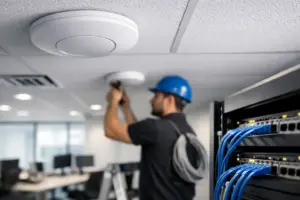
The visible station at the door gets attention, but much of the system’s performance depends on infrastructure behind the walls. Structured cabling, network capacity, power requirements, equipment location, and pathway planning should all be addressed before installation begins.
For new construction and major renovations, this is the ideal time to run the appropriate cabling to entry points, reception areas, network rooms, gates, and future expansion locations. Clean cable routing and properly labeled terminations simplify maintenance and make later upgrades far less disruptive. In an occupied building, the installation plan should minimize interruption while protecting finished surfaces and keeping the final result clean and professional.
Network-based intercom systems offer flexible call routing, video capabilities, and integration potential, but they require a stable, properly configured network. They should not simply be added to an overloaded business network without assessing bandwidth, switching, power over Ethernet needs, segmentation, and security. A system can have premium hardware and still underperform if the supporting network was treated as an afterthought.
Placement Is a Security Decision
A door station should be easy for visitors to find, comfortable to use, and difficult to bypass. That sounds straightforward, yet placement often requires careful field coordination. Mounting height must accommodate the people expected to use it. The station needs adequate lighting, a useful camera angle, weather protection where applicable, and a location that does not create confusion at the entrance.
At gates and vehicle entrances, the planning becomes more detailed. Drivers need a safe place to stop and communicate without blocking traffic. Call stations may need to serve both standard vehicles and larger service vehicles. Gate release must be coordinated with the property’s access rules, and the installation should account for the physical environment rather than forcing a generic design onto the site.
Privacy also deserves attention. Video and audio at an entry point should support legitimate security and operations needs without unnecessarily exposing private areas. For businesses serving clients, patients, residents, or members, that balance is part of a professional design process.
Plan Call Routing Before You Need It
One common failure point is assuming a call will always be answered by the same person at the same desk. Businesses change. Reception coverage shifts, teams move, and management may need visibility into certain entrances after hours.
A thoughtful design establishes how calls are handled during normal business hours, after hours, and when the first recipient is unavailable. A front-door call might ring reception first, then route to a secondary station or an authorized manager. A delivery entrance may call a facilities team directly. Some sites benefit from separate routing for different doors so employees immediately know where a visitor is waiting.
These decisions should be documented and tested during commissioning. Staff should know how to answer a call, communicate with a visitor, grant access when appropriate, and escalate an issue. The goal is not to add complexity. It is to make the correct response easy under normal conditions and during unexpected situations.
Integration Can Reduce Friction Across the Property
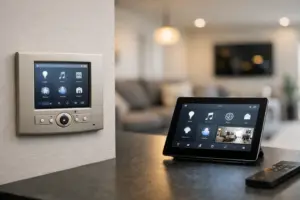
An intercom performs well on its own, but it becomes more valuable when it works alongside the systems that already support the building. Video surveillance can provide additional views around an entrance. Access control can manage credentials and door schedules. Interior displays or control interfaces can give designated staff an efficient way to respond to calls.
Not every business needs every integration. A small professional office may prioritize a refined entry experience and reliable communication with reception. A larger commercial property may need several entry zones, video verification, credential management, and centralized oversight. The right scope depends on risk, staffing, property layout, and the experience you want visitors to have.
The key is avoiding a collection of isolated products that create duplicate work. An experienced integrator evaluates the full environment and designs the system around the way people use the building.
Why Professional Installation Matters
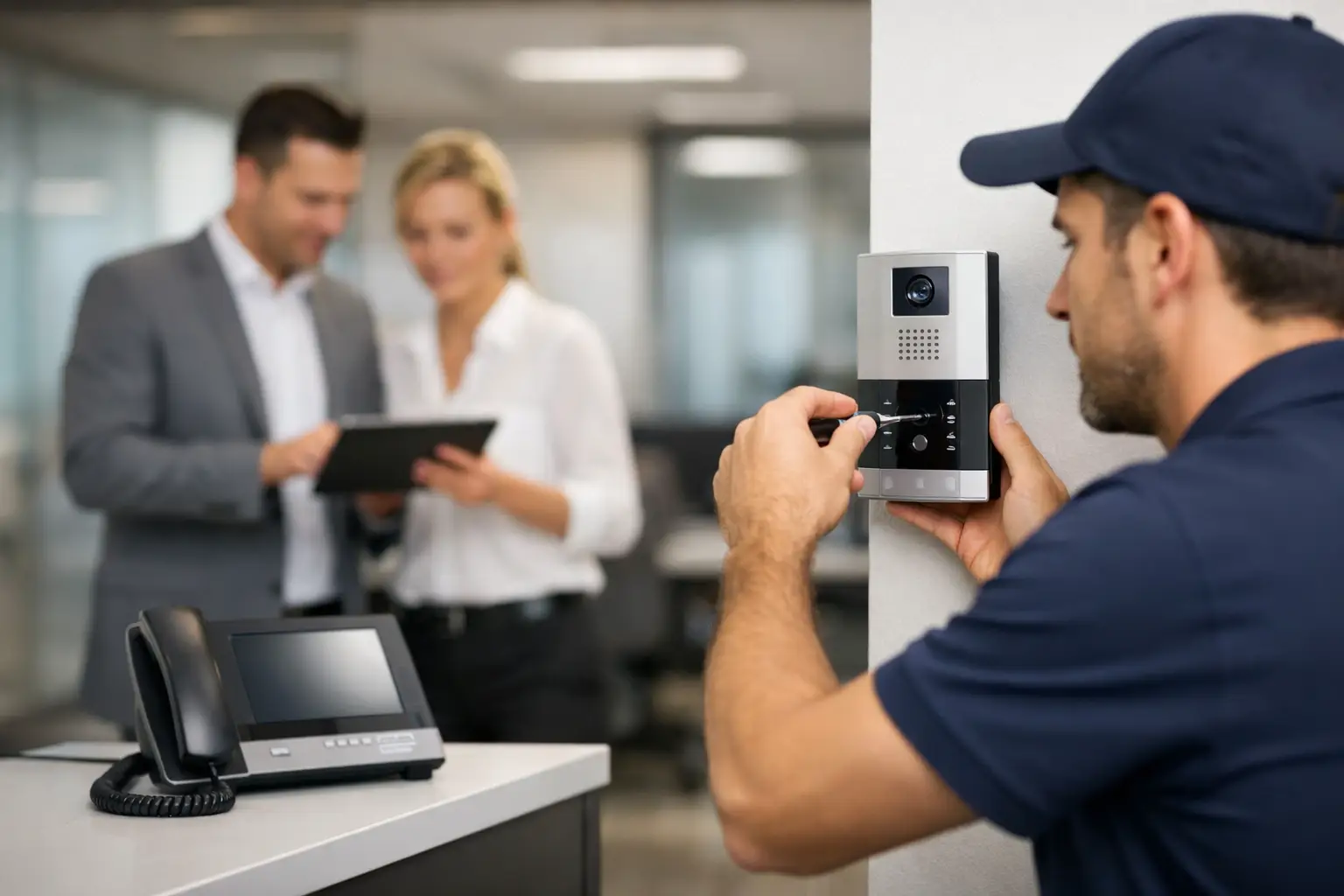
Intercom equipment is only one part of the outcome. Professional installation includes the details that visitors and staff may never see, but will notice when they are missing: secure mounting, protected cable pathways, clean wall finishes, organized equipment racks, properly programmed call routing, consistent labeling, and complete testing.
It also means taking responsibility for the full system. If a door release, camera view, network connection, or call station is not functioning as intended, the issue may cross several technical categories. Working with one trusted integration partner helps prevent the handoffs and uncertainty that can occur when separate providers handle cabling, communications, security, and network infrastructure independently.
For commercial properties in Boca Raton, Fort Lauderdale, and surrounding South Florida communities, Sentry Audio Video designs and installs intercom solutions with the same attention to clean execution, dependable performance, and long-term support that complex properties require.
A Better Entry Experience Starts at the First Call
Your intercom system is often the first interaction a visitor has with your business and one of the first lines of protection for your property. When it is designed around real operations, installed with precision, and supported by the right infrastructure, it gives staff more control without making their day more complicated. A professional consultation can turn a simple entry point into a dependable part of your business environment.