
A four-camera system and a forty-camera system can both be called “video surveillance,” but they live in completely different pricing worlds. That is why video surveillance installation cost is never just about the camera itself. The real number depends on how the property is laid out, what level of coverage you expect, how recordings are stored, and how cleanly the system is designed to perform over time.
For homeowners and business owners investing in a professionally integrated system, the question is not simply “What does it cost?” It is “What level of protection, visibility, and reliability am I paying for?” That distinction matters, because the least expensive proposal on paper can become the most frustrating system to live with if coverage is inconsistent, images are poor, or service is limited when something needs attention.
What affects video surveillance installation cost?
The biggest cost driver is camera count, but that is only the starting point. A larger property typically needs more coverage points, wider lens planning, and more recording capacity. A small residence may only need perimeter coverage, while a waterfront home, estate property, office, retail space, or mixed-use facility may require entrances, parking areas, delivery zones, interior access points, and blind-spot reduction.
Camera type also changes the investment. Fixed cameras are straightforward when the goal is to watch a dedicated area. Varifocal cameras offer more flexibility in framing and identification. Pan-tilt-zoom cameras add active control and are often used in larger commercial environments where operators need to follow movement across a wide space. Specialty low-light or license plate capture cameras add another layer of performance, and with that comes higher equipment and configuration cost.
Then there is image quality. Higher resolution sounds simple, but it affects more than the picture. It can increase storage requirements, bandwidth planning, and recording hardware specifications. A system designed for reliable facial recognition at entry points will be priced differently from one intended mainly for broad situational awareness.
Installation labor is more than mounting cameras
A professional proposal often surprises people because labor is not just “put camera on wall.” Proper installation includes cable routing, termination, testing, device setup, recorder configuration, network coordination, viewing access, and final system calibration. In finished homes or active commercial spaces, labor can increase because technicians must preserve aesthetics, work around schedules, and keep the installation clean and minimally disruptive.
The building itself has a major effect on labor. New construction and major renovations are usually more efficient because pathways can be planned before walls and ceilings are closed. Retrofit projects can take more time, especially in luxury residences, concrete structures, multi-story buildings, or spaces with limited access above ceilings. Outdoor runs, detached structures, gate entries, and long-distance trenching also add complexity.
This is where professional design earns its value. A well-planned system does not just hide wires. It positions devices correctly, protects equipment from environmental issues, and avoids the common problem of spending money on cameras that cannot actually deliver usable footage when it matters.
Typical video surveillance installation cost ranges
There is no single universal price, but realistic ranges help set expectations. For a professionally installed residential system with a modest number of quality cameras, central recording, mobile access, and clean cabling, many projects begin in the low thousands and scale upward based on coverage and finish requirements.
A more comprehensive residential installation for a larger home or luxury property can move well beyond that range once advanced camera placement, extended exterior coverage, higher storage retention, integration with gates or access control, and architectural considerations are part of the scope.
Commercial pricing tends to vary even more. A small office or boutique location may land in a moderate range if the layout is simple and the camera count is controlled. A larger facility, multi-tenant property, restaurant group, warehouse, or high-traffic retail environment can quickly move into a significantly higher investment due to expanded coverage, infrastructure coordination, and retention requirements.
As a broad planning reference, professionally installed systems often fall into these general tiers:
- Smaller residential systems may start around $3,000 to $7,500.
- Larger or more customized residential systems often range from $8,000 to $25,000 or more.
- Small commercial systems may begin around $5,000 to $15,000.
- Mid-size to large commercial installations can range from $15,000 to $100,000 and beyond.
Those numbers are directional, not promises. A simple property with easy access can come in lower than expected. A visually demanding residence or operationally sensitive business can exceed averages quickly.
Why storage and remote access matter to cost
One of the most overlooked parts of video surveillance installation cost is recording strategy. How long do you want footage retained? Are cameras recording continuously, only on motion, or through a hybrid setup? How many users need access, and from where?
Longer retention periods require more storage. Higher-resolution cameras require even more. A business that wants several weeks of reliable playback across multiple cameras will need a different recorder and storage architecture than a homeowner who only wants to check motion events from the last few days.
Remote access also needs to be done properly. Secure app setup, network configuration, user permissions, and dependable system communication all affect the final scope. This is especially important for clients with multiple properties or managers who need visibility without sacrificing security.
Integration can raise value as much as cost
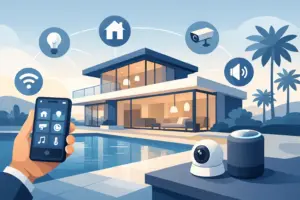
A stand-alone camera system is one thing. An integrated property protection system is another. When surveillance is tied into alarms, access control, intercoms, gates, lighting scenes, or a broader smart property platform, the project becomes more capable and more tailored to the way the property is actually used.
That integration typically increases cost, but it can also improve daily convenience and incident response. A homeowner may want to see the front gate camera and open access from the same interface. A business owner may want video tied to door activity or user permissions. Those use cases are not add-ons for the sake of technology. They are practical improvements in awareness and control.
For many premium properties, the right question is not whether integration adds cost. It is whether separate systems create unnecessary friction, multiple apps, and weaker oversight.
Residential and commercial pricing are different for a reason
Homeowners often prioritize perimeter awareness, package visibility, gate monitoring, pool areas, and entry points. The system has to perform well without disrupting architecture or interior finishes. In higher-end homes, visual discretion matters almost as much as technical performance.
Businesses usually have a wider mix of priorities. They may need employee safety, customer area visibility, after-hours monitoring, inventory protection, receiving coverage, liability review, and long-term video retention. They may also need systems designed around insurance requirements, internal policies, or multi-user administration.
Because the goals are different, the pricing model is different too. Commercial projects often require more planning around scalability, network load, compliance expectations, and operational uptime. Residential projects often require more finish sensitivity and integration with lifestyle systems. Neither is inherently simpler. They are simply built around different standards of success.
How to evaluate a proposal beyond the price
When reviewing quotes, the lowest total is rarely the clearest indicator of value. Start by looking at scope. How many cameras are included, and why were those locations selected? Is the proposal designed around identification, deterrence, or broad observation? Does it include recording equipment sized for your actual needs, or only the minimum needed to keep the number attractive?
Pay attention to workmanship and support. Clean cable management, thoughtful placement, reliable programming, and post-installation service are part of system performance. A surveillance system is not finished the moment the cameras turn on. It has to remain dependable through weather, network changes, firmware updates, and normal day-to-day use.
It is also worth asking whether the installer understands the full property ecosystem. On projects where surveillance touches networking, automation, access control, audio/video, or structured cabling, working with a company that can coordinate the entire environment often leads to better results and fewer handoff issues.
The smart way to plan your investment
If you want an accurate number, the process should begin with a site-specific assessment. That means understanding sightlines, entry patterns, lighting conditions, architectural constraints, and how you actually want to use the system. A strong design can sometimes reduce unnecessary camera count while improving coverage. In other cases, it reveals that a property needs more infrastructure than expected to avoid blind spots or weak performance.
For clients in markets such as Boca Raton, Fort Lauderdale, and other high-value residential and commercial environments, this planning stage is especially important. Properties are often larger, finish standards are higher, and expectations around aesthetics and reliability leave less room for shortcuts.
Sentry Audio Video approaches surveillance as part of a broader commitment to system performance, clean execution, and long-term support. That matters because a well-installed camera system should feel dependable from day one and remain that way long after installation is complete.
If you are comparing options, focus on the outcome you want to live with for years, not just the number attached to the initial proposal. The right system is the one that sees what it should, works when you need it, and fits the property as if it belonged there from the start.