A camera mounted in the wrong place can create a false sense of security for years. It records activity, but misses faces at the entry, leaves blind spots at loading areas, or produces footage too poor to use when something actually happens. That is why business video surveillance systems are not just about adding cameras – they are about designing visibility where your operation is most vulnerable.
For business owners, the real question is not whether surveillance matters. It is whether the system supports the way the property works day to day. A retail store, private office, restaurant, warehouse, medical practice, and multi-tenant building all need different camera placement, recording policies, access levels, and retention strategies. The value comes from alignment between the technology and the environment it protects.
What business video surveillance systems should actually do
A well-designed surveillance system should do more than record incidents after the fact. It should help deter theft, support employee and visitor safety, verify deliveries, reduce liability disputes, and give ownership or management clear visibility across the property.
That sounds straightforward, but performance depends on details. Camera resolution matters, but so do lens choice, lighting conditions, mounting height, field of view, and how footage is stored and retrieved. A camera aimed too wide may cover a large area while missing the detail needed for identification. A camera aimed too tight may capture faces clearly but fail to show the broader context of an event. Good design balances both.
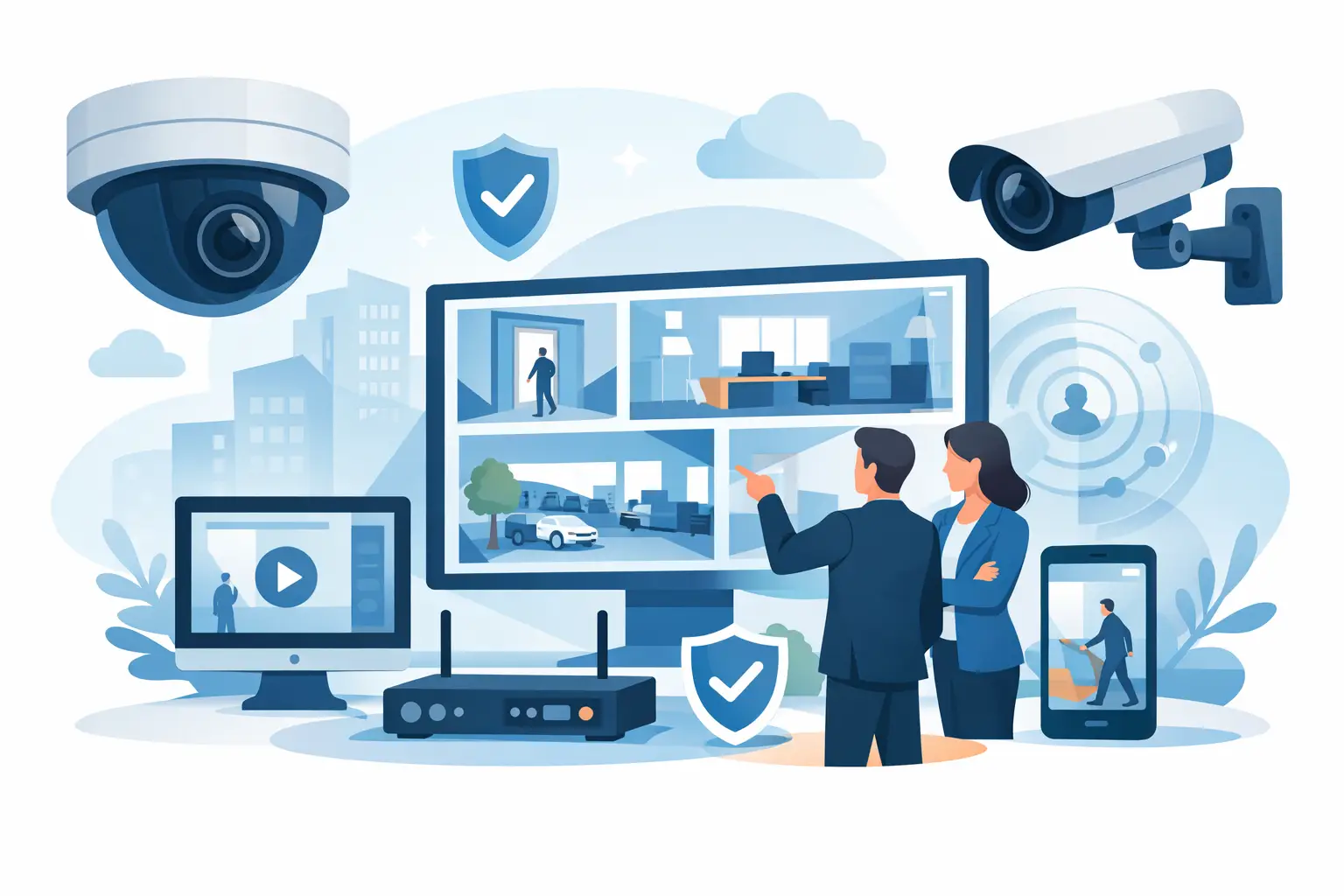
For many businesses, remote access is now expected. Owners want to check activity after hours, managers want to verify openings and closings, and security teams want immediate access when an alert comes in. Remote viewing is useful, but only when it is secure, easy to use, and set up with proper permissions. Not every user should have the same level of access, and that control matters more as organizations grow.
The difference between camera quantity and system quality
It is easy to assume more cameras means more protection. In practice, camera count is only one part of the equation. Too many poorly placed cameras can generate clutter without improving accountability. A smaller number of properly selected and strategically placed cameras often performs better.
System quality starts with a site-specific plan. Entry points, cash handling areas, customer interaction zones, parking lots, perimeters, hallways, elevators, server rooms, and back-of-house operations all present different risks. Some areas need broad situational awareness. Others require clear, forensic-level detail. The system should reflect those priorities.
There is also the issue of environmental demands. Indoor cameras in climate-controlled offices face different conditions than cameras placed outdoors in coastal South Florida, where heat, humidity, glare, and storms can affect long-term reliability. Premium hardware and professional installation are not cosmetic upgrades – they directly influence image quality, uptime, and service life.
Key design decisions in business video surveillance systems
The most effective systems are built around a few core decisions.
Coverage goals
Before choosing hardware, it helps to define what each camera needs to accomplish. Are you trying to identify a face, monitor traffic flow, document transactions, or watch for after-hours intrusion? One camera type will not serve every purpose equally well.
For example, a front entrance may need strong facial identification in changing light conditions. A warehouse floor may need wide-area visibility. A parking lot may need infrared performance and careful positioning to reduce glare from headlights. When those goals are clear, product selection becomes more precise.
Recording and storage
Storage is often overlooked until someone needs footage from three weeks ago and discovers it was overwritten. Retention should be based on risk, compliance requirements, operational habits, and incident history. A busy property with constant motion may consume storage much faster than an office with limited after-hours traffic.
Cloud, local, and hybrid storage models each have advantages. Local recording can offer strong control and fast playback. Cloud-based options can improve accessibility and off-site resilience. Hybrid systems can provide a practical balance. The right answer depends on the business, the network, and the level of redundancy expected.
Network and cybersecurity
Modern surveillance is part of the larger business technology environment. Cameras, recorders, remote apps, and user permissions all sit within a connected system, which means cybersecurity cannot be treated as an afterthought.
This is where experienced integration matters. Surveillance should work cleanly with the network infrastructure, not compete with it. Segmentation, secure remote access, firmware management, and credential control all play a role in protecting the system from becoming a weak point.
Ease of use
A powerful system that is difficult to navigate tends to be underused. Owners and managers need an interface that makes sense in real working conditions. Finding footage, exporting clips, reviewing alerts, and switching between locations should be straightforward. If daily use feels cumbersome, response times suffer.
Where many businesses get surveillance wrong
One common mistake is treating surveillance like a product purchase instead of an operational system. Cameras are selected from a spec sheet, installed quickly, and expected to solve every security concern on their own. The result is often uneven coverage, confusing footage management, and no clear plan for support.
Another issue is failing to think beyond the building interior. Exterior coverage often determines whether a system captures the beginning of an incident rather than only the aftermath. Parking areas, service entrances, alleys, gates, and dumpster enclosures may not seem central until a vehicle is damaged, a delivery goes missing, or someone accesses the property from an unmonitored side.
Lighting is another major factor. Even high-resolution cameras can struggle in poor conditions. Shadows, backlighting, reflective glass, and nighttime transitions all affect usability. A professional design accounts for the environment instead of assuming the camera will compensate for everything on its own.
Why integration matters more than most buyers expect
Surveillance works better when it is not isolated. For many properties, cameras should coordinate with access control, alarm systems, intercoms, and network infrastructure. When these systems communicate, operators can verify events faster and respond with more confidence.
If a door is forced open after hours, management should be able to review the related camera view immediately. If a visitor requests access at a gate or entrance, video verification should be quick and clear. If multiple locations need oversight, the system should present them in a unified and manageable way.
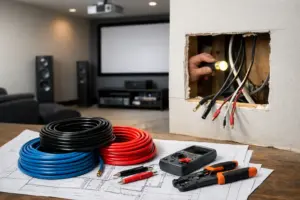
This integrated approach is particularly valuable for businesses with a premium customer environment or a high standard for daily operations. The technology should protect the property without becoming intrusive or difficult to manage. Clean installation, organized wiring, thoughtful camera placement, and polished user interfaces all contribute to that result.
Choosing a partner, not just equipment
When evaluating surveillance options, the conversation should include design, installation standards, training, service response, and long-term support. Equipment matters, but so does the team standing behind it.
A qualified integration partner will ask how the property operates, who needs access, what incidents concern you most, how long footage should be retained, and how surveillance fits into the larger security and IT picture. That process leads to a system that feels intentional rather than pieced together.
For businesses in markets such as Boca Raton, Fort Lauderdale, and surrounding coastal communities, presentation and reliability often matter just as much as raw functionality. A visible camera can deter the wrong behavior, but a professionally integrated system also reinforces that the property is well-managed, secure, and taken seriously. That matters for staff confidence, tenant expectations, and customer perception.
Sentry Audio Video approaches surveillance the same way it approaches every integrated technology environment – with careful planning, clean execution, and ongoing accountability for performance.
How to think about return on investment
The return on surveillance is not always measured by a single prevented incident. Often it shows up in reduced loss, faster dispute resolution, stronger operational oversight, lower exposure to false claims, and greater peace of mind for ownership and management.
It also depends on the business. In one setting, the priority may be employee safety. In another, it may be inventory protection, after-hours visibility, or multi-site oversight. That is why the right system is rarely the one with the longest feature list. It is the one that performs consistently in the ways your business actually needs.
A strong surveillance system should feel dependable in the background and decisive when needed. If you only think about it during a problem, that is fine – as long as it works exactly as expected when that moment arrives.
The smartest next step is to look at your property the way an incident would. Where would someone enter, where would accountability matter most, and would your current system give you a clear answer? That is where better protection begins.