A beautiful media room can still feel underwhelming when dialogue gets lost, bright scenes wash out, or the system requires a stack of remotes to operate. Premium home cinema upgrades address the details that separate a large screen from a genuinely immersive, dependable entertainment space. The goal is not simply more equipment. It is a room where the picture, sound, lighting, seating, and control work together from the moment the system turns on.
For homeowners investing in a dedicated theater, a refined family room, or a multipurpose entertainment area, the right improvements should be guided by how the room is actually used. A cinematic experience is built around performance, comfort, and the confidence that everything will operate as intended.
Start With the Room, Not the Equipment
The most successful theater projects begin with a proper room assessment. Room dimensions, ceiling height, window placement, wall construction, seating distance, and natural light all affect the final result. A display that performs beautifully in a controlled theater may not be the right choice for an open-concept room with expansive glass and daytime viewing.
This is where professional design matters. Screen size must match viewing distance and resolution, but it also needs to feel proportionate to the room. Speaker placement must support accurate sound without compromising the architecture. Equipment locations, ventilation, wire paths, and service access should be planned before finishes are complete.
A custom design also gives homeowners choices with clear trade-offs. A projection system can create a dramatic, larger-than-life image in a light-controlled theater. A premium direct-view display can offer exceptional brightness and contrast in a living space that sees regular daytime use. Neither is universally right. The better solution is the one designed around the room and the family’s viewing habits.
Premium Home Cinema Upgrades With Real Impact
A display engineered for the viewing environment
Picture quality is often the first improvement people notice, but screen size alone does not define it. Black levels, contrast, color accuracy, motion handling, brightness, and content calibration shape whether films look dimensional and natural or merely bright.
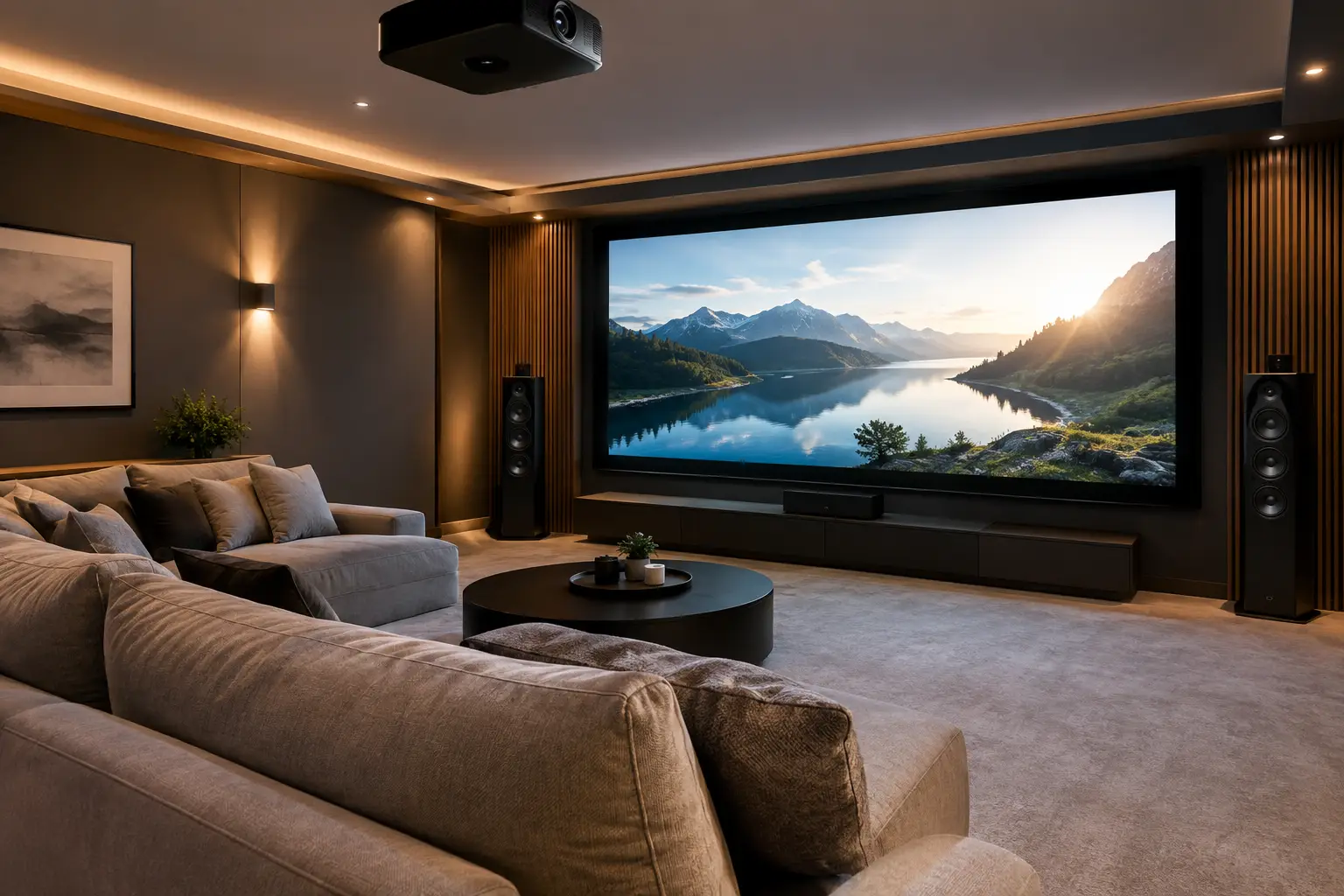
For a dedicated cinema, a high-performance projector and acoustically transparent screen may allow speakers to sit behind the image, recreating the visual and sonic relationship intended in a commercial theater. In brighter spaces, a premium large-format display may deliver more consistent daytime performance. Automated shades can further improve either option by controlling glare and protecting the viewing environment without asking the homeowner to manually adjust the room each time.
Surround sound that puts every seat in the scene
A premium theater should make dialogue clear at normal listening levels, carry the impact of a soundtrack without harshness, and maintain a convincing sound field beyond the center seat. That requires more than adding speakers around a room.
Speaker locations need to be calculated for the seating plan. Subwoofers need to be placed and calibrated to avoid uneven bass, where one chair receives overwhelming low end while another receives very little. Ceiling speakers, when selected and positioned correctly, add height and movement to compatible content. The result is sound that feels spacious and intentional rather than loud for its own sake.
Acoustic treatment is often one of the most valuable upgrades because it addresses the room itself. Hard surfaces can create reflections that blur dialogue and fatigue the listener. Strategically integrated acoustic panels, fabric finishes, and sound control measures help the system perform closer to its potential while preserving the room’s design.
Seating designed around comfort and sightlines
Theater seating should support the screen, not compete with it. Seat height, recline position, row spacing, and riser design affect whether every viewer has a comfortable, unobstructed view. In a dedicated theater, a second row may need a carefully engineered platform rather than a simple elevation change.
Comfort also affects how long the room gets used. Premium seating can incorporate power recline, headrest adjustments, subtle task lighting, and thoughtful placement of controls. The objective is not to overload the room with features. It is to create a space where a family can settle in for a full feature presentation without distraction.
Lighting that supports the image and the atmosphere
Lighting is frequently the difference between a theater that looks impressive in photographs and one that performs beautifully during a movie. Bright, uncontrolled overhead fixtures can reflect on the screen and diminish contrast. At the same time, a completely dark room can be impractical when guests are arriving, using steps, or leaving the theater.
Layered lighting provides the answer. Low-level pathway lighting improves safety. Dimmable sconces or cove lighting set the atmosphere. Controlled accent lighting can highlight architectural details before the presentation begins. With integrated lighting scenes, the room can transition from entertaining mode to viewing mode with a single command.
Control that makes the system easy to enjoy
Even extraordinary equipment becomes frustrating if operation is complicated. A premium home cinema should not require memorizing input selections, adjusting multiple remotes, or troubleshooting a connection before every movie.
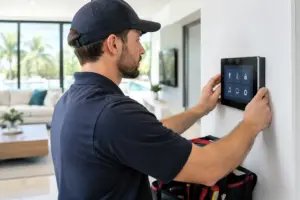
A professionally integrated control system brings the theater into one intuitive interface. A single button can power the system, lower shades, set lights to the preferred level, select the right source, and prepare the audio system. The same control can offer clearly labeled options for movies, music, sports viewing, or casual television without exposing the complexity behind the scenes.
Reliability is as important as convenience. Clean rack installation, labeled connections, stable network design, surge protection, appropriate cooling, and remote support capabilities all contribute to a system that remains dependable long after installation day.
Plan for the Infrastructure Behind the Experience
Some of the most important upgrades are rarely seen. Structured cabling, equipment racks, dedicated ventilation, network capacity, and power management create the foundation for a cinema that can be maintained and expanded thoughtfully.
A concealed equipment rack keeps source components, amplification, networking hardware, and control processors organized and accessible. It also removes heat and visual clutter from the theater. Properly planned wiring avoids visible cables while preserving the ability to service components without opening finished walls or disrupting the room.
Homeowners renovating in South Florida should give this planning special attention. Open layouts, large windows, and changing ambient light can influence display selection and shade integration. Coastal properties may also benefit from equipment placement that considers humidity, heat, and access for ongoing maintenance. These are design decisions that are far easier to resolve before drywall, millwork, and finishes are complete.
Know Which Upgrades Fit Your Priorities
Not every room needs every feature at once. The strongest approach is to establish priorities early. If film presentation is the focus, acoustic performance, display calibration, and light control may take precedence. If the theater will serve as the household’s everyday viewing space, intuitive control, brightness, flexible seating, and distributed audio may carry more weight.
It is also wise to plan for future capability even when some elements are installed later. Prewiring for additional speakers, seating, shades, or control zones protects the investment and keeps future work cleaner. A well-designed system can evolve without forcing a homeowner to start over.
This is why an integrated partner is valuable. Rather than treating the screen, audio, lighting, shades, networking, and room design as separate projects, Sentry Audio Video approaches them as one coordinated experience. That ownership helps prevent the gaps that often appear when multiple trades are working independently.
What Professional Execution Should Look Like
Premium performance should be matched by premium workmanship. Speakers should align cleanly with architectural details. Equipment should be installed with proper ventilation and service access. Wiring should be concealed, organized, and labeled. Control interfaces should be programmed around the household, not around the installer’s preferences.
The final stage is calibration and education. Video settings should be tuned for the selected display and viewing environment. Audio should be measured and adjusted for the room. The homeowner should receive a clear walkthrough that makes daily operation feel natural, along with a dependable point of contact for support.
A home cinema is at its best when technology disappears and the experience takes over. Plan each upgrade around the room, the people who use it, and the level of performance you expect for years to come.