A Crestron system rarely fails in a way that affects only one room. A command that does not respond at the keypad can also mean the theater, shades, music, climate control, cameras, or conference-room display are no longer working as intended. That is why Crestron system repair Fort Lauderdale property owners request should begin with experienced diagnosis, not assumptions. The goal is to restore the full experience your system was designed to deliver.
For a luxury residence, a restaurant, office, or hospitality space, integrated technology is part of how the property functions. It should feel intuitive for family members, guests, and staff. When it becomes unreliable, the right service partner traces the issue across the entire system, protects the original design intent, and makes the repair with clean, accountable workmanship.
What a Crestron System Is Actually Managing
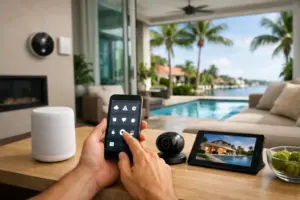
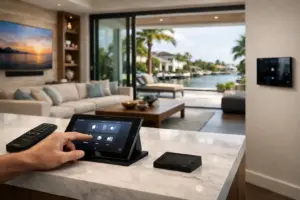
Crestron is the control layer behind many premium residential and commercial environments. It can bring audio, video, lighting, motorized shades, security, climate settings, pool features, and communications into a single control experience. Touch panels, keypads, remotes, wall interfaces, and mobile controls send commands to processors, networked devices, and equipment located in racks or distributed throughout the property.
That level of integration is precisely why a problem can be difficult to pinpoint from the symptom alone. A touch panel that appears frozen may have a network communication issue. Audio that drops in one zone may involve an amplifier, source component, audio distribution path, programming logic, or a device that has fallen offline. A room that will not respond to an “All Off” command may be functioning locally while no longer communicating correctly with the central processor.
A qualified technician examines how the components are working together rather than replacing parts based on guesswork. That approach reduces disruption and helps avoid changes that solve one complaint while creating another.
Common Signs You Need Crestron System Repair in Fort Lauderdale
The most obvious sign is a control interface that does nothing, responds slowly, or displays incomplete information. But Crestron issues are not always as visible. Homeowners may notice that a favorite scene no longer starts the right equipment, while business owners may find that displays, sound, or meeting-room controls require repeated input before operating.
Intermittent behavior deserves prompt attention. A system that works some days but not others can point to network instability, a device communication issue, aging hardware, configuration conflicts, or environmental conditions around the equipment rack. South Florida properties also contend with heat, humidity, extended vacancies, and storm-related interruptions that can expose vulnerabilities in technology systems.
Other symptoms include audio zones disappearing from a control menu, shades that stop responding to scenes, video sources failing to appear on selected displays, cameras no longer populating on a touch panel, or controls that work in one area but not another. These issues may be connected, even when they seem unrelated.
When the Original Installer Is No Longer Available
Many property owners inherit a Crestron installation during a purchase, renovation, tenant change, or management transition. Documentation may be limited, passwords may be unavailable, and the original programming may have been changed over time without a clear record.
This does not mean the system has to be replaced. It does mean the service process should be deliberate. A professional team can document the existing infrastructure, identify installed components, assess their condition, and determine whether targeted repair, programming correction, equipment replacement, or a broader modernization is the soundest path forward.
The Difference Between a Symptom Fix and a System Repair
Restarting an affected component can sometimes restore operation temporarily. That can be useful for narrowing down a problem, but it is not the same as resolving the cause. If a processor repeatedly drops offline, a one-time restart does not address why it is losing communication. If a display is not responding to a room command, simply changing the display may overlook an issue in the control or signal path.
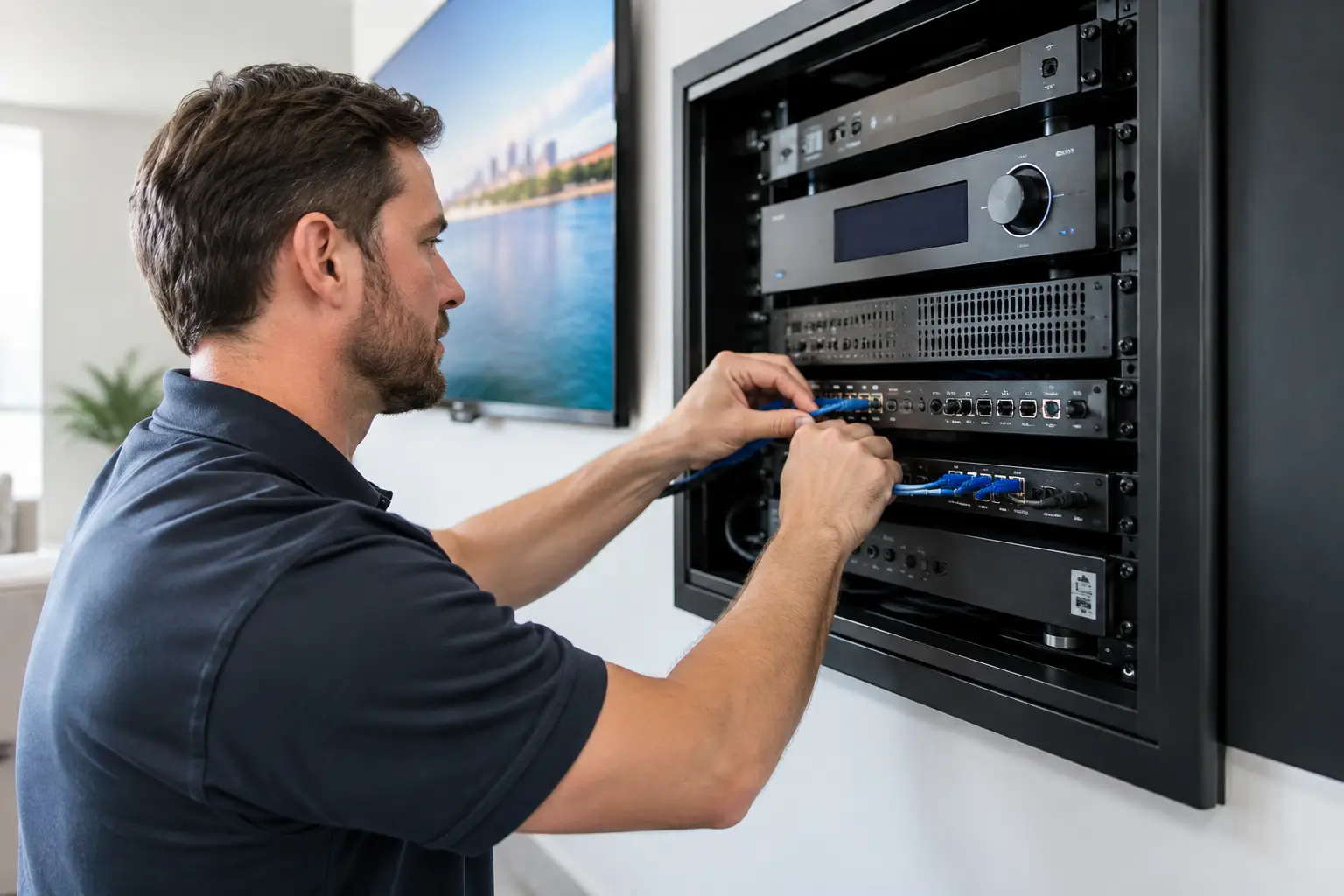
Effective Crestron system repair starts with a complete evaluation of the affected experience. Technicians verify the condition of the controller, touch panels, network connections, source devices, audio and video distribution, and connected subsystems. They review programming behavior and confirm that commands produce the expected response at the equipment level.
The repair plan should match the actual condition of the system. In some cases, a configuration correction or failed component replacement is all that is needed. In others, older devices may no longer be compatible with the way the property is being used, particularly after a remodel, network change, or expansion into outdoor entertainment, surveillance, or additional zones.
There are trade-offs. Preserving an existing system can be appropriate when the architecture remains sound and the issue is isolated. A partial upgrade may make more sense when a critical device is aging or a new feature needs to work alongside legacy equipment. A larger update may be justified when recurring failures, limited serviceability, and evolving property needs begin to affect reliability. The right answer depends on the condition of the installed system, not a one-size-fits-all recommendation.
Why Programming and Network Health Matter
Crestron programming determines what happens when someone presses a button, selects a source, starts a scene, or activates a room. It is the operational logic behind the experience. Changes to devices, room usage, control interfaces, or system settings can affect that logic, which is why programming should be reviewed carefully whenever a repair involves integrated equipment.
Network performance matters just as much. Modern AV, control, surveillance, and communications systems rely on reliable connectivity. A network issue can make a healthy component appear defective because it cannot receive commands or report its status. In a commercial environment, this can interrupt presentations, background music, digital displays, or communications. In a residence, it can affect entertainment, security visibility, and centralized control throughout the property.
A capable integrator understands both sides of the equation: the AV system and the IT-enabled infrastructure that supports it. This broader technical view is especially valuable when multiple systems are affected or when the issue appears only at certain times of day.
What to Expect From a Professional Service Visit
A proper service visit should bring clarity before it brings changes. The technician will discuss what has been happening, when it began, which rooms or functions are affected, and whether there were recent changes to the property or equipment. Details such as a recent internet service interruption, renovation work, new display, or changed room layout can help narrow the investigation.
From there, the system is evaluated methodically. Equipment locations are inspected, component status is checked, communications are tested, and control behavior is verified. The technician should be able to explain the findings in practical terms: what failed, why it matters, what needs attention now, and which recommendations are intended to prevent future disruption.
For larger properties and businesses, documentation is a meaningful part of the service. Clearly identifying components, room functions, and system dependencies makes future maintenance more efficient and gives owners and managers greater confidence in the technology they rely on.
Protecting the Investment After the Repair
Once service is complete, the next priority is keeping performance consistent. That may involve confirming the correct operation of everyday scenes, updating records after equipment changes, organizing the rack environment, reviewing network capacity, or planning proactive attention for older components before they become a point of failure.
It also helps to think beyond the immediate issue. If the property is expanding, being renovated, or changing how rooms are used, this is an opportunity to ensure the Crestron system still supports the way people live and work there. A conference room may need easier presentation control. A waterfront residence may need dependable outdoor entertainment and camera access. A managed property may benefit from clearer documentation and ongoing support.
Sentry Audio Video approaches service as ownership of the overall result, not simply a visit to address a single symptom. For Fort Lauderdale homes and businesses with complex integrated technology, that means careful diagnosis, premium technical execution, and recommendations built around long-term performance.
When your controls stop feeling dependable, do not let a minor symptom become the new normal. A thoughtful system evaluation can restore confidence in the spaces where your technology should work quietly, reliably, and exactly when you need it.