A home should not require a tutorial every time you want to lower the shades, start music on the patio, or prepare the theater for movie night. That expectation is at the center of the Control4 versus Josh.ai automation conversation. Both platforms serve sophisticated connected homes, but they approach control very differently – and the right choice depends on how your household actually lives in the space.
For many luxury residences, the decision is not always Control4 or Josh.ai. A professionally designed system can use Control4 as the automation foundation while adding Josh.ai for exceptionally natural voice control. Understanding where each platform excels helps ensure the finished system feels intuitive, dependable, and appropriate for the property.
Control4 Versus Josh.ai Automation: The Core Difference
Control4 is a comprehensive automation platform designed to bring a home’s systems into one organized control environment. Lighting, motorized shades, distributed audio, video, climate, surveillance, door locks, gates, pool equipment, and home theater components can be programmed to work together through touchscreens, remotes, keypads, mobile devices, and automated scenes.
Josh.ai is a premium voice-control platform created for custom-integrated homes. Its appeal is not simply that it responds to voice commands. It is designed to understand conversational, room-aware requests such as, “Set the living room lights for dinner,” or “Turn off everything downstairs.” Josh can also provide app-based control and can integrate with a broad range of high-end products.
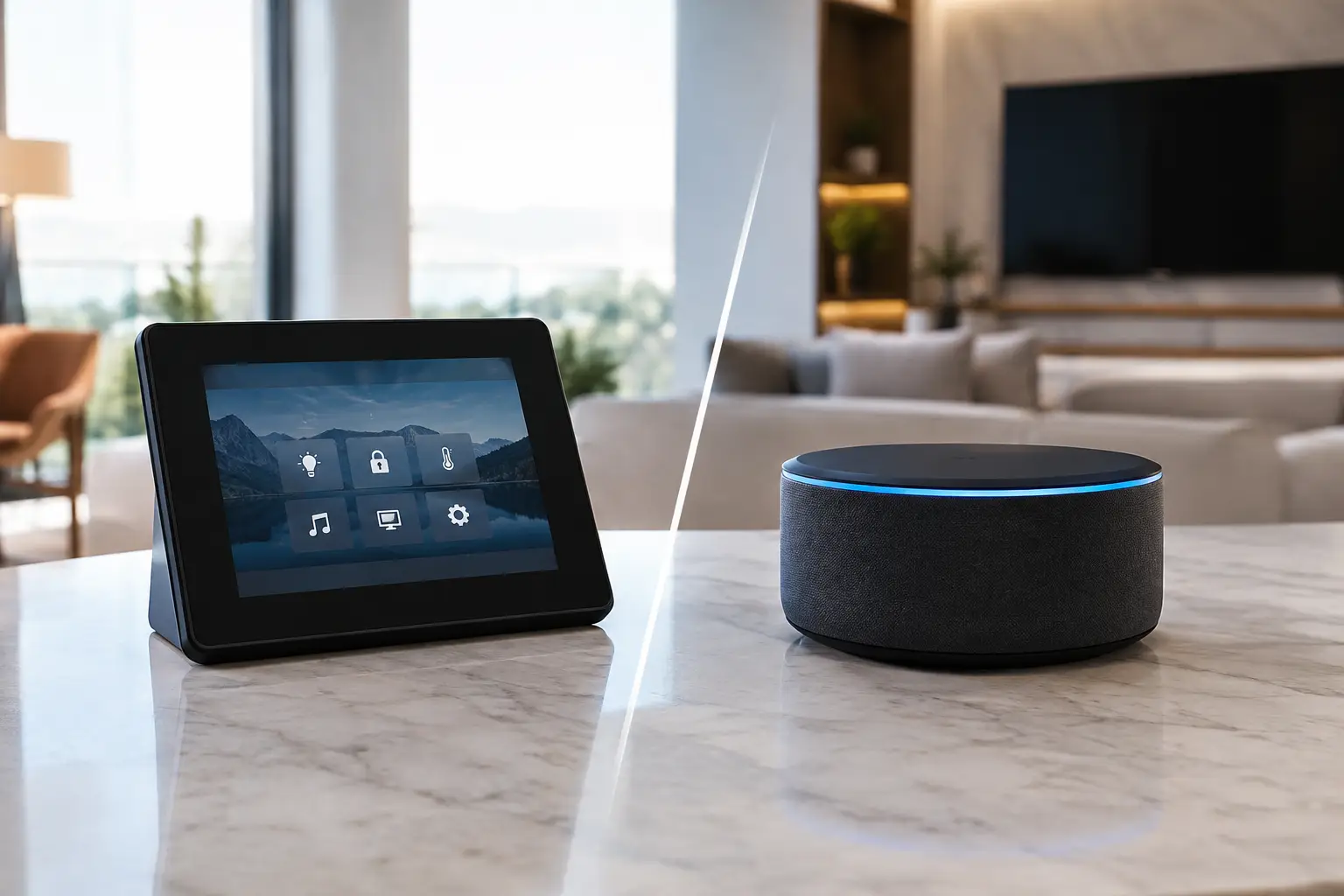
The distinction matters. Control4 is often the central operating system that coordinates a large number of connected systems. Josh.ai is especially compelling when voice should feel more personal, flexible, and discreet than a standard voice assistant experience. In many projects, these roles complement rather than replace one another.
Where Control4 Delivers the Strongest Value
Control4 is an excellent fit for homeowners who want one polished interface across an entire property. A single touchscreen can bring up cameras at the front gate, adjust lighting in the main living areas, select a source for the theater, and arm the security system. The experience is structured, familiar, and highly customizable when it is properly designed and programmed.
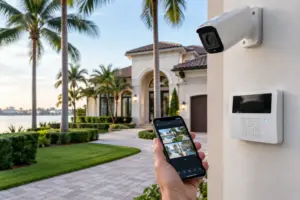
Its strength is scale. A Control4 system can coordinate dozens of rooms and countless devices without forcing the homeowner to move between separate apps. For a Boca Raton waterfront residence, for example, that may mean tying together landscape lighting, patio audio, motorized screens, surveillance, climate zones, and the pool environment into a few clearly labeled controls.
Control4 also performs particularly well with intentional scenes. A “Good Morning” scene may raise bedroom shades, set preferred lighting levels, start music in the kitchen, and adjust comfort settings. A “Leaving” scene can turn off selected lights, lower shades, pause entertainment, and prepare the home for vacancy. These actions can be triggered from a keypad, touchscreen, app, schedule, or selected sensor condition.
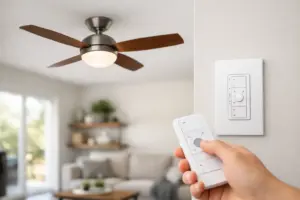
For dedicated media rooms and home theaters, Control4 remotes and interfaces are another advantage. Rather than juggling separate controls for display, surround sound, streaming sources, lighting, and shades, the system can present a simple experience built around the homeowner’s routines. The technology behind it may be complex. The experience should not be.
Why Homeowners Choose Josh.ai
Josh.ai is built around a higher standard for voice interaction. Instead of requiring rigid command phrasing, it is designed to interpret natural language and contextual details. A homeowner may say, “Dim these lights to 30 percent,” while standing in the kitchen, or “Play jazz outside,” without naming every device or room in a predetermined format.
That sense of context is valuable in homes where lighting, entertainment, and shades are used constantly throughout the day. Voice control can remove small points of friction when hands are full, guests are present, or a homeowner simply does not want to reach for a remote. It also gives the system a more refined feel when the voice experience has been carefully tuned to the home.
Privacy is another major consideration. Josh.ai was developed with a privacy-focused philosophy that appeals to homeowners who are careful about how voice data is handled inside the home. The exact behavior of any voice system can vary by feature, configuration, and software version, so privacy expectations should be reviewed during system design. Still, for clients who want sophisticated voice control without treating their home like a data collection point, Josh.ai deserves serious consideration.
Josh.ai’s hardware can also suit interiors where visual restraint matters. Voice interfaces can be placed thoughtfully in key spaces, allowing homeowners to reduce reliance on visible controls while retaining access to the systems they use most.
Control Methods: Structure Versus Conversation
The practical difference often becomes clearest in daily use. Control4 gives homeowners a well-organized set of control paths: elegant keypads on the wall, dedicated handheld remotes, touchscreens, mobile access, and programmed automation. Each path has a purpose, and that predictability is a major benefit in larger homes or multi-user households.
Josh.ai adds conversational control. It is particularly effective for requests that have variations in wording or involve several actions at once. A request such as “Set the house for entertaining” can activate a tailored combination of lighting, music, shades, and outdoor systems without requiring the user to locate multiple controls.
Voice should not be the only way to operate the home, however. Even the most capable voice platform benefits from strong physical and visual controls. Guests may prefer a keypad. A family member may want to adjust the theater from a remote. During a noisy gathering, touching a button may be faster than speaking. The most successful installations provide multiple intuitive ways to achieve the same result.
Reliability Depends on Design, Not Just the Platform
Neither platform can compensate for weak infrastructure, incomplete programming, or poorly chosen products. Reliable automation begins with a carefully planned network, structured wiring, appropriate equipment locations, power protection, and a clear understanding of how each system will be used.
This is where an experienced integrator makes a measurable difference. Lighting scenes must be programmed around actual habits. Network coverage must support mobile control, cameras, streaming, and voice interfaces throughout the property. Outdoor areas need equipment selected for their environment. Security and life-safety systems require deliberate coordination, not an afterthought added near the end of construction.
Control4 is often selected as the primary automation platform when broad system coordination and dependable in-home control are the priority. Josh.ai may be added where natural voice control and privacy-centered interaction are priorities. In a smaller project focused on lighting, shades, and music, Josh.ai may play a more central role. In a large estate with extensive AV, security, outdoor entertainment, and multiple user profiles, Control4 frequently provides the deeper operational framework.
Questions That Clarify the Right Choice
Before selecting a platform, consider how you want to interact with your home when no one is there to explain it. If your priority is centralized control across nearly every system, Control4 is likely the stronger foundation. If voice interaction is central to the experience and you want more natural, contextual requests, Josh.ai may be the feature that changes how the home feels day to day.
It is also worth considering who will use the system. Families, guests, household staff, and property managers all need control methods that make sense without extensive instruction. A thoughtful design may use keypads for essential actions, remotes for entertainment, touchscreens for detailed control, and Josh.ai for convenient spoken requests.
Future plans matter as well. A home that is currently focused on media and lighting may later add motorized shades, expanded surveillance, outdoor zones, or a theater upgrade. Designing the automation architecture with those future phases in mind protects the value of the initial investment and avoids unnecessary disruption later.
A Better Result Comes From the Right Integration Plan
Control4 and Josh.ai are both premium options, but they are not interchangeable products. Control4 excels at serving as a broad, dependable automation backbone. Josh.ai elevates the voice experience with a more natural and privacy-conscious approach. For many high-performance homes, the strongest answer is a considered combination of both.
Sentry Audio Video designs automation systems around the property, the people using it, and the level of performance expected after installation is complete. The right platform is the one that makes every room easier to enjoy, every essential system easier to manage, and every interaction feel properly considered.