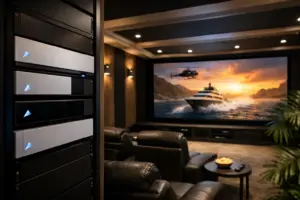
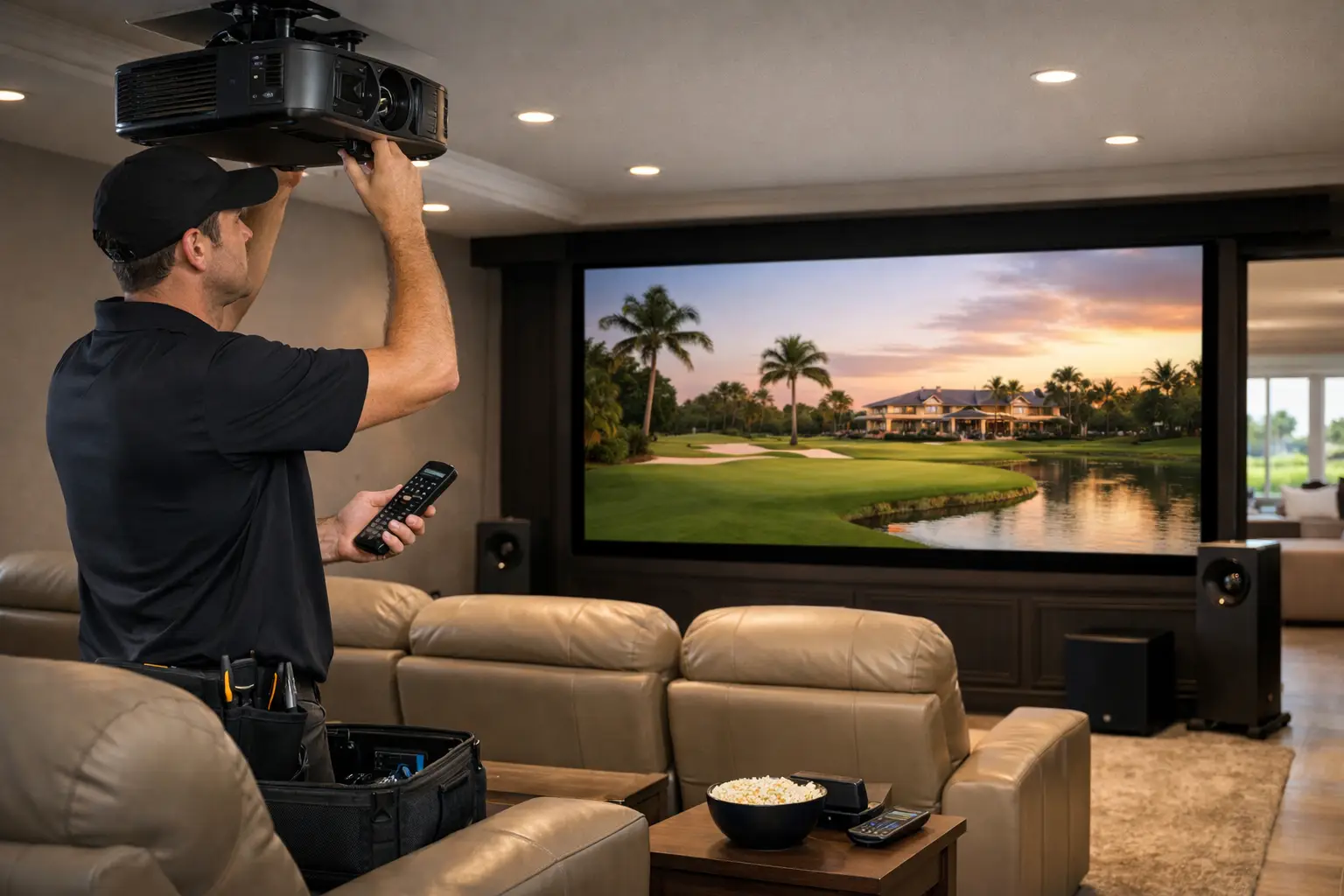
A theater can have an impressive display and premium speakers yet still feel underwhelming if the room was never designed around them. Dialogue gets lost, bass travels where it should not, remote controls pile up, and a beautiful space becomes harder to use than it needs to be. Home Theater Installation in Woodfield Country Club should begin with the room, the way your household entertains, and a system engineered to perform reliably every time.
For homeowners investing in a refined media room, dedicated theater, or multipurpose living space, the goal is not simply more equipment. It is a complete experience: cinematic picture quality, clear and immersive sound, discreet technology, and straightforward control. A professionally integrated system accounts for every one of those details before installation begins.
Start With the Room, Not the Equipment
The dimensions, ceiling height, seating plan, windows, wall finishes, and lighting conditions all shape what a theater can deliver. A room with expansive glass and abundant daytime light may call for a high-performance display and carefully planned motorized shades. A fully dedicated theater may be an excellent fit for a projection system, acoustically transparent screen, architectural speakers, and tailored acoustic treatment.
This early planning protects the finished result. Screen size, for example, should be selected around viewing distance and sightlines, not just the largest option that fits on a wall. A screen that is too large can make viewing tiring. One that is too small can leave a generously proportioned room feeling incomplete.
Sound deserves the same level of attention. Speaker locations, subwoofer placement, seating position, and room surfaces determine whether a soundtrack feels precise and enveloping or muddy and uneven. Even premium components cannot overcome poor placement. Custom design gives every element a purpose before walls are opened, furniture is positioned, or cabinetry is built.
What a Professional Theater Design Should Include
A properly scoped theater installation is a coordinated system, not a collection of products. The design should document how audio, video, control, networking, power, lighting, and any future upgrades will work together. This is especially valuable during a renovation or new construction project, when wiring pathways and equipment locations can be planned cleanly behind the scenes.
A complete design generally considers the following elements:
- Display or projection selection based on room light, viewing distance, and desired image size
- Surround sound layout, speaker concealment, and acoustic performance
- Equipment rack location, ventilation, and service access
- Structured cabling for dependable signal distribution and network connectivity
- Lighting scenes and motorized shade control to support comfortable viewing
- One intuitive control interface for the theater and connected room features
The equipment rack is often overlooked, but it has an outsized impact on long-term performance. Locating source components, amplifiers, network hardware, and control processors in a properly ventilated, labeled rack keeps the theater wall and cabinetry clean. It also makes service and future adjustments far more efficient than burying components in a confined cabinet.
Home Theater Installation in Woodfield Country Club: Design for Daily Use
A home theater should feel special on movie night and simple on an ordinary Tuesday. That means a control system must reduce friction instead of adding it. With a single, thoughtfully programmed interface, a homeowner can select a source, set the room to the right lighting scene, lower shades when appropriate, and begin watching without sorting through multiple remotes.
The right level of automation depends on the household. Some clients prefer dedicated theater control only. Others want the theater to be part of a broader home system that includes whole-house audio, lighting, shades, climate settings, security, and outdoor entertainment. Neither approach is inherently better. The right choice is the one that makes the home easier to enjoy while preserving clear, dependable operation.
This is also where professional programming matters. Buttons should be named clearly, common activities should be easy to reach, and the system should respond consistently. A theater is not truly polished if guests need instructions to turn it on.
Picture Quality Requires More Than a Large Screen
A striking image comes from the relationship between the display, source components, signal path, ambient light, and calibration. Displays offer a strong solution in rooms where daytime viewing is common. Projection systems can create exceptional scale and cinematic immersion in rooms where lighting can be managed effectively.
There are trade-offs. Projection can deliver a true theater feel, but it requires careful consideration of light control, projector placement, screen material, and maintenance access. A large display may offer stronger daytime visibility and a more compact installation, though it creates different design considerations for wall space and speaker placement.
Calibration brings these choices together. Proper picture settings protect detail in dark scenes, maintain natural color, and deliver a comfortable image across a wide range of content. It is the difference between a system that looks impressive in a showroom and one that looks consistently refined in your own home.
Sound That Fills the Room Without Taking Over the Room
Exceptional theater audio is not measured only by volume. It is measured by clarity, balance, impact, and the ability to hear subtle details without straining to follow dialogue. In-wall and in-ceiling speakers can maintain a clean architectural appearance, while carefully selected subwoofers provide controlled low-frequency performance.
The number of speakers should follow the room and the listening objectives. A compact media room may perform beautifully with a thoughtfully designed surround layout. A larger dedicated theater may support additional height channels for a more dimensional sound field. Adding channels without proper placement or calibration does not automatically create a better experience.
Acoustic treatment can be equally valuable in rooms with hard flooring, glass, stone, or other reflective surfaces. Treatments may be incorporated behind fabric panels, within custom millwork, or in other discreet ways that respect the home’s interior design. The objective is to control unwanted reflections and improve intelligibility without making the room feel technical or overbuilt.
Clean Installation Protects the Home and the Experience
The difference between an average installation and a professionally executed one is often visible in what you do not see. Wiring should be organized, labeled, properly routed, and accessible where practical. Speakers, displays, keypads, and control components should align cleanly with the room’s architecture. Equipment should have adequate ventilation, reliable network connectivity, and protection from avoidable power issues.
Coordination also matters. Theater work frequently overlaps with interior designers, builders, electricians, cabinet makers, and shade professionals. A capable integration partner can align technology requirements with the broader project schedule, preventing last-minute compromises such as exposed cabling, obstructed speaker locations, or inaccessible equipment.
For an established home, installation planning should be equally respectful. The approach may involve existing pathways, surface preservation, and a careful review of where equipment can live without disrupting the look or use of the space.
Plan for Service Before You Need It
Technology is more enjoyable when support is clear. Homeowners should know who to call if a control setting needs refinement, a component requires attention, or the system needs to evolve after a renovation. Ongoing support is not an afterthought in a custom theater. It is part of protecting the investment and preserving the experience over time.
Sentry Audio Video approaches theater projects as complete integrations, from initial consultation and system design through installation, programming, and support. That ownership matters when audio, video, lighting, shades, networking, and security-related infrastructure must work together rather than operate as disconnected systems.
The strongest theater designs make advanced performance feel effortless. Begin with a conversation about the room, your viewing habits, and the experience you want every time the lights dim. From there, the right system can be designed with the precision, finish quality, and long-term reliability a distinguished home deserves.