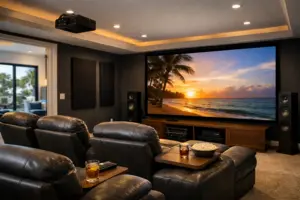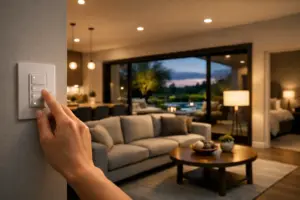
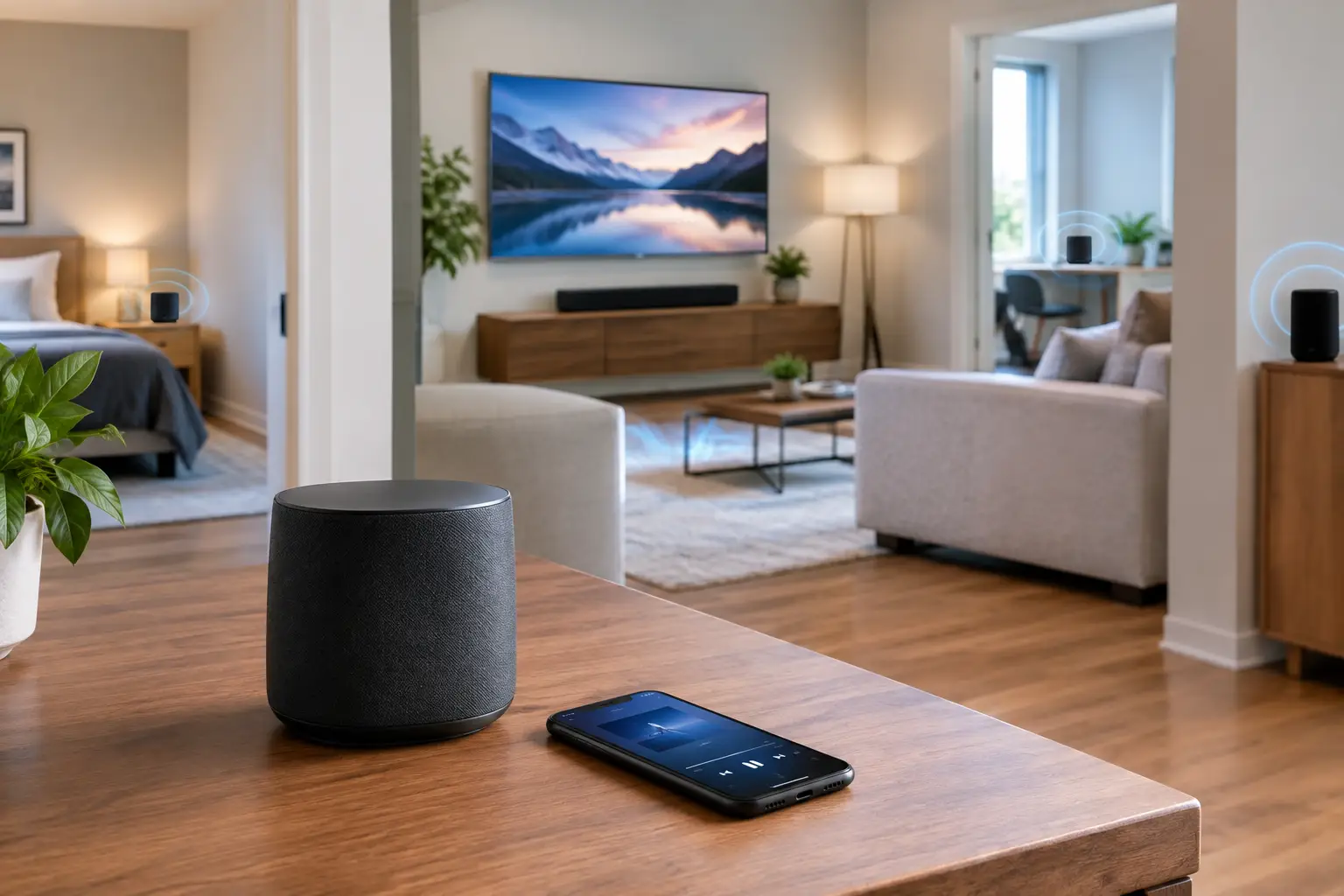
A television above the family-room fireplace, music on the patio, a game on in the kitchen, and a movie ready in the media room should not require a collection of remotes, competing apps, or a call for help when someone changes inputs. This multiroom entertainment system guide explains what a professionally designed system should do, what it requires behind the walls, and how to plan it around the way your household actually lives.
A multiroom system is not simply a group of televisions and speakers. It is an integrated entertainment environment that distributes content, delivers high-quality sound, and puts control where it belongs: in the hands of the people using the space. When designed correctly, it feels straightforward because the technical complexity has been handled before installation begins.
What a Multiroom Entertainment System Does
At its core, a multiroom entertainment system allows audio and video to be shared, selected, and controlled across multiple areas of a home. A homeowner may want the same concert playing in the kitchen, great room, and outdoor living area during a gathering. At the same time, another family member may want a different source in the bedroom or media room.
The right system supports both shared and independent experiences. It can distribute music throughout the property, send video sources to selected displays, and bring lighting, shades, and climate controls into one organized interface when appropriate. The goal is not to put every function on one screen simply because it can be done. The goal is to reduce friction and make each room easier to enjoy.
For South Florida homes, outdoor zones often deserve the same attention as interior spaces. A patio, pool deck, covered lanai, or waterfront entertaining area needs speakers selected and placed for the environment, displays designed for outdoor conditions, and controls that remain dependable around moisture, heat, and changing weather.
Start With How Each Space Will Be Used
The most successful systems begin with a conversation about routines, not equipment. A kitchen may need quick access to music and news. A primary suite may benefit from discreet audio and a simple bedside control. A great room may need high-performance surround sound, while the dining room may only require refined background music.
Consider who uses each area and when. Are there frequent gatherings where indoor and outdoor music should be grouped together? Do different family members regularly watch separate content at the same time? Is there a preference for visible speakers as a design statement, or should sound disappear into ceilings, walls, and landscaping?
These decisions affect more than speaker selection. They determine the number of audio zones, video sources, display locations, control options, and network capacity required. They also help prevent a common problem: installing a capable system that does not match the home’s daily rhythm.
Audio Zones Need Purposeful Design
A zone is an area that can play audio independently from other areas. One zone may be a single room, while another may include several connected spaces such as the kitchen, breakfast area, and family room. The appropriate grouping depends on the floor plan, acoustics, and how sound travels through the home.
Speaker placement matters as much as speaker quality. In-ceiling speakers can provide even coverage with a clean architectural appearance. In-wall speakers may suit focused listening areas. Outdoor speakers and buried subwoofers can create full, natural sound across a landscape without forcing the volume higher near the house.
A professional design accounts for ceiling height, finishes, furnishings, glass surfaces, and room shape. This is particularly important in open-concept residences, where one poorly planned zone can sound uneven or spill into spaces that should remain quiet.
Video Distribution Is About Access and Reliability
Video distribution lets selected sources appear on multiple displays throughout the property. Depending on the design, those sources may include streaming services, cable or satellite receivers, media servers, or surveillance camera views. Rather than placing separate source equipment at every television, a centralized approach can keep components organized, protected, and easier to service.
Not every home needs every source available on every display. A bedroom television may need straightforward access to preferred entertainment services, while a bar, great room, or home theater may need a broader selection. Tailoring access by room can simplify the interface and avoid unnecessary complexity.
Picture quality also depends on the infrastructure behind it. Proper distribution equipment, signal management, and high-quality cabling help preserve performance across long runs and multiple displays. A screen that occasionally loses its signal or takes too long to respond is not a luxury experience, regardless of how impressive the display looks on the wall.
The Infrastructure Behind a Dependable System
The most visible parts of a multiroom system are displays, speakers, and keypads. The hidden foundation is equally important. Structured cabling, a properly engineered network, equipment ventilation, power protection, and organized racks are what allow entertainment to perform consistently year after year.
Whenever possible, wired connections should support stationary devices such as televisions, streaming players, wireless access points, touch panels, and centralized equipment. Wireless coverage still has an important role, especially for mobile devices, but relying on it for every critical connection can introduce avoidable performance issues.
A strong network is especially important because streaming, control, security, and communications often share the same property-wide infrastructure. The network must be designed for the number of connected devices, the size and construction of the home, and the demands placed on it during busy periods. A large residence with concrete walls, metal framing, or extensive outdoor areas requires more planning than a standard single-room setup.
Centralized equipment should also be accessible without becoming an eyesore. A dedicated rack can house source components, amplifiers, network hardware, and control processors in a clean, serviceable layout. Proper ventilation protects equipment from heat, while labeling and cable management make future maintenance far more efficient.
Control Should Feel Natural, Not Technical
A polished multiroom entertainment system gives users a few intuitive ways to operate it. A dedicated handheld remote may be ideal for television viewing. Wall keypads can make music control immediate in frequently used rooms. Touchscreens provide a broader view of the home, while a mobile app can be convenient when moving between spaces.
The key is consistency. If “Patio Music” works one way from the kitchen and another way from the primary suite, the control experience becomes frustrating. Clear naming, familiar icons, and carefully programmed favorites make a meaningful difference for guests, children, and household staff.
Voice control can be useful for simple commands, but it should complement rather than replace dependable physical and app-based controls. It depends on the room, the user, and the desired level of privacy. For many homes, the strongest approach combines convenient voice options with controls that work instantly without spoken commands.
Planning During Construction or Renovation
The ideal time to plan a multiroom entertainment system is before walls are closed. Early coordination allows wiring to be routed cleanly, speaker locations to align with lighting and architectural details, displays to receive recessed backing and power, and equipment rooms to be properly sized.
This planning phase is also where an integrator coordinates with the architect, interior designer, builder, and other trades. A flush-mounted display, concealed speaker, motorized shade pocket, or outdoor television enclosure has to work with the surrounding construction. Addressing these details in advance protects the design vision and avoids visible compromises later.
Existing homes can also be upgraded successfully. The approach may involve strategic use of existing pathways, carefully selected wireless solutions, and focused improvements in the rooms that matter most. The trade-off is that retrofitting can offer fewer concealed-routing options than a new build, which makes an on-site assessment especially valuable.
Choosing the Right Scope for Your Home
There is no single formula for a multiroom system. Some properties need music in six interior zones and a fully appointed outdoor entertainment area. Others require distributed video across several rooms, a dedicated theater, and centralized control that brings every component together. The right scope is based on the home, the lifestyle, and the standard of performance expected.
It is wise to plan for future expansion where practical. Running additional cabling, allowing space in an equipment rack, and selecting a control platform that can grow with the property can protect long-term flexibility. That does not mean adding features without a reason. It means creating an infrastructure that will not limit the home later.
Sentry Audio Video approaches multiroom projects as complete systems, from early design and equipment selection through installation, programming, and ongoing support. That level of ownership is what turns a collection of devices into an entertainment experience you can rely on.
The right next step is to walk through the property and identify the moments that matter most: a quiet morning in the kitchen, a family movie night, a weekend by the pool, or a full house of guests. Those moments should guide the design, and the technology should simply make them better.