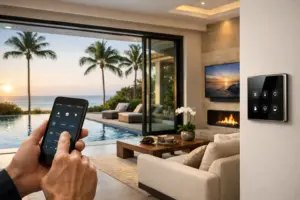

This page is for Boca Raton homeowners, builders and renovation teams planning a new Lutron HomeWorks installation. The focus is installation: translating lighting plans into panels, processors, keypads, shades, wiring, programming and a finished system that is tested before turnover. Existing-system troubleshooting and takeovers belong on our service page, while broader platform selection is covered by our Lutron dealer, installation and service guide for Boca Raton.
A HomeWorks installation should begin before electrical rough-in and shade-pocket details are finalized. Sentry coordinates controlled loads, LED drivers, panel locations, keypad layouts, shade power, equipment access and integration requirements with the builder, electrician, architect and interior designer. That early work prevents walls crowded with controls, inaccessible equipment and last-minute changes to finished ceilings or millwork.
For a waterfront estate, condominium renovation or seasonal residence, the completed system should deliver consistent scenes, intuitive physical controls and clear documentation. HomeWorks, Ketra, Palladiom and motorized shades can be included when appropriate, but the platform and product mix are selected from the property requirements rather than a standard package.
Why Professional Lutron Design Makes a Difference
Lutron lighting and shade control can coordinate fixtures, motorized window treatments, outdoor areas, climate-related scenes, and smart home controls from a single, intuitive interface. That capability is powerful, but it also means the system should be designed around the property and the people using it.
A professional integrator begins by understanding how each room is used. A great room may need bright, even lighting for daytime gatherings, controlled accent lighting for entertaining, and a low-level pathway scene for late evenings. A primary suite may call for bedside control, blackout shades, soft morning light, and an all-off command at night. A conference room has different priorities: presentation lighting, glare control, occupancy-based operation, and a simple interface that any employee can use confidently.
The design must also account for the lighting itself. Dimming performance varies by fixture type, driver, load, and control method. Selecting a keypad before evaluating these details can create visible flicker, poor dimming range, or inconsistent color appearance. The right installer coordinates specifications with the project team so the finished system performs as intended, not merely as a collection of connected components.
What a Lutron Installer in Boca Raton Should Evaluate
Boca Raton properties often present a combination of expansive glass, bright sun exposure, outdoor living areas, high ceilings, and multiple entertaining zones. These features create opportunities for beautiful lighting and shading, but they also require careful engineering.
Sunlight is a major consideration. Motorized shades can protect furnishings, reduce glare on displays, and improve daytime comfort without closing a room off from its views. Fabric selection, shade openness, mounting details, and control schedules all matter. In rooms with large openings, an installer should assess solar direction, window dimensions, fascia requirements, and whether shades need to operate independently or as a coordinated group.
Lighting design requires the same attention. Layered lighting usually creates the most refined result: ambient lighting for general illumination, task lighting where work happens, and accent lighting to highlight architecture, art, or landscaping. Lutron control gives those layers a purposeful relationship. Instead of walking around a room to adjust several switches, occupants can call up a scene that has been calibrated for the moment.
Infrastructure is equally important. Some projects benefit from hardwired controls, particularly during new construction or major renovation, while other properties are well suited to advanced wireless solutions. The choice depends on wall construction, system size, future expansion plans, network design, and the level of control the client expects. A reliable installer explains the options clearly rather than forcing every property into the same approach.
The Value of a Complete System Plan
Lighting control should not be treated as an isolated feature. It becomes far more useful when it is planned alongside audio/video, security, surveillance, motorized shades, outdoor entertainment, and network infrastructure.
Consider an arrival scene. As the driveway gate opens or a homeowner enters, selected exterior and interior lights can come on, shades can adjust for privacy, and the property can transition naturally from daytime to evening. At bedtime, a single command can turn off entertainment areas, lower shades, set a safe pathway to bedrooms, and confirm that designated exterior lighting remains active.
For commercial environments, integrated control can simplify opening and closing routines, support a more welcoming guest experience, and reduce unnecessary energy use in spaces that are not occupied. Restaurants, offices, wellness facilities, and hospitality properties each have their own lighting demands. The central principle remains the same: control should be easy for the people responsible for using it every day.
This is why experienced integrators coordinate with architects, interior designers, builders, lighting designers, and property managers. Keypad placement affects both function and aesthetics. Shade pockets must be addressed before finishes are complete. Equipment locations, pathways, and structured cabling need a plan before walls are closed. Early coordination protects the design and prevents visible compromises later.
Questions to Ask Before Selecting Your Installer
The right conversation should go beyond product names and room counts. Ask how the installer approaches system design, who will program the system, how changes are handled after installation, and what support looks like once the project is complete.
You should also ask whether the team will review fixture compatibility before installation. This is particularly relevant with decorative fixtures, specialty drivers, and large LED lighting plans. A polished keypad cannot overcome a mismatch between the control system and the lighting load.
Request clarity on documentation as well. A professionally managed project should include a clear scope, control locations, proposed scenes, equipment placement, and expectations for commissioning. For larger homes and commercial projects, labeled wiring, network planning, and service records make future updates much easier to manage.
Finally, assess whether the installer can take ownership of the broader environment. Lighting control may be the starting point, but it often intersects with distributed audio, video distribution, surveillance, access control, and network performance. Working with one accountable integration partner reduces the risk of separate systems being installed without a common plan.
Programming Is Where the Experience Comes Together
Lutron hardware is only part of the finished experience. Programming determines whether the system feels natural or burdensome. The most useful systems are built around a limited number of thoughtful scenes that match real routines.
A “Morning” scene might raise shades gradually, bring kitchen and hallway lights to comfortable levels, and leave bedrooms quieter for family members who are still resting. “Entertain” might illuminate the kitchen island and art while lowering glare near a display and activating outdoor lighting. “Away” can turn off selected loads, place shades in a preferred position, and create an occupied appearance with scheduled lighting behavior.
The key is restraint. Too many scenes, labels, and commands make a control system harder to use. A skilled programmer asks practical questions: Which entry do you use most often? Where do guests gather? Which rooms need privacy at night? Who needs simple controls without navigating an app? The answers shape a system that supports daily life rather than demanding attention.
Installation Quality Is Visible in the Details
Premium technology deserves premium execution. That means clean keypad alignment, properly planned shade mounting, protected equipment locations, labeled connections, and interfaces that feel consistent from one room to the next. It also means testing the system under real conditions, including daytime glare, evening lighting levels, remote access, and the routines the client will actually rely on.
For coastal South Florida homes, system reliability also benefits from thoughtful equipment placement and properly designed infrastructure. Network stability, enclosure ventilation, and orderly low-voltage wiring affect the performance of connected controls over time. These are details that may not be visible once the project is complete, but they influence serviceability and confidence every day.
A Better Standard for Lighting and Shade Control
Choosing a Lutron installer is ultimately a decision about who will be responsible for the experience after the equipment is installed. The ideal partner listens carefully, designs with the entire property in mind, coordinates with the project team, and remains available when your needs change.
Sentry Audio Video approaches Lutron integration as part of a complete technology plan, delivering refined control for lighting, shades, entertainment, security, and connected spaces. Whether you are building a new Boca Raton residence, renovating a signature room, or upgrading a commercial environment, begin with a site consultation that focuses on how the property should feel, function, and perform for years to come.