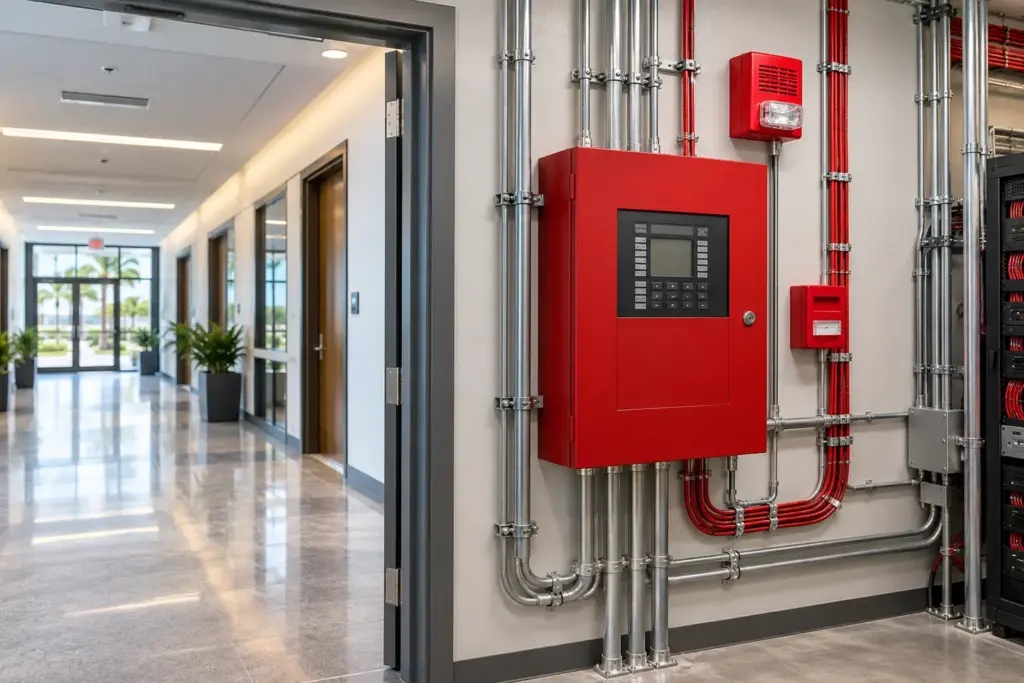
A fire alarm is not a feature that should disappear into the background simply because it is quiet most of the time. When smoke, heat, or a manual pull station triggers an event, the system must identify the condition, alert occupants, communicate as required, and perform exactly as designed. That level of performance starts well before devices are mounted. Professional Fire Alarm System Installation is a coordinated process involving life-safety design, code requirements, clean cabling, testing, documentation, and long-term service.
For a luxury residence, a multifamily property, a retail location, office, restaurant, or hospitality space, the goal is the same: dependable protection that fits the property, supports compliance, and remains manageable for the people responsible for it.
Fire Alarm System Installation Is a Design Process
No two properties present the same fire protection needs. A large residence may include multiple levels, detached structures, a theater, equipment rooms, garages, and outdoor entertainment areas. A commercial building may have tenant spaces, kitchens, storage rooms, public areas, elevators, access-controlled doors, and different occupancy conditions. Installing devices without first understanding how the space is used can create blind spots, nuisance alarms, and complications during inspection.
The process begins with a site evaluation and system plan. An experienced integrator reviews the building layout, occupancy, construction phase, existing infrastructure, and the relevant requirements set by the authority having jurisdiction, often called the AHJ. The AHJ may include the local fire marshal, building department, or other enforcing agency. Their approval process matters because life-safety systems must meet applicable codes and permit requirements, not simply look complete.
A proper design identifies where initiating devices, notification appliances, control equipment, power supplies, and communications pathways belong. It also accounts for audibility, visibility, accessibility, equipment access, and future service. For commercial projects, this planning often includes coordination with architects, general contractors, property managers, and other trades so that every component is installed at the right stage and in the right location.
The Core Components of a Fire Alarm System
A fire alarm system is a connected network, not a collection of standalone alarms. The control panel is the decision-making center. It supervises connected devices, receives alarm, trouble, and supervisory signals, and activates notification and programmed responses when conditions require it.
Initiating devices detect or report a potential emergency. Depending on the property and approved design, these may include smoke detectors, heat detectors, manual pull stations, duct detectors, sprinkler-monitoring devices, and specialty detection for certain high-risk environments. The appropriate device depends on the setting. For example, smoke detection may be unsuitable in areas where normal activity produces steam, vapor, or airborne particles that could cause unwanted activations. Heat detection may be a more appropriate option in select locations, subject to the approved plan and code requirements.
Notification appliances alert people inside the building. Horns, strobes, speakers, and combination devices must be selected and located to provide effective notification throughout the required areas. In larger or more complex spaces, clarity and coverage are not assumptions. They are measured and verified during testing.
The system also needs supervised wiring, reliable power, standby batteries, and, when required, a monitored communication path to a supervising station. These details are not visible once a project is complete, but they directly affect reliability. Cleanly routed, labeled, and documented infrastructure makes future inspection, service, and expansion far more efficient.
Integration Requires Careful Boundaries
Premium homes and commercial properties often have security, surveillance, access control, communications, audio/video, and smart control systems operating alongside fire protection. Thoughtful integration can improve awareness and operational response, but a fire alarm system must retain its required life-safety function independent of lifestyle or convenience features.
For instance, a fire event may need to release access-controlled doors, recall elevators, shut down certain air-handling equipment, activate emergency communications, or transmit a signal for monitoring. These functions require careful coordination, approved interfaces, and clear responsibility among the parties involved. They should never be treated as an afterthought during a renovation or technology upgrade.
This is where a full-service technology partner brings meaningful value. Rather than treating life safety, security, and infrastructure as unrelated scopes, the project can be planned as one coordinated environment. The result is cleaner execution, fewer last-minute conflicts, and a system that is easier for owners and facility teams to understand.
What a Professional Installation Process Should Include
A dependable project follows a disciplined sequence. While the exact scope varies by property type and local requirements, clients should expect these core stages:
- Site review and requirements planning. The project team evaluates the property, reviews the intended use of each area, identifies applicable permitting and inspection needs, and develops the system scope.
- Engineered layout and coordination. Device locations, control equipment, cabling routes, notification coverage, and system interfaces are planned before installation proceeds. On active construction sites, this step prevents conflicts with ceilings, millwork, lighting, mechanical systems, and finished architectural details.
- Professional installation. Equipment is installed with attention to placement, labeling, access, cable management, and the finished appearance of the property. In refined residential and commercial interiors, workmanship matters as much as the equipment itself.
- Programming, testing, and inspection support. The panel is programmed for the approved configuration. Every initiating device, notification appliance, supervisory condition, and connected function is tested. The team then addresses inspection requirements and provides records appropriate to the project.
- Owner orientation and ongoing service. Property owners and designated staff should know how to recognize alarm, trouble, and supervisory signals, how to respond appropriately, and who to call for service. Scheduled inspection, testing, and maintenance help preserve performance over time.
Common Problems That Start Before Installation
Many fire alarm issues are created by incomplete planning rather than equipment failure. A late-stage decision to add detection after walls and ceilings are closed can lead to visible pathways, compromised finishes, or costly rework. In commercial environments, changes in room use can also affect the original protection plan. A storage room converted into an office, a new partition wall, or a renovated kitchen can alter coverage and notification needs.
Another common issue is selecting components based only on the initial installation scope. A property may later add a guest wing, tenant build-out, server room, or access-control expansion. If the control panel, pathway capacity, or documentation does not support growth, future work becomes more disruptive than necessary.
False alarms deserve equal attention. They interrupt operations, unsettle residents and guests, and can lead to costly emergency responses. Proper device selection, placement, environmental assessment, and maintenance are the practical ways to reduce nuisance activity. The answer is not to ignore repeated alarms or disable a device. It is to identify the cause and correct the underlying condition through qualified service.
Fire Alarm Maintenance Protects the Original Investment
Installation is the beginning of the system’s service life, not the end of it. Detectors accumulate dust, batteries age, building layouts change, and equipment can develop trouble conditions that require attention. Regular inspection and testing confirm that devices communicate correctly, notification appliances operate as intended, standby power is available, and monitoring connections remain active where applicable.
Maintenance also creates a record of care. For business owners, that documentation can support compliance efforts and give property managers a clear history of system activity. For homeowners, it offers confidence that a system installed during construction or renovation has not been forgotten after move-in.
The right service relationship matters when a panel reports a trouble condition at an inconvenient time or a property change requires a system update. A knowledgeable provider can review the existing installation, determine whether the issue is isolated or systemic, and recommend a clear path forward without guesswork.
Questions to Ask Before Choosing an Installer
Before committing to a fire alarm partner, ask whether the provider designs around your property’s actual use, coordinates permits and inspections as applicable, and can support the system after installation. Ask how the installation will be documented, how devices and cabling will be labeled, and how the fire alarm will interface with any required doors, monitoring, or building systems.
For renovations and new construction, ask when the fire alarm scope should enter the project schedule. Earlier is almost always better. Early coordination protects architectural finishes, reduces change orders, and allows the system to be planned alongside security, structured cabling, communications, and other essential infrastructure.
At Sentry Audio Video, the focus is on professionally executed systems that perform reliably and fit the property with the level of care premium homes and businesses expect. A well-planned fire alarm system provides more than a passing inspection. It gives owners, occupants, and managers confidence that when a critical moment arrives, the system is ready to respond.