You are currently viewing Fire Alarm Installation Boca Raton Done Right

Fire Alarm Installation Boca Raton Done Right

  • Post author:
  • Post category:Uncategorized

A fire alarm system is only valuable when it responds correctly, reaches the right people, and remains dependable long after installation day. For Fire Alarm Installation Boca Raton property owners can rely on, the work must begin with a thoughtful design – not a box of devices and a rushed installation.

Whether you are completing a luxury home renovation, opening a new business, managing a multifamily property, or updating an existing facility, life-safety planning deserves the same level of attention as every other critical system. Proper coverage, clean installation, clear documentation, and ongoing service all affect how well the system performs when it matters most.

What a Professional Fire Alarm Design Should Address

Fire alarm design is not a one-size-fits-all exercise. The layout of the property, occupancy type, ceiling heights, finishes, access points, local requirements, and the presence of other building systems can all affect the recommended approach.

A professional site assessment starts by understanding how the space is actually used. A restaurant, medical office, retail location, warehouse, condominium common area, and private residence present very different notification and detection needs. In a residence, the goal may be effective smoke and carbon monoxide notification throughout sleeping areas and major living spaces. In a commercial environment, the system may require a dedicated control panel, manual pull stations, horn/strobe notification, monitoring provisions, annunciation, and coordinated interfaces with other life-safety equipment.

The design should also account for future service. Devices should be placed where they can be inspected and maintained without compromising the finished appearance of the property. Wiring paths, panel locations, labeling, and equipment access may not be visible once the project is complete, but they have a direct impact on long-term reliability.

Fire Alarm Installation in Boca Raton Requires Code Coordination

Code compliance is a central part of fire alarm planning, but it is not simply a matter of installing a certain number of detectors. Requirements can vary based on the building type, use, size, renovation scope, local jurisdiction, and the authority having jurisdiction. A change in tenant layout or occupancy can also trigger new considerations.

An experienced integrator coordinates the system design around approved plans, applicable fire and building requirements, and inspection expectations. This helps prevent common project delays, such as inaccessible equipment, missing notification coverage, incomplete labeling, or systems that do not perform as intended during testing.

For new construction and major renovations, early coordination is especially valuable. Fire alarm cabling, device locations, control equipment, and interfaces should be considered before walls and ceilings are closed. That planning protects the architectural finish while giving the installation team a clear path to build a clean, serviceable system.

Residential and Commercial Systems Have Different Demands

Not every home needs the same type of fire alarm system as a commercial property. Many single-family residences are served by code-compliant smoke and carbon monoxide alarms, while larger estates, gated properties, and specialty residential spaces may benefit from more extensive monitoring, notification, or integrated security planning.

Commercial properties typically have more formal requirements and operational concerns. Owners need a system that can be inspected, tested, documented, and maintained with minimal disruption to staff, guests, tenants, or customers. They may also need the system to communicate with monitoring services or coordinate with other approved building functions.

The key is not to overbuild or under-specify the system. The right solution fits the property, satisfies applicable requirements, and gives owners confidence that their investment is protected by equipment selected and installed for its intended environment.

The Components That Determine System Performance

A dependable fire alarm system is made up of more than visible ceiling devices. Each component has a specific role, and the overall system must operate as a coordinated whole.

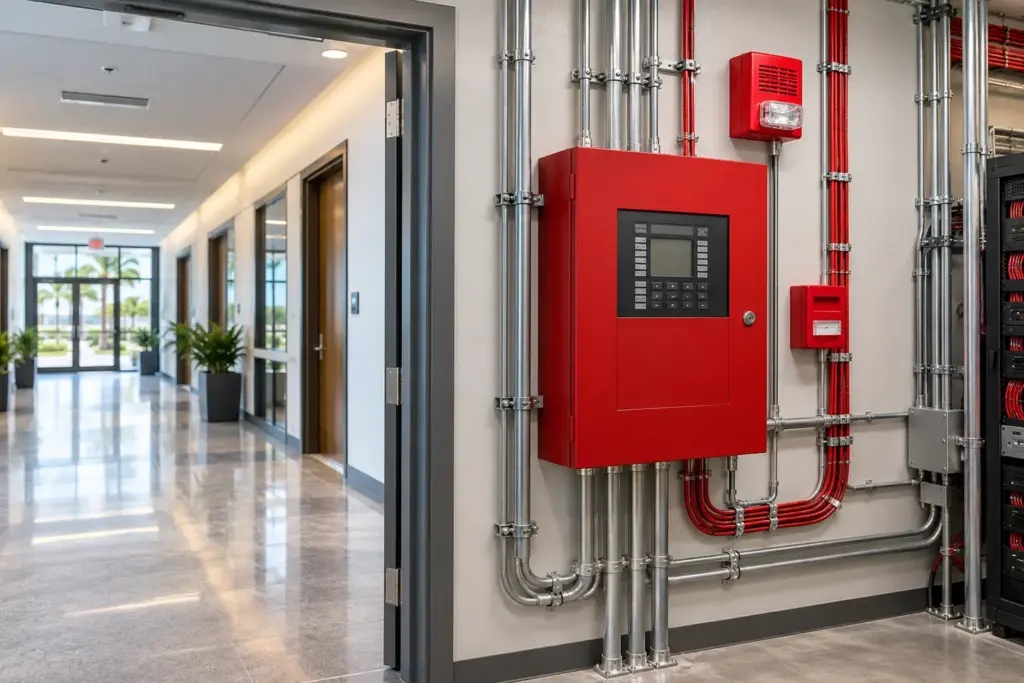
Detection devices identify signs of a fire event, while manual initiating devices allow occupants to report an emergency. Notification appliances provide audible and visible alerts throughout the property. The control panel supervises the system, records conditions, and communicates status information. Depending on the application, the design may also include remote annunciation, monitoring communication equipment, duct detection, heat detection, carbon monoxide detection, or specialized devices for challenging environments.

Equipment selection should reflect the space rather than a generic device schedule. High ceilings, open areas, kitchens, garages, humid locations, and areas with normal airborne particles can require careful planning to reduce nuisance alarms without sacrificing protection. A quality installation also considers how devices will look against premium finishes, using precise placement and clean workmanship to preserve the character of the property.

Integration Adds Value, but Life Safety Must Stand on Its Own

For properties with professionally integrated security, communications, access control, surveillance, and automation systems, fire alarm planning should be part of the larger technology conversation. Coordinated infrastructure can make installation cleaner, improve organization, and support more efficient property management.

However, a fire alarm system is a life-safety system first. Its required functions should remain reliable and properly supervised independent of lifestyle automation features. Smart home control, mobile alerts, and security system notifications can provide useful awareness, but they are not substitutes for a properly designed fire alarm system, required notification appliances, monitoring, inspections, or emergency response procedures.

This distinction is where an experienced technology integrator brings meaningful value. Rather than treating each system as an isolated project, the integrator can plan pathways, equipment locations, network considerations, and user-facing controls across the property while respecting the critical role and requirements of life-safety equipment.

Testing, Documentation, and Ongoing Service Matter After Installation

Installation day is only one milestone. Before a fire alarm system is placed into service, devices, notification appliances, control functions, communications, and supervisory conditions must be tested thoroughly. The property owner or facility representative should also understand the basics of normal operation, trouble conditions, and who to contact for service.

Documentation is equally important. Accurate device labels, panel directories, test records, and system information make future inspections and maintenance more efficient. When service is needed years later, clear documentation can reduce downtime and help technicians diagnose issues without unnecessary disruption.

Ongoing testing and maintenance should be scheduled according to the system type, applicable requirements, manufacturer guidance, and property use. A system that has not been inspected or serviced can develop unnoticed issues, including depleted backup power, damaged devices, communication faults, or changes caused by renovations. Regular professional attention protects the performance of the original investment.

Questions to Ask Before Selecting an Installer

The right partner should be able to explain the proposed system in clear terms, not just provide a device list. Ask how the design addresses your building use, what approvals and inspections are expected, how the installation will be coordinated with other trades, and what testing and service support will look like after completion.

It is also wise to ask who will take ownership if a problem arises. Complex properties benefit from a team that can manage the full scope of technology infrastructure, communicate clearly with project stakeholders, and provide consistent support after the final walkthrough. For owners who value clean execution and accountability, that level of service is as important as the equipment itself.

Sentry AV approaches fire alarm projects with the same disciplined planning used for security, communications, and integrated property technology. The goal is simple: deliver a professional system that fits the space, supports compliance, and performs with confidence.

A site walkthrough is the right place to start. It turns broad concerns about protection, approvals, appearance, and future maintenance into a practical plan built around your property.