A key left with a former employee, vendor, or household worker can remain a security gap long after the relationship ends. Access Control Systems Boca Raton property owners choose replace that uncertainty with clear authority over who can enter, where they can go, and when their access expires.
For a private residence, condominium common area, office, medical practice, restaurant, or managed property, access control is more than a door lock. It is a coordinated security system that protects people, assets, privacy, and daily operations without making entry inconvenient for authorized users. The right design should feel simple to use while giving owners and managers meaningful control behind the scenes.
What an Access Control System Should Solve
The first question is not which reader, credential, or door hardware looks most impressive. The question is what access problem the property needs to solve. A single office suite with a few staff members has different requirements than a waterfront estate with service gates, a detached guest house, and multiple family members. A commercial building may need scheduled employee access, visitor entry, audit records, and separate permissions for sensitive spaces.
A professionally designed system can assign access by person, role, door, and schedule. An employee may enter a front office on weekdays but not a records room. A pool vendor may receive access through a side gate during a designated service window. A houseguest can use a temporary credential that expires automatically after departure.
This level of control matters because changing locks after every staffing or occupancy change is disruptive and offers limited accountability. With managed access, permissions can be adjusted quickly while the property maintains a documented record of entry activity where appropriate.
Access Control Systems in Boca Raton Need a Property-First Design
Boca Raton properties often combine multiple entry points with a high expectation for presentation. Front gates, secondary gates, garage entries, staff entrances, amenity rooms, rooftop areas, executive offices, storage rooms, and private interior spaces may all require distinct rules. The goal is not to place a reader on every door. It is to create a sensible security perimeter and manage the spaces inside it according to their purpose.
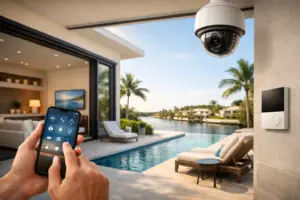
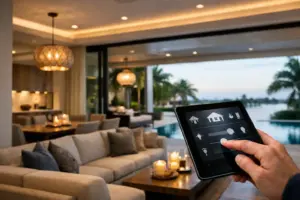
For residences, access control can be coordinated with gate intercoms, video surveillance, entry cameras, smart lighting scenes, and whole-home automation. A homeowner may verify a visitor at the gate, speak with them through an intercom, release the gate, and receive a notification when an exterior door opens. The experience should be polished for guests and practical for the household.
For businesses, the design must account for workflow. Employees should not have to wait for a manager to open routinely used doors, while restricted rooms should not become casually accessible. A system can also help managers address lost credentials promptly, control after-hours entry, and review events following an incident.
South Florida conditions deserve consideration as well. Exterior devices must be selected and installed for heat, humidity, rain exposure, and the specific placement of each opening. A clean installation includes thoughtful reader location, protected cabling pathways, reliable door hardware, and equipment positioned for long-term service access.
Choose Credentials Around the People Using Them
Credentials are the method an authorized person uses to request entry. There is no universal answer, because convenience, user volume, security expectations, and the type of property all affect the decision.
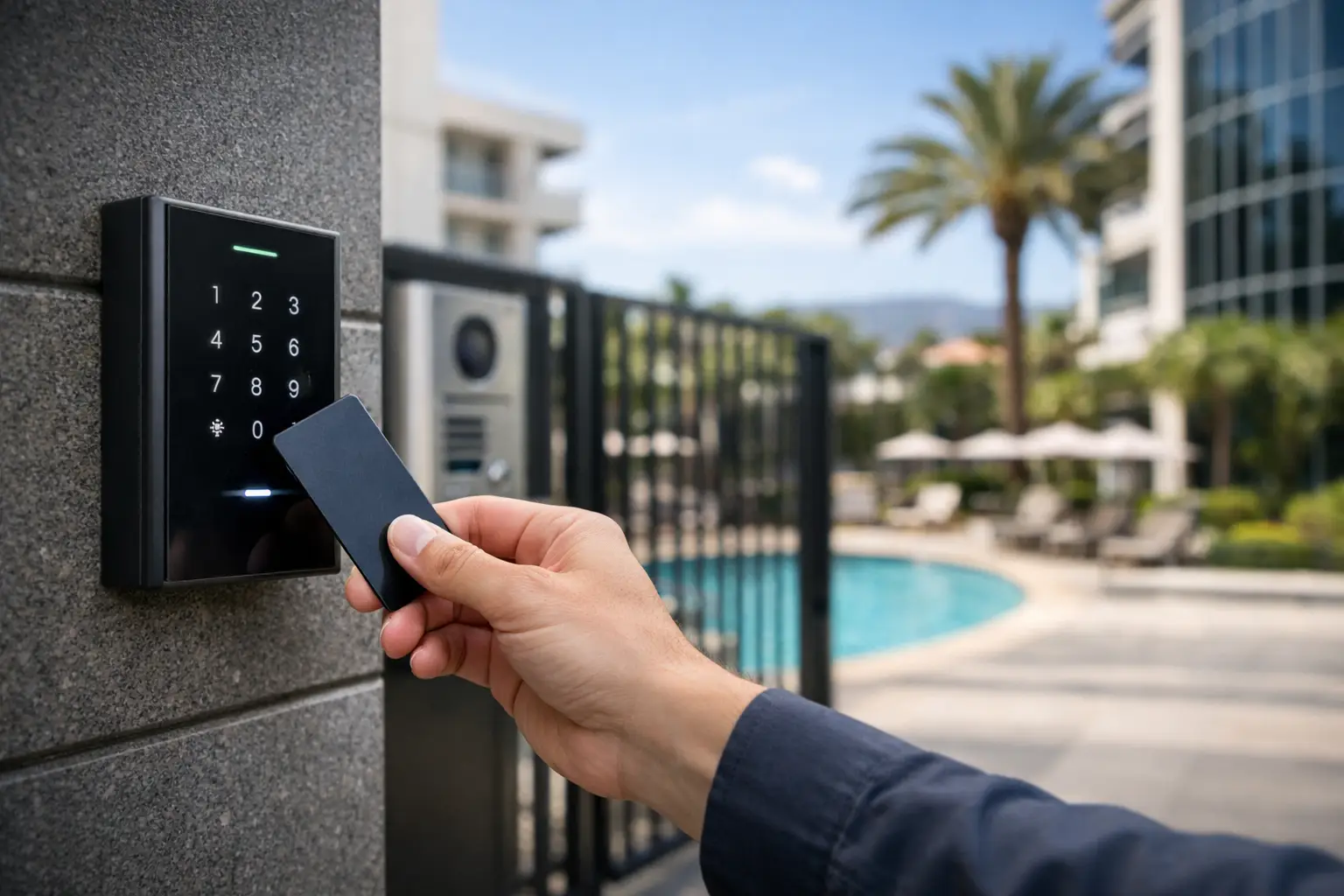
Key cards and fobs remain practical for workplaces, clubs, and multi-user environments. They are familiar, fast, and easy to issue or deactivate. Mobile credentials can suit users who prefer entry from their phone and may reduce the need to distribute physical fobs. PIN codes can work well for temporary access, but shared codes should be managed carefully because they provide less certainty about who used them.
Biometric entry can add another layer of identity verification in selected applications. It should be evaluated thoughtfully, particularly where privacy expectations, user acceptance, and the need for a fallback credential matter. Many premium systems use more than one credential type. For example, staff may use fobs for daily entry while vendors receive temporary codes and executives use mobile credentials.
Convenience is valuable, but it should not override the access policy. If every employee shares one code or every family member uses the same gate remote, the system loses much of its accountability. Individual credentials provide a clearer record and make it easier to remove access without affecting everyone else.
The Door Hardware Matters as Much as the Software
A polished access control interface cannot compensate for poorly selected hardware. Every opening has physical requirements that determine how it should be secured. A glass storefront door, a wood residence entry door, a vehicle gate, an aluminum pool gate, and a fire-rated interior door all need a different approach.
The system design should consider the door construction, swing direction, traffic volume, emergency egress requirements, existing locking hardware, and what happens when power is interrupted. Certain doors may require electrified locking hardware, while others are better served by an electrified trim solution or gate control integration. The correct configuration supports security without interfering with safe exit or the intended use of the door.
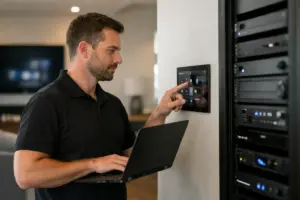
This is one reason professionally integrated systems perform differently from pieced-together components. Design, cabling, locking hardware, readers, power supplies, programming, and user training all affect the final result. When one partner owns the full scope, problems are easier to prevent and simpler to resolve.
Plan Visitor Access Before It Becomes a Daily Frustration
Visitor management is often the point where an otherwise capable system becomes inconvenient. Think through the people who arrive regularly: deliveries, household staff, caregivers, contractors, clients, guests, and service providers. Each group may need a different entry experience.
At a residence, a gate station with video and two-way communication can give the homeowner confidence before granting access. Scheduled temporary credentials are useful for recurring services, particularly when no one is home. For commercial properties, a reception desk, video intercom, directory, and controlled lobby door can create a professional arrival experience while keeping private areas protected.
Remote release should be configured with care. It is helpful to open a gate or door from an approved device, but permissions should be limited to the people who truly need that authority. Notifications should also be meaningful. Constant alerts quickly become background noise, while targeted notifications for a gate held open, a forced door, or after-hours entry can prompt timely action.
Think Beyond the First Phase of the Project
An access control system is easier to expand when the infrastructure is planned early. During a renovation or new construction project, it is wise to consider future gates, detached structures, additional office suites, cameras, intercoms, and networked devices. Proper structured cabling and equipment capacity can prevent unnecessary disruption later.
Expansion does not mean installing every device immediately. It means creating a design that can accommodate future needs without forcing a complete replacement. A growing business may begin with exterior doors and an equipment room, then add executive offices or warehouse zones later. A homeowner may start with a front gate and primary entries, then integrate a guest house, dock gate, or pool access as the property evolves.
Remote management deserves similar planning. Cloud-managed platforms can be useful for owners and managers who need to add users, change schedules, or review activity from off-site. However, remote access should be protected with appropriate account permissions and administration practices. Not every user needs full system control.
Questions to Ask Before Selecting an Integrator
A quality installation begins with a detailed walkthrough and an honest conversation about how the property operates. Before moving forward, ask whether the proposed system addresses these practical points:
- Can access be assigned and removed individually without changing locks?
- Are visitor, vendor, and after-hours access policies clearly defined?
- Does the door hardware support reliable security and safe egress?
- Can the system integrate with gates, cameras, intercoms, and existing security infrastructure?
- Who will provide training, system documentation, and ongoing support after installation?
The final question is especially important. Access control is not a one-time hardware purchase. People change roles, tenants move, credentials are lost, and properties change hands. Ongoing support helps ensure the system continues to reflect current needs instead of becoming an overlooked liability.
A More Controlled, More Polished Entry Experience
The strongest access control systems are rarely the most visible part of a property. Authorized people enter with confidence. Visitors are handled professionally. Managers can make changes without confusion. Restricted areas remain restricted, and the installation complements the architecture rather than distracting from it.
Sentry Audio Video designs access control around the way each residence or business actually operates, then integrates the right equipment with careful installation and dependable support. A thoughtful site assessment can turn a collection of doors and gates into a coordinated entry system that protects the property while making every arrival feel more controlled and professional.