A well-appointed property should not require a collection of remotes, disconnected apps, and guesswork to operate. Tech and Automation Boca Raton homeowners and business owners choose should make the property easier to enjoy, easier to manage, and more secure without calling attention to the technology behind it.
That standard requires more than placing impressive equipment in a room. It requires thoughtful system design, professional installation, dependable infrastructure, and a service partner who takes responsibility for how every component works together. Whether the project is a waterfront residence, a major renovation, a restaurant, an office, or a multi-use commercial property, the goal is the same: technology that performs as intended every day.
Tech and Automation Boca Raton Starts With the Way You Live
The right system begins with the property and the people using it. A family may want music throughout the home, simple control of lighting and shades, camera access while traveling, and an outdoor area ready for entertaining. Another homeowner may prioritize a dedicated theater, climate settings that follow their routine, and discreet technology that preserves a carefully designed interior.
Commercial needs are different, but the design principle is identical. A business may need clear communications, presentation systems that work immediately, reliable surveillance, coordinated audio across guest areas, or fire alarm and access-related infrastructure planned around daily operations. Technology should support the experience of employees, customers, residents, and visitors rather than create another task for staff to manage.
That is why custom integration matters. An integrated environment gives the owner a clear, consistent way to control systems across the property. It also allows the underlying components to be selected for their role, coverage area, environmental conditions, and expected use. A polished result is built around the space, not forced into it afterward.
A single control experience changes the daily routine
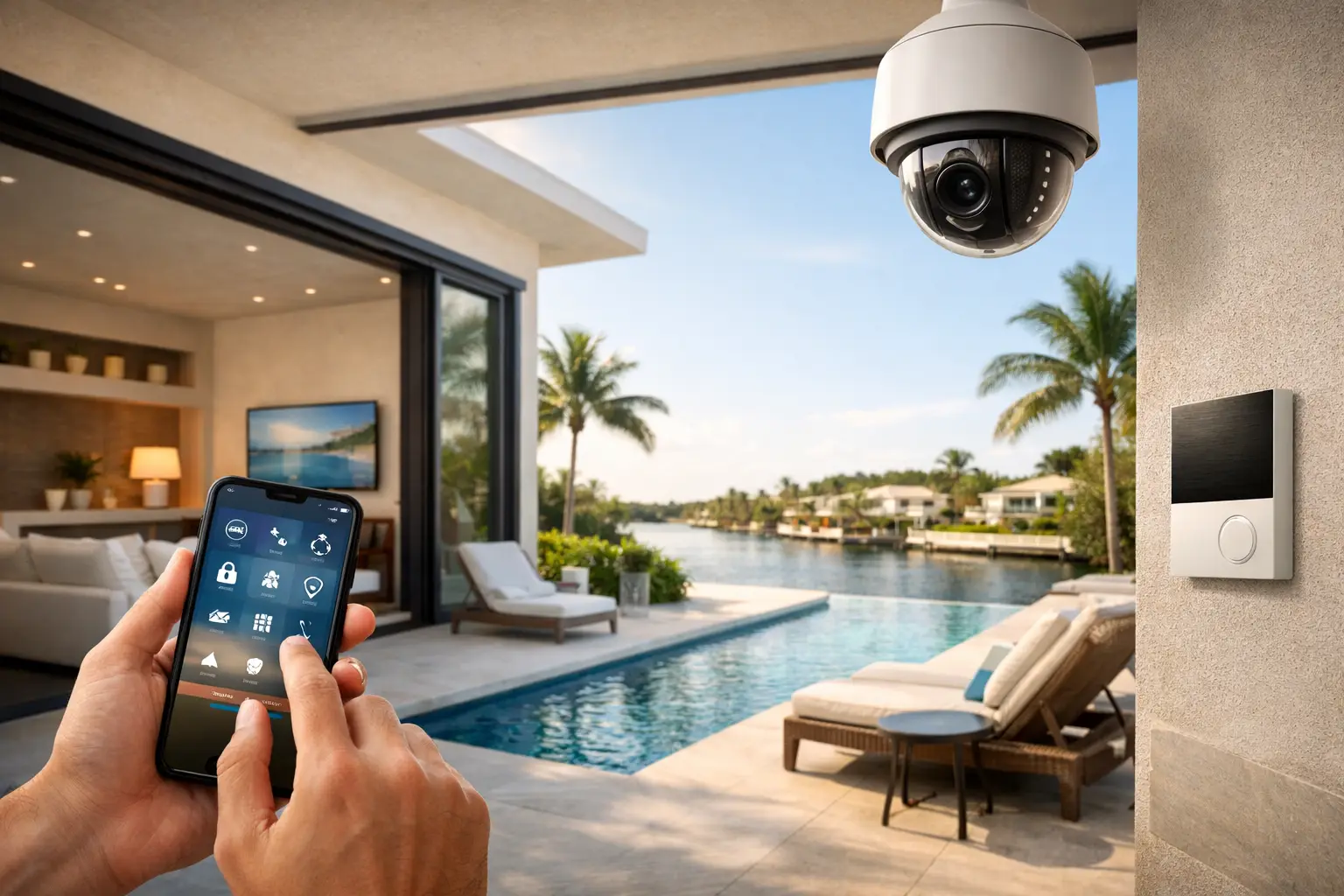
Centralized control is not about adding more screens to your day. It is about reducing friction. One interface can bring together entertainment, shades, lighting scenes, climate preferences, pool features, security views, and other connected systems that belong in the same routine.
For example, an evening scene might lower motorized shades, set the lighting level, adjust the room temperature, and prepare audio in the living area. A departure scene can turn off selected systems, set the property to an energy-conscious state, and confirm that security measures are active. The value is not the number of commands available. It is the confidence that common actions happen correctly with a simple, repeatable instruction.
The best control design also accounts for the people who will use it. Guests should be able to enjoy a room without training. Family members should not need to remember multiple logins. Staff should have clear access to the controls relevant to their role, not an unnecessarily complex dashboard.
Build Around the Spaces That Matter Most
Many integration projects begin with a theater or a media room, then expand as clients see the advantages of a complete system. That is a sensible approach, provided the initial plan leaves room for the property to evolve.
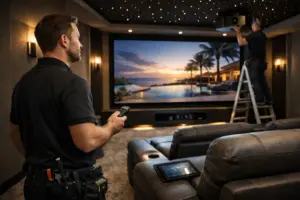
In a home, the most valuable technology zones often include the main living areas, primary suite, outdoor entertaining spaces, entry points, and areas where security visibility matters. Whole-house audio can provide consistent sound without cluttering rooms with visible equipment. Whole-house video can make entertainment accessible in the places people naturally gather. A properly designed home theater creates a focused viewing environment where sound, picture, seating, acoustics, and control are considered as one experience.
Outdoor areas deserve equal attention in South Florida. Pools, patios, kitchens, lounges, and waterfront gathering spaces are extensions of the home for much of the year. Equipment selection, speaker placement, display protection, network coverage, and control design must account for heat, moisture, sunlight, and the way people move through the space. An outdoor system that looks exceptional on installation day but struggles in local conditions is not a successful system.
In commercial settings, technology must often work under more pressure. A conference room system cannot require a lengthy setup before an important client meeting. Distributed audio needs to remain clear and appropriate across different zones. Surveillance must deliver usable images, not merely record footage. Structured cabling and network infrastructure need enough capacity and organization to support present operations while allowing future improvements without disruptive rework.
Reliability Is Designed Before Equipment Is Installed
Premium equipment matters, but it is only one part of system performance. The hidden work behind the walls and in equipment locations often determines whether a technology investment remains dependable for years.
Structured cabling creates an organized foundation for audio, video, security, communications, wireless coverage, and control. It allows systems to be placed where they belong instead of where a signal happens to reach. It also makes future service more efficient because wiring paths, terminations, and equipment connections are planned, labeled, and documented.
Network design deserves the same level of attention. Modern properties depend on connectivity for control platforms, cameras, entertainment sources, communications, and business operations. Coverage, capacity, segmentation, equipment placement, and backup planning should be considered early, particularly in larger homes, concrete construction, and commercial environments with many users.
There are trade-offs. A wireless device can be appropriate in an existing finished space where opening walls is not practical. However, permanent, high-demand systems generally benefit from a wired backbone. The correct choice depends on the property, the performance requirement, and the scope of the project. A qualified integrator explains those decisions clearly rather than applying one approach everywhere.
Security Should Feel Present, Not Intrusive
Security integration is most effective when it is built into the overall property plan. Video surveillance, access control, alarm-related systems, communications, gates, and lighting responses can complement one another while maintaining a clean appearance.
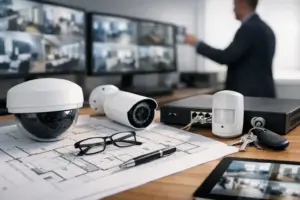
Camera placement should be based on identifiable objectives: entrances, driveways, delivery areas, waterfront access, parking areas, corridors, and other points that need visibility. Placement affects image quality as much as camera specification. A poorly positioned camera may capture glare, shadows, or an unhelpful angle at the moment it matters.
For homeowners, remote access to selected camera views and property alerts can provide valuable peace of mind when away. For business owners, surveillance and communications systems can help protect the property while giving management a clearer picture of activity across locations. Privacy, user permissions, retention needs, and the practical process for reviewing recordings should all be addressed before the system is finalized.
What Professional Integration Looks Like During a Project
A strong project process prevents surprises. It begins with a conversation about how the property is used, what needs to change, and what success looks like after installation. From there, the team can assess the space, coordinate with other trades where needed, develop a proposal, and specify a system that matches the project requirements.
During installation, workmanship matters. Clean rack builds, organized wiring, carefully placed devices, discreet speaker locations, and thoughtful finish details protect both system performance and the appearance of the property. For renovations and new construction, early coordination is especially valuable because it allows infrastructure to be incorporated before finishes are complete.
Commissioning is the stage where the system is tested as a complete environment. Controls should be intuitive, audio zones should perform consistently, video should be calibrated appropriately, and security devices should be verified in real operating conditions. The handoff should include clear training tailored to the owner or staff, not a rushed demonstration at the end of the day.
Ongoing support is equally important. Technology systems occasionally need adjustments, updates, or service as a property changes. Working with one accountable partner simplifies that process. Sentry Audio Video provides clients with a single source for design, installation, integration, and continued support across lifestyle, security, and infrastructure systems.
Questions Worth Asking Before You Commit
Before selecting an integration partner, ask how the system will be designed around your specific property, who will coordinate the installation, and what support looks like after the project is complete. Ask how the team handles network planning, documentation, service access, and future expansion. For commercial projects, ask how the design protects operational continuity and supports staff with different levels of technical familiarity.
The answers should be specific. A professional partner can explain why equipment is being selected, where it will be installed, how it will be controlled, and how the system can adapt over time. The result is more than an impressive demonstration. It is a property that feels more comfortable, capable, protected, and prepared from the moment you walk in.