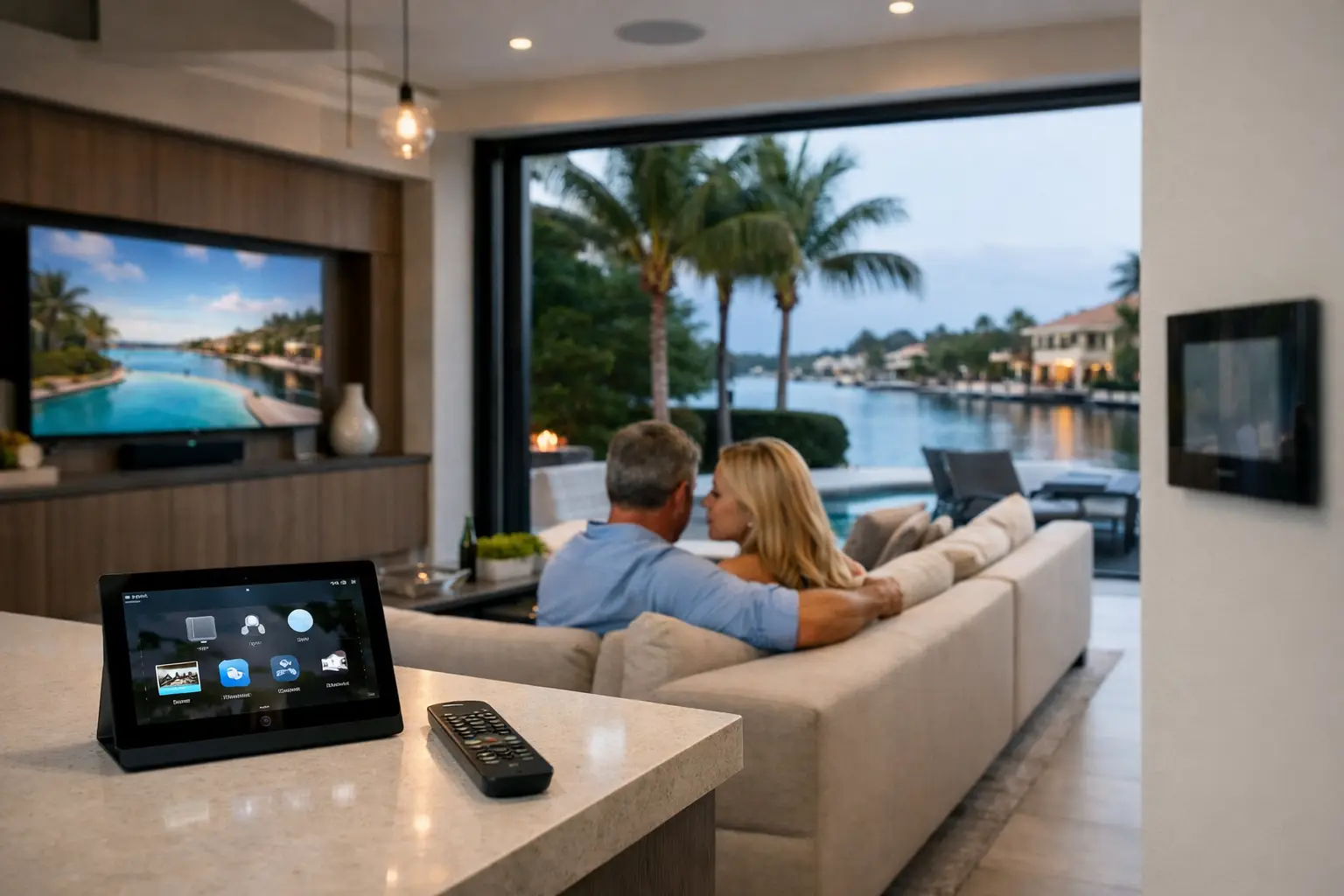
A Boca Raton home can have beautiful spaces, exceptional finishes, and premium entertainment equipment, yet still feel complicated when every room requires a different remote, app, or wall control. Control4 Boca Raton integration brings those individual systems into one thoughtfully designed experience, giving homeowners a more refined way to manage entertainment, lighting, motorized shades, security, and outdoor living.
The difference is not simply putting controls on a touchscreen. It is designing technology around the way a property is used. A properly integrated system can prepare the home for an evening outside, create the right atmosphere for guests, make daily routines easier for the family, and keep essential security functions within reach without cluttering the walls and coffee tables with unnecessary devices.
What a Control4 System Actually Changes
Control4 is a professional automation platform that brings compatible technology systems together under a common control experience. Instead of moving between separate interfaces for audio, video, lights, shades, cameras, and access points, the homeowner has a consistent way to operate the systems that matter most.
That consistency is especially valuable in larger homes, seasonal residences, and properties with distinct indoor and outdoor zones. A single command can turn on selected lights, lower shades, start music in the main living area, and prepare the television for a movie or sporting event. Another can secure the home at night by turning off nonessential lights, closing shades, and confirming that the property is in its preferred evening state.
The goal is not to automate every possible task. Over-programming a home can create confusion and make a system harder to live with. The strongest design focuses on routines the household will genuinely use, then keeps manual control intuitive when someone wants to make a quick adjustment.
Control4 Boca Raton Design Starts With the Property
No two homes use technology in exactly the same way. A waterfront property with expansive outdoor entertaining areas has different requirements than a condominium, an estate undergoing renovation, or a home used part of the year. The system design should account for the layout, construction, equipment locations, internet coverage, lifestyle priorities, and level of privacy the owner expects.
For some clients, whole-home audio is the starting point. They want music to follow the day from the kitchen to the patio, with independent source selection and volume control in each area. Others begin with a dedicated theater, where display performance, speaker placement, acoustic considerations, and clean equipment integration need to work as one.
Security may be the primary concern for a homeowner who travels frequently. In that case, professionally positioned cameras, access control, alerts, and remote visibility can take priority. The right answer depends on the home and the owner’s habits. A consultation should identify those priorities before equipment is selected or programming begins.
Everyday Scenes Should Feel Natural
The most useful automation is often the least dramatic. Consider a morning scene that raises selected shades, adjusts lighting in common areas, and starts a preferred audio source. Or consider an entertaining scene that creates a warm lighting environment, activates music across the main gathering spaces, and powers outdoor video when appropriate.
These scenes should be simple enough that everyone in the home understands them. They can be activated from an elegant keypad, touchscreen, remote, or mobile device, but the experience should never depend on hunting through a complicated menu. Good programming removes friction rather than adding another layer of technology to manage.
The Systems That Deliver the Greatest Value Together
Control4 becomes more valuable when the components around it are selected and installed as a coordinated system. Entertainment, shades, lighting, surveillance, structured cabling, and network infrastructure all affect the final experience. A beautiful control interface cannot compensate for inconsistent wireless coverage, poorly placed speakers, weak video distribution, or equipment installed without proper ventilation and service access.
Audio and video integration can provide a consistent experience across family rooms, bedrooms, media spaces, patios, and pool areas. The design should consider where people gather, how loud each zone needs to be, and whether audio should remain private in certain spaces. Outdoor areas need equipment selected and placed for the environment, not simply extended from an indoor setup.
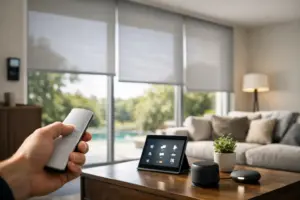
Motorized shades and lighting control add another dimension. Beyond convenience, they help shape the atmosphere of a room and support privacy at the touch of a button. In homes with significant glass, shade design also deserves early attention because power, mounting conditions, fabric selection, and control strategy affect both appearance and performance.
Security integration can bring cameras, door stations, locks, and alerts into the same control environment. However, security should never be treated as an afterthought. Camera coverage, recording needs, network capacity, and notification preferences need careful planning so the homeowner receives meaningful information rather than a stream of unnecessary alerts.
Installation Quality Determines Long-Term Reliability
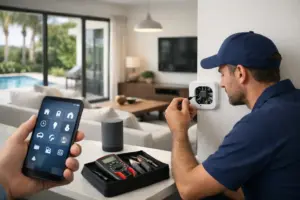
A premium system should look as composed behind the scenes as it does from the living room. Equipment racks, wiring pathways, labeling, ventilation, surge protection, and network architecture are not glamorous details, but they are the foundation of dependable performance.
Clean workmanship also makes future service more efficient. When cabling is organized, components are documented, and systems are installed with access in mind, an integrator can diagnose issues and make updates without disrupting the home. This matters particularly in complex properties where several systems share the same technology backbone.
Wireless technology has an important role, but it is not a substitute for proper infrastructure. Where possible, hardwired connections provide stability for fixed equipment, surveillance, access points, and high-demand entertainment zones. A professional design balances wired and wireless capabilities based on the structure and intended use of each space.
Plan Early, Even If the Project Will Be Phased
The ideal time to plan an integrated system is before walls are closed or finishes are finalized. Early coordination allows for concealed wiring, correct power locations, equipment space, speaker placement, shade provisions, and clean keypad locations. It also helps avoid visible compromises later.
That said, an occupied home can still be upgraded effectively. The approach simply requires more care around existing finishes, access limitations, and the homeowner’s schedule. A qualified integrator can identify what can be integrated now, what should be prewired for a future phase, and where a carefully chosen wireless solution makes sense.
A phased plan is often a smart choice when a property is being renovated room by room. Start with the network and structured wiring foundation, then build into entertainment, lighting, shades, security, and outdoor spaces as the project progresses. The key is ensuring that the first phase does not limit the next one.
Questions to Set a Project Up for Success
Before approving a proposal, homeowners should be able to clearly discuss a few practical details with their integrator:
- Which rooms and outdoor areas need independent audio, video, lighting, or shade control?
- Who will use the system, and which routines should be simple enough for every family member and guest?
- Where will equipment be housed, and how will it be cooled, powered, and accessed for service?
- What level of remote access, camera visibility, and notifications feels useful without becoming intrusive?
Clear answers create a better design and reduce late changes during installation. They also help distinguish a custom solution from a collection of disconnected products.
A Partner for the System After Installation
Technology integration is not finished the day the equipment powers on. Homes change, families develop new routines, and software updates or service needs can arise over time. Working with an experienced integrator gives the owner a single accountable partner who understands the complete design rather than requiring multiple providers to troubleshoot separate pieces of the system.
Sentry Audio Video approaches Control4 projects with that level of ownership, from the initial conversation through installation, programming, and ongoing support. For a Boca Raton property, the right next step is a detailed conversation about how the home is used and which experiences are worth making simpler, more reliable, and more enjoyable.