A Boca Raton home can have a theater-quality media room, waterfront outdoor spaces, motorized shades, cameras, and multiple climate zones. Without a thoughtful plan, each feature can end up with its own remote, app, installer, and support number. A professionally designed smart home Boca Raton homeowners can depend on brings those systems together around the way the property is actually used.
The goal is not to fill a home with technology for its own sake. It is to make arrival, entertaining, relaxing, and protecting the property feel simpler. The right system puts reliable control within reach while keeping equipment discreet, wiring organized, and performance consistent from room to room.
Start With How You Live in the Home
The strongest smart home projects begin before equipment is selected. A family with young children may prioritize perimeter security, pool-area awareness, and simple whole-home music. A seasonal homeowner may care more about remote access, surveillance, leak detection, and dependable communications when the property is vacant. Someone who entertains often may want lighting scenes, outdoor audio, television distribution, and shades that set the right atmosphere with one command.
This is why custom design matters. A technology plan should reflect the home’s architecture, daily routines, staff access, privacy expectations, and plans for future renovations. It should also account for locations that are easy to overlook, including patios, guest suites, garages, gates, docks, and equipment rooms.
A capable integrator maps out where technology will be used and where it should disappear from view. That includes properly located displays and speakers, concealed wiring pathways, centralized equipment when appropriate, and control interfaces that are intuitive for every member of the household.
The Core Systems of a Smart Home in Boca Raton
A well-planned home does not need every available feature. It needs the right systems working together reliably. For many properties, several categories create the greatest day-to-day value.
Centralized Control That Reduces Friction
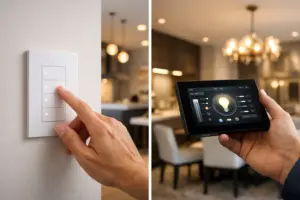
Centralized control replaces the familiar pile of remotes and disconnected apps with a consistent experience. From a touch panel, elegant keypad, or mobile device, homeowners can manage lighting, shades, entertainment, security cameras, gates, and climate settings.
The real benefit appears in everyday moments. A “Goodnight” command can turn off selected lights, lower shades, shut down entertainment areas, and arm appropriate security zones. An “Entertain” scene can prepare the living room, kitchen, and patio without requiring guests or staff to adjust each system individually.
Control should be simple, but the programming behind it deserves care. Scenes must match the household’s habits, permissions need to be considered, and key functions should remain easy to access even when a phone is not nearby.
Lighting and Motorized Shades
Lighting is one of the most frequently used smart home features because it changes both comfort and presentation. Thoughtfully programmed scenes can provide bright, useful light for morning routines, a softer setting for dinner, or safe pathway illumination after dark. Keypads can also reduce wall clutter while making common scenes easy to use.
Motorized shades add privacy, daylight management, and protection for interiors. In homes with expansive glass, they can help control glare in media spaces and preserve the view without requiring constant manual adjustment. The best approach depends on window treatments, fabric selection, room use, and whether the homeowner wants scheduled operation, sensor-based adjustments, or direct control.
Whole-Home Audio, Video, and Theater
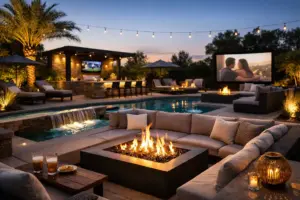
Music should not stop at the edge of the living room. Whole-home audio lets homeowners enjoy selected sources in the kitchen, bedrooms, patio, and pool area while maintaining independent volume and source choices in each zone. Proper speaker placement is critical, especially outdoors, where sound coverage should feel full without pushing excessive volume toward neighboring properties.
Video distribution can provide access to preferred sources throughout the home without crowding every room with visible equipment. For a dedicated theater or media room, system design should address much more than screen size. Acoustics, display performance, speaker layout, seating, lighting control, and equipment ventilation all influence the final experience.
Security, Surveillance, and Property Awareness
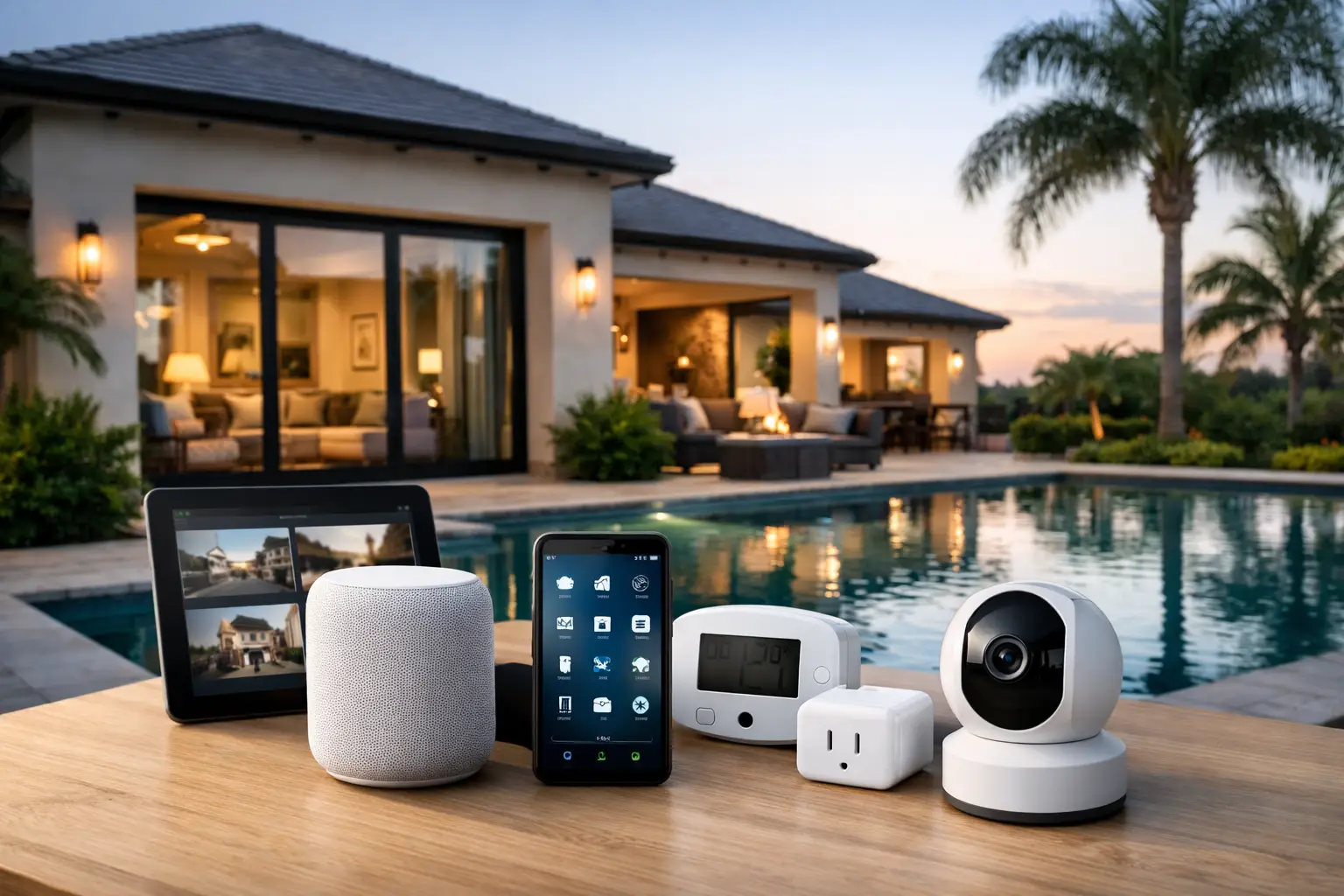
Smart security is most valuable when it provides useful awareness rather than a constant stream of nuisance alerts. Professionally placed cameras can cover entry points, driveways, gates, exterior gathering areas, and other priority zones while respecting privacy. Video quality, night visibility, recording retention, remote viewing, and network capacity should be evaluated as part of the design.
Integration makes security more practical. A homeowner can check a camera from a central control interface, receive relevant activity notifications, or use an intercom to communicate with a visitor at a gate. Access control can also simplify entry for family members, house managers, and approved service providers while preserving an activity record.
For larger residences and estates, security planning should be coordinated early with landscape, gate, pool, and architectural decisions. Waiting until the end of a project can limit camera views, complicate wiring, and leave visible components where they do not belong.
Why Infrastructure Determines Long-Term Performance
The equipment people see is only part of the system. Behind every responsive control command, clear camera image, and uninterrupted entertainment experience is an infrastructure designed to carry the load. Structured cabling, properly planned wireless coverage, network hardware, equipment racks, power protection, and ventilation are foundational to dependable performance.
This is particularly relevant in larger homes, properties with concrete construction, and residences with expansive outdoor areas. Wireless coverage must be designed for the layout, building materials, and number of connected devices, not treated as an afterthought. A network that performs well in one room but struggles on a patio or in a guest wing creates frustration across the entire smart home.
Centralizing key equipment can make service easier and keep living spaces clean. Still, it is not the right answer for every system or every home. The location must allow for access, cooling, power management, and organized cable routing. Good design balances hidden technology with practical serviceability.
Plan for Service, Not Just Installation
A smart home is not a one-time purchase that should be forgotten after commissioning. Software updates, changing household needs, network adjustments, new entertainment services, and occasional equipment issues all make ongoing support meaningful. The most valuable partner takes responsibility for the complete system and can diagnose issues across categories rather than passing homeowners from one vendor to another.
Before choosing an integrator, ask how system documentation is handled, who provides support after installation, and whether the company manages both lifestyle technology and security-related systems. Ask how they coordinate with architects, designers, builders, and other trades. Clear answers usually signal a disciplined process.
Sentry Audio Video designs and supports integrated residential systems with this full-property perspective, from structured infrastructure and entertainment to automation, surveillance, shades, and outdoor living. That breadth helps reduce the gaps that appear when individual systems are planned in isolation.
A Smarter Way to Phase a Project
Not every homeowner is starting with new construction. Renovations and occupied homes often require a phased strategy. The first priority is usually the infrastructure that would be difficult to add later: cabling pathways, network improvements, equipment locations, power planning, and provisions for cameras, shades, speakers, or control keypads.
From there, the project can move into the systems that matter most immediately. Some homeowners start with security and networking, then add lighting control and entertainment. Others begin with a media room and outdoor areas, then extend centralized control throughout the property. The right sequence depends on the home, construction schedule, and how the family plans to use each space.
The key is to create one design roadmap rather than making disconnected decisions over time. A future-ready plan does not mean installing every feature at once. It means avoiding choices that restrict future options or require unnecessary disruption later.
Choose Technology That Feels Natural
The mark of a successful smart home is not how many devices it contains. It is whether the home responds naturally to the people living in it. A well-designed system should make a morning routine calmer, a gathering more enjoyable, a vacant property easier to monitor, and everyday control less complicated.
Start with the rooms and moments that matter most, then build the technology around them. When design, installation quality, and long-term support are treated as one responsibility, the result is a home that performs with the confidence a Boca Raton property deserves.