A great theater should disappear the moment the movie starts. With professional Home Theater Installation Boca Raton homeowners can enjoy a room that looks refined in daylight, sounds commanding when the lights go down, and works without a stack of remotes or visible wiring competing for attention.
That outcome does not come from choosing a large display alone. It comes from designing the room around how it will actually be used: family movie nights, major events, casual streaming, private listening, or entertaining guests. Screen placement, speaker locations, lighting, seating, control, acoustics, and infrastructure all need to work together. When they do, the result feels effortless because the planning was anything but casual.
What Defines a High-Performance Home Theater?
A home theater is more than a television with additional speakers. It is a coordinated entertainment environment designed to deliver clear dialogue, convincing surround sound, deep impact, and intuitive control from a single room interface.
For many Boca Raton homes, the theater may be a dedicated room with acoustical treatments, theater seating, a projection system, and controlled lighting. For others, it may be a beautifully appointed media room where a large display, architectural speakers, and hidden equipment preserve the room’s open, polished appearance. Neither approach is automatically better. The right solution depends on the architecture, natural light, viewing habits, and the role the room plays in the home.
A dedicated theater provides the greatest control over sound and picture quality. Dark finishes, light-blocking shades, carefully positioned speakers, and acoustic treatment can create an experience that feels remarkably close to a private cinema. A multi-purpose media room offers more flexibility for everyday living, but it requires more careful product selection and integration to perform well in a brighter, more active space.
Start With the Room, Not the Equipment
The most successful projects begin with an assessment of the space. Room dimensions, ceiling height, window placement, seating distance, and construction details directly influence what the system can achieve.
A display that appears impressive in a showroom may be oversized or undersized once it is installed in a specific room. The proper screen size is based on the viewing distance and desired field of view, not simply the largest option available. The same is true for projection. A projector and screen can deliver an extraordinary image, but ambient light has to be managed. In a room with large windows or bright exterior exposure, motorized shades and a high-performance display may deliver a more consistent daytime experience.
Speaker placement deserves the same level of attention. Surround sound depends on positional accuracy. Front channels need to anchor dialogue and action to the screen, while surround and overhead speakers create depth and movement around the listener. When speakers are placed wherever construction happens to allow, the system can still make sound, but it may not create the enveloping effect homeowners expect.
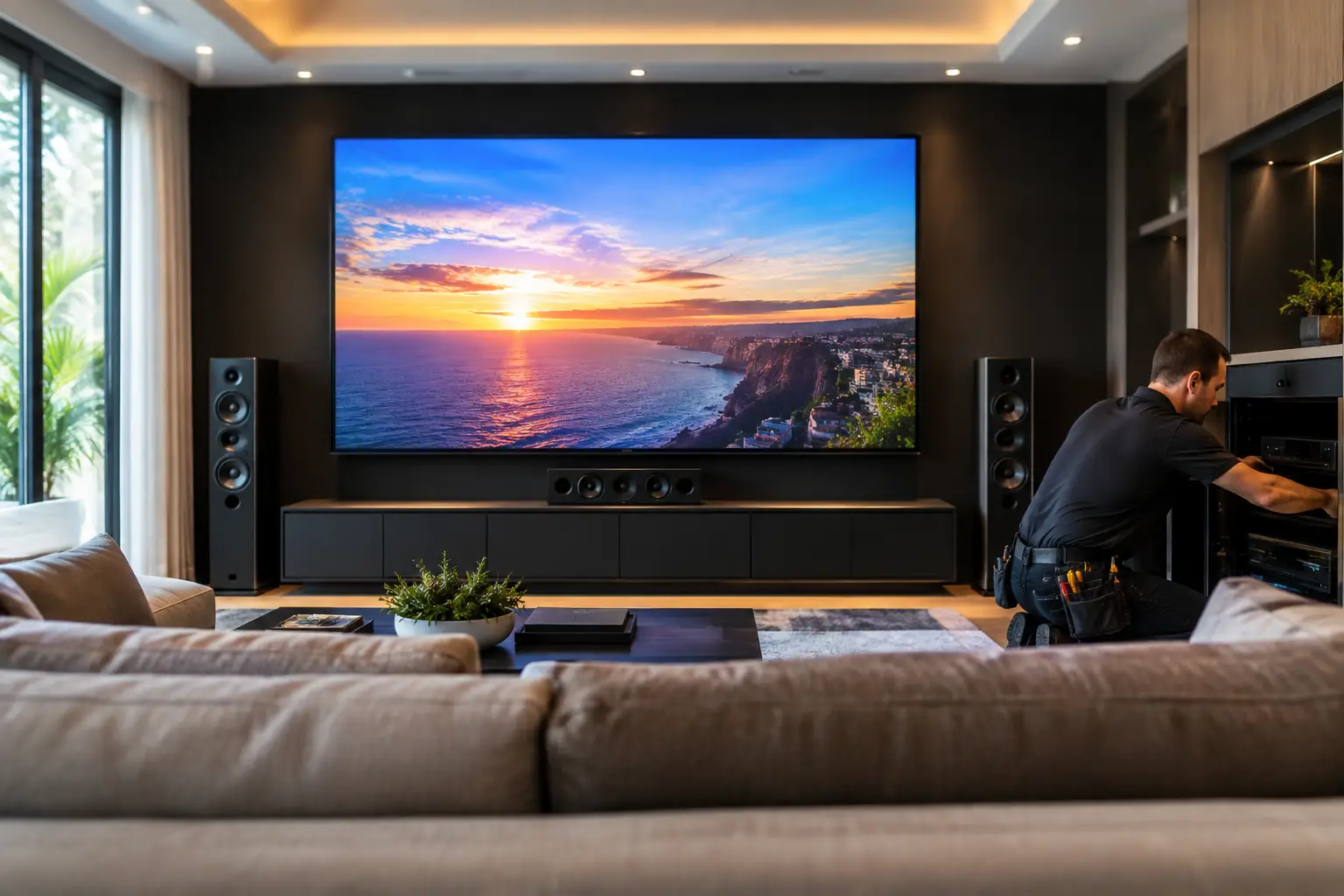
Professional planning also accounts for the equipment location. AV components, networking hardware, and power management can often be housed in a ventilated rack or adjacent equipment area instead of filling cabinetry beneath the screen. This protects the clean design of the theater while making future service more efficient.
Sound Quality Is About Control, Not Just Volume
The difference between ordinary sound and cinematic sound is usually clarity. You should be able to understand quiet dialogue without turning the volume up so far that action scenes become overwhelming. You should feel the impact of a soundtrack without hearing rattles, harshness, or muddy bass.
That requires the right speaker configuration, proper calibration, and attention to the room itself. Hard surfaces such as glass, stone, and expansive tile can create reflections that make a system sound bright or indistinct. Soft furnishings help, but purpose-built acoustic treatments may be appropriate in dedicated theaters where performance is the priority.
Subwoofers are another area where placement matters. Low-frequency sound interacts with room dimensions in complex ways, and one location can produce dramatically different results than another. A professional design may use more than one subwoofer to create more even bass across several seats. This is especially valuable when the room is designed for family and guests rather than a single preferred listening position.
Calibration is the final step that brings the system together. Levels, timing, crossover settings, and processing should be tuned after installation, not guessed at before it. Premium components deserve this level of precision, and homeowners deserve a system that performs as intended from day one.
Home Theater Installation in Boca Raton Should Respect the Home
In high-end residences, performance and presentation carry equal weight. A theater should not introduce exposed wiring, awkward wall plates, overloaded cabinets, or equipment noise into an otherwise finished space. Every visible detail should feel intentional.
That is why early coordination is so valuable during a renovation or new construction project. Structured cabling can be installed before walls are closed, speakers can be framed into the design, and equipment locations can be planned around millwork, ventilation, and access. The finished room remains elegant because the infrastructure was considered before the finishes were selected.
For an existing home, thoughtful installation techniques remain essential. Surface conditions, access paths, wall construction, and décor all shape the installation plan. The goal is not merely to add equipment to a room. It is to integrate technology in a way that supports the home’s architecture and protects its visual appeal.
Sentry Audio Video approaches each project as a complete system, coordinating audio, video, controls, networking, lighting, and related infrastructure so the final installation is clean, dependable, and simple to operate.
Simple Control Changes the Entire Experience
A theater can include outstanding equipment and still frustrate its owner if operation is complicated. Multiple remotes, inconsistent inputs, and confusing settings take attention away from the entertainment itself.
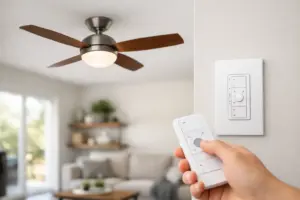
Centralized control replaces that clutter with a clear, familiar interface. A wall keypad, handheld remote, or touchscreen can start a movie, select a source, lower motorized shades, set the lights, and adjust the sound without requiring separate steps. The exact control solution should reflect the household. Some clients want a streamlined “Watch” experience with only a few options. Others want deeper access to music, distributed video, lighting scenes, and whole-home automation.
Reliability also begins with the network. Streaming services, control systems, and connected sources depend on stable connectivity. A properly designed wired and wireless network gives the theater a stronger foundation than relying on a standard internet setup that was never intended to support a sophisticated integrated system.
Questions to Ask Before Approving a Theater Design
Before moving forward, homeowners should understand how the proposed system supports both the room and their daily use. Ask where the equipment will live, how ventilation and service access will be handled, and whether the system can be expanded later. If the room has windows, ask how daytime viewing will be addressed. If several people will use the theater, ask how sound will remain balanced across the seating area.
It is also worth discussing maintenance and support before installation begins. Technology should be serviceable without disrupting the room, and a trusted integrator should remain available when updates, adjustments, or future additions are needed. The relationship should not end once the final component is installed.
Plan for the Experience You Want to Have
A home theater is one of the few spaces where a home can become more personal, more entertaining, and more connected at the same time. Whether the goal is a dedicated cinema or a sophisticated media room, the strongest results come from a design that considers the entire experience rather than individual products.
The right installation brings picture, sound, lighting, control, and architecture into alignment. Start with a professional consultation, communicate how the room will be used, and give the design the attention it deserves. When the first scene begins and everything simply works, the value of careful planning becomes immediately clear.